
Mary Wollstonecraft Shelley Biography Quotes 22 Report mistakes
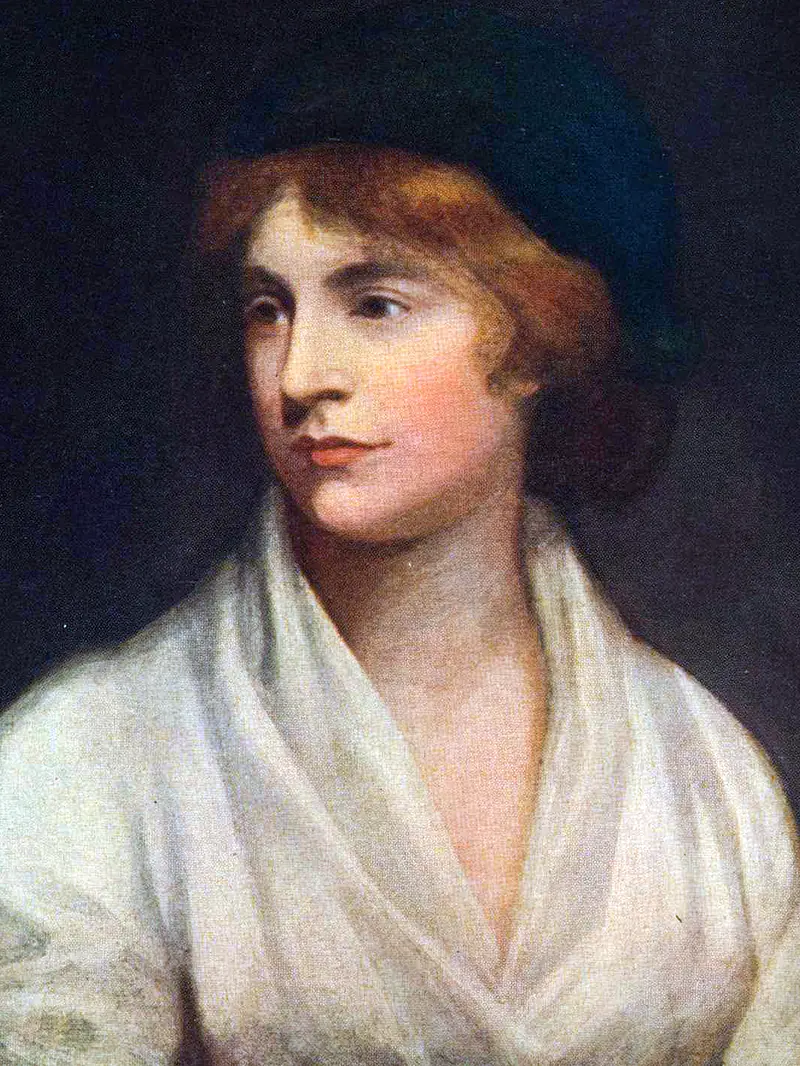
| 22 Quotes | |
| Born as | Mary Wollstonecraft Godwin |
| Known as | Mary Shelley |
| Occup. | Author |
| From | England |
| Born | August 30, 1797 Somers Town, London, England |
| Died | February 1, 1851 London, England |
| Cause | brain tumour |
| Aged | 53 years |
| Cite | |
Citation Formats
APA Style (7th ed.)
Mary wollstonecraft shelley biography, facts and quotes. (2026, February 5). FixQuotes. https://fixquotes.com/authors/mary-wollstonecraft-shelley/
Chicago Style
"Mary Wollstonecraft Shelley biography, facts and quotes." FixQuotes. February 5, 2026. https://fixquotes.com/authors/mary-wollstonecraft-shelley/.
MLA Style (9th ed.)
"Mary Wollstonecraft Shelley biography, facts and quotes." FixQuotes, 5 Feb. 2026, https://fixquotes.com/authors/mary-wollstonecraft-shelley/. Accessed 7 Feb. 2026.
Mary Wollstonecraft Godwin was born in Somers Town, London, on 30 August 1797 into an intellectual dynasty already marked by scandal and grief. Her mother, the pioneering feminist Mary Wollstonecraft, died of puerperal fever days after the birth; her father, the political philosopher William Godwin, raised her amid books, visitors, and the burden of a name that promised brilliance while advertising nonconformity. The child grew up with an acute sense that affection could be precarious and public judgment relentless, conditions that later sharpened her interest in responsibility, abandonment, and the costs of transgression.
Godwin remarried in 1801 to Mary Jane Clairmont, and the household became crowded with half-siblings and step-siblings, including Claire Clairmont. Money was frequently tight, despite Godwin's reputation, and Mary learned early to translate insecurity into inward life. She found a private anchorage in memory and imagination, often visiting her mother's grave at St Pancras Old Church, a ritual that fused reverence, loneliness, and the idea that the dead can remain formative presences in the living.
Education and Formative Influences
Mary's education was irregular but intense: she read widely in her father's library and absorbed the radical debates of the 1790s that still echoed through the Godwin circle. Coleridge's visit and recitation, the family's engagement with reformist politics, and her exposure to Enlightenment reasoning shaped her sense that ideas carry moral consequences. The decisive influence arrived in 1814 when she fell in love with the poet Percy Bysshe Shelley, a disciple of Godwin; their elopement to France and Switzerland, with Claire, threw Mary into adult life as an outsider, testing her ideals against social condemnation and the daily arithmetic of survival.
Career, Major Works, and Turning Points
The summer of 1816 at the Villa Diodati near Lake Geneva with Percy Shelley, Lord Byron, and John Polidori became the catalytic moment: amid storms, ghost stories, and talk of galvanism and scientific ambition, Mary drafted the tale that grew into "Frankenstein; or, The Modern Prometheus" (1818), first published anonymously. The following years compounded triumph with loss - the deaths of three of her children between 1815 and 1819, and the drowning of Percy in 1822 off the Italian coast - intensifying her preoccupation with creation, culpability, and grief. Back in England as a widowed mother, she built a professional writing life through novels such as "Valperga" (1823), "The Last Man" (1826), and "Lodore" (1835), and she shaped Percy's posthumous reputation by editing and presenting his poems, a careful act of literary stewardship that also protected her son's inheritance and her own social standing.
Philosophy, Style, and Themes
Mary Shelley's inner life was disciplined, not merely stormy: she treated purpose as a form of self-governance, the only reliable counterweight to upheaval. "Nothing contributes so much to tranquilize the mind as a steady purpose - a point on which the soul may fix its intellectual eye". That sentence, often read as moral advice, also reveals a psychology trained by bereavement - she repeatedly had to reconstitute meaning after bodies vanished and futures collapsed. Her journals show a mind that sought composure through work, routine, and the long horizon of authorship.
Her fiction turns the era's revolutions - political, industrial, scientific - into intimate dramas of obligation. In "Frankenstein", the aspiration to exceed limits is inseparable from the failure to nurture what one brings into being: "Life and death appeared to me ideal bounds, which I should first break through, and pour a torrent of light into our dark world". She admired intellectual daring yet anatomized its evasions, insisting that ethics cannot be delegated to circumstance. Across her novels, and in her inherited radicalism, she returns to structural harm rather than sentimental relief: "It is justice, not charity, that is wanting in the world". Stylistically, she favors framed narration, moral pressure, and landscapes that echo thought - a Romantic sensibility harnessed to a cool, prosecutorial clarity about consequences.
Legacy and Influence
Mary Wollstonecraft Shelley died in London on 1 February 1851, leaving behind a body of work that extends far beyond her most famous novel, yet "Frankenstein" alone remade modern myth: it helped define science fiction, set the template for ethical debates about invention, and supplied a lasting vocabulary for creators who abandon their creations. Her life - daughter of two revolutionaries, partner of a poet-rebel, survivor turned professional author - made her a hinge figure between Enlightenment reason and Romantic feeling, and her influence persists wherever ambition meets responsibility, from bioethics to climate catastrophe narratives, from political critiques of injustice to stories that ask what the outcast is owed by the world that made him.
Our collection contains 22 quotes written by Mary, under the main topics: Ethics & Morality - Wisdom - Justice - Deep - Nature.
Other people related to Mary: George Byron (Poet), Jeanette Winterson (Novelist), Thomas Love Peacock (Author), Horace Smith (Poet), Leslie Fiedler (Critic), Elle Fanning (Actress), Aidan Quinn (Actor), Richard Briers (Actor), Kenneth Branagh (Actor)
Mary Wollstonecraft Shelley Famous Works
- 1851 The Life of Percy Bysshe Shelley (Memoir/Prefatory Life) (Biography)
- 1837 Falkner (Novel)
- 1835 Lodore (Novel)
- 1826 The Last Man (Novel)
- 1823 Valperga; or, The Life and Adventures of Castruccio, Prince of Lucca (Novel)
- 1818 Frankenstein; or, The Modern Prometheus (Novel)
- 1817 History of a Six Weeks' Tour (Non-fiction)