
Poetry: The Long March
Background and occasion
The poem "The Long March" (1935) by Mao Tse-Tung commemorates the Red Army's epic retreat across China in 1934, 35. Composed soon after the climax of that campaign, it condenses a prolonged military ordeal into a compact, celebratory voice. The poem reflects both the literal hardships, treacherous rivers, snowbound passes, and broken bridges, and the political meaning the Long March acquired as a foundational myth for the Communist movement.
Mao wrote in a tradition that mixed classical Chinese forms with contemporary revolutionary content. The immediacy of the poem comes from its pairing of concrete geographic markers with a confident, forward-looking tone, turning a history of suffering into an assertion of inevitability and moral success.
Form and language
The poem uses a tightly controlled classical form, employing concise seven-character lines and regulated tonal patterns that lend a steady, marching rhythm. That formal restraint amplifies the rhetorical power of each image: compact lines store intense contrast, so a single couplet can move from danger to triumph. The diction blends elevated, archaic words with the blunt vocabulary of travel and combat, joining tradition to modern political purpose.
Rhetorical devices are prominent. Parallelism and antithesis compress long sequences of events into pithy, memorable phrases. Repetition of structural patterns mimics the discipline and cadence of troops on the march, while abrupt shifts in imagery create a sense of movement over time and terrain.
Imagery and tone
Landscape plays the central imaginative role: mountains, rivers, bridges, and snowscapes become characters that test and then validate the marchers' resolve. Natural obstacles are depicted in grand, almost operatic terms, wild, vast, and elemental, so that the soldiers' passage reads as a moral and physical conquest. The poem turns hostile geography into a dramatic backdrop that only heightens the Red Army's heroism.
The tone is paradoxically sober and exhilarated. Hardship is acknowledged rather than romanticized, but it is immediately reframed as a source of joy and liberation. That tonal pivot, from endurance to elation, is the poem's chief rhetorical achievement, converting fatigue and danger into proof of historical righteousness and communal vitality.
Themes and political meaning
Endurance, solidarity, and revolutionary optimism stand at the poem's thematic core. The Long March is represented as a crucible in which leadership, discipline, and popular will are forged. Individual suffering is subsumed into collective triumph; the soldiers' trials are meaningful because they point toward a transformed future. This is as much a political manifesto in miniature as it is a commemorative lyric.
The poem also emphasizes historical continuity: by drawing on classical poetic forms and sweeping natural metaphors, it situates a modern military campaign within a longue durée of Chinese experience. That linkage legitimizes radical political change by placing it in the cadence of national destiny rather than presenting it as a mere tactical retreat.
Historical impact and legacy
As a piece of revolutionary literature, the poem quickly became iconic, taught and recited as a distillation of the Long March's legend. Its compact imagery and assertive tone helped fix a public memory of the event as a moral victory that justified further struggle. Over time it has functions both as cultural artifact and political symbol, cited in speeches, anniversaries, and educational settings.
Literarily, the poem influenced subsequent revolutionary writing by demonstrating how classical forms could be mobilized for contemporary propaganda without losing lyrical intensity. Its enduring resonance lies in that fusion: a short, formal lyric that transforms historical catastrophe into collective confidence and a renewed sense of purpose.
Citation Formats
APA Style (7th ed.)
The long march. (2026, February 4). FixQuotes. https://fixquotes.com/works/the-long-march/
Chicago Style
"The Long March." FixQuotes. February 4, 2026. https://fixquotes.com/works/the-long-march/.
MLA Style (9th ed.)
"The Long March." FixQuotes, 4 Feb. 2026, https://fixquotes.com/works/the-long-march/. Accessed 22 Mar. 2026.
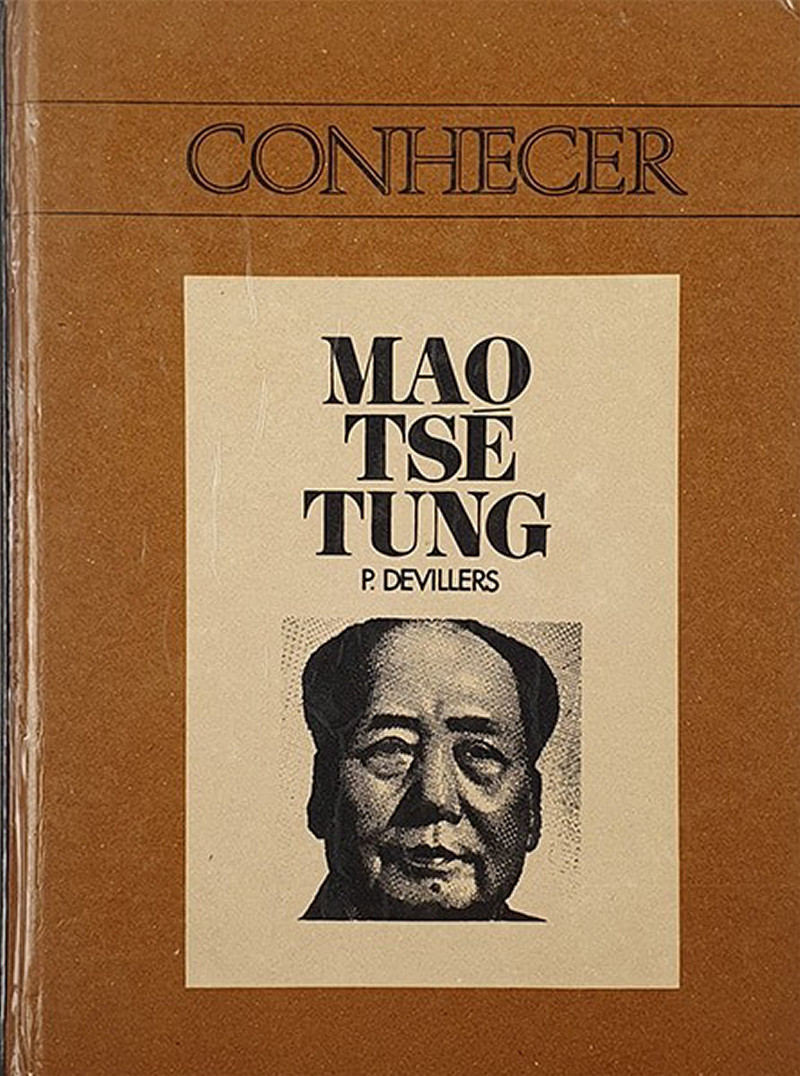
The Long March
Original: 长征
A poem commemorating the hardships and heroism of the Red Army's Long March, combining historical reflection with revolutionary optimism.
- Published1935
- TypePoetry
- GenrePoetry, Historical
- Languagezh
About the Author

Mao Tse-Tung
Mao Tse-Tung with selected quotes, key life events, political career, and historical context.
View Profile- OccupationLeader
- FromChina
-
Other Works
- To the Tune of Qin Yuan Chun: Changsha (1925)
- Report on an Investigation of the Peasant Movement in Hunan (1927)
- Why Is It That Red Political Power Can Exist in China? (1928)
- A Single Spark Can Start a Prairie Fire (1930)
- Snow (To the Tune of Qin Yuan Chun) (1936)
- On Guerrilla Warfare (1937)
- On Practice (1937)
- On Contradiction (1937)
- On Protracted War (1938)
- On New Democracy (1940)
- Talks at the Yan'an Forum on Literature and Art (1942)
- Serve the People (1944)
- On the People's Democratic Dictatorship (1949)
- On the Correct Handling of Contradictions Among the People (1957)