
John Grigg Biography Quotes 1 Report mistakes
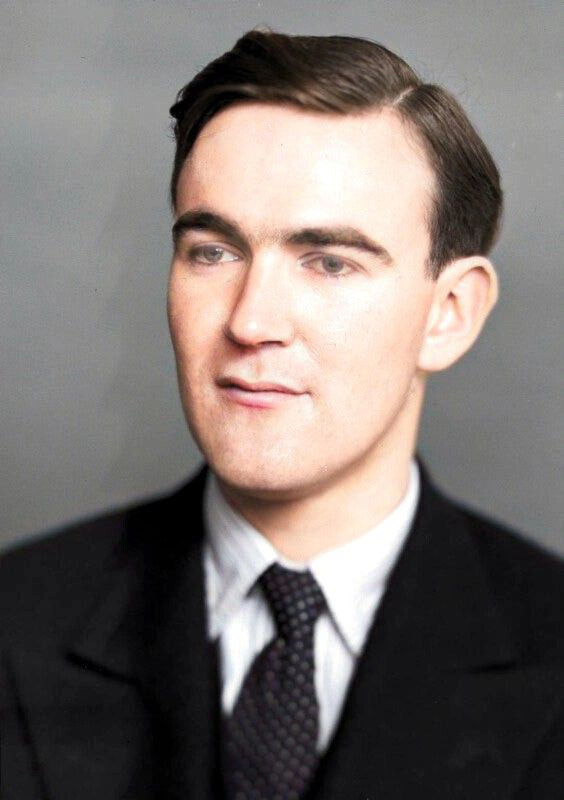
| 1 Quotes | |
| Born as | John Edward Poynder Grigg |
| Occup. | Writer |
| From | England |
| Spouse | Patricia Campbell (1958) |
| Born | April 15, 1924 London, England |
| Died | December 31, 2001 London, England |
| Aged | 77 years |
| Cite | |
Citation Formats
APA Style (7th ed.)
John grigg biography, facts and quotes. (2026, February 11). FixQuotes. https://fixquotes.com/authors/john-grigg/
Chicago Style
"John Grigg biography, facts and quotes." FixQuotes. February 11, 2026. https://fixquotes.com/authors/john-grigg/.
MLA Style (9th ed.)
"John Grigg biography, facts and quotes." FixQuotes, 11 Feb. 2026, https://fixquotes.com/authors/john-grigg/. Accessed 12 Feb. 2026.
Early Life and Background
John Edward Poynder Grigg was born on April 15, 1924, in England, into a society still organizing its memory of the First World War while drifting toward another. His childhood fell between austerity and inherited confidence: the interwar years prized duty, discretion, and the ability to speak with authority without sounding as if one were trying. That atmosphere mattered for a boy who would later become a biographer and critic of public life, sensitive to the ways class and institutions teach people what can be said aloud - and what must be hinted.He came of age as war returned. Like many of his generation, the Second World War pressed early adulthood into a moral and practical examination: the state could demand everything, and private life could be reorganized overnight. Grigg learned, in that pressured setting, the value of documentary truth and the unreliability of personal recollection. That tension - between public record and private narrative - became one of the quiet engines of his writing life.
Education and Formative Influences
Grigg was educated in the traditional British pattern that funneled talented young men toward letters, criticism, and public commentary, and he absorbed the habits of close reading and exact phrasing that distinguished mid-century English prose at its best. The period also trained him in a particular skepticism: the belief that style can conceal as much as it reveals, and that reputations are often built by selective quotation, institutional loyalty, and the convenient forgetting of awkward facts.Career, Major Works, and Turning Points
Grigg built his reputation as a writer and biographer in postwar Britain, when the old certainties were being renegotiated and the reading public still treated serious biography as a way to understand power. He is best remembered for substantial historical and political biographies, including work on David Lloyd George, in which he tried to reconcile the magnetism of political performance with the harsher mathematics of policy, ambition, and compromise. In an era that increasingly rewarded confessional self-writing and celebrity memoir, Grigg remained committed to the older biographical craft: patient reconstruction from documents, correspondence, and the public trace of a life.Philosophy, Style, and Themes
Grigg wrote with a moral fastidiousness that distrusted self-display. His well-known barb, "Autobiography is now as common as adultery and hardly less reprehensible". , was not simply a joke about literary fashion; it revealed a psychological posture shaped by restraint and a fear that self-narration easily becomes self-exculpation. He tended to treat the "I" as a contaminant in historical understanding, because it can turn a life into a defense brief or a performance for sympathy. For Grigg, the writer was obliged to look outward - toward evidence, context, and consequences - even when the culture was urging the opposite.That suspicion of confession also illuminates his approach to subjects: he often examined the gap between private motive and public act, showing how charisma can coexist with calculation and how ideals get translated into bargaining. His prose favored clarity over flourish, and his judgment - when sharp - aimed to be anchored in record rather than temperament. Underneath was a distinct anxiety about the ease with which stories harden into myths: the biographer must dismantle the comforting narrative without destroying the human being inside it.
Legacy and Influence
John Grigg died on December 31, 2001, closing a career that belonged to the long postwar arc of British letters when biography served as a civic instrument as much as a literary one. His influence endures less through a school of imitators than through an example: a model of biographical seriousness that resists both hero-worship and confessional drift, insisting that character is best revealed by the pressure of events and the documentary footprint a person leaves behind. In that sense, Grigg remains a reminder that the past is not improved by intimacy, only by accuracy and nerve.Our collection contains 1 quotes written by John, under the main topics: Witty One-Liners.
John Grigg Famous Works
- 1995 The Reign of Elizabeth I: Court and Culture in the Last Decade (Book)
- 1980 1943: The Victory That Never Was (Book)
- 1959 The Defeat of the Spanish Armada (Book)
Source / external links