
Book: The Neurotic's Notebook
Overview
Mignon McLaughlin's The Neurotic's Notebook (1960) is a compact treasury of aphorisms, wry observations, and mini-essays that dissect the anxieties, contradictions, and small triumphs of everyday life. The book collects short, punchy pieces that jump from love and marriage to childhood, social manners, and the private follies people hide from themselves. The tone is urbane and amused, favoring sharp insight over sentimentality.
Structure and Content
Rather than following a continuous narrative, the book is organized as a sequence of stand-alone entries that vary in length from a single line to a few paragraphs. Each item functions like a polished epigram: it captures a slice of human behavior or thought and then twists it just enough to reveal an unexpected truth. Subjects recur, relationships, self-deception, ambition, domestic life, so broader themes emerge even as individual pieces remain self-contained and easily browsable.
Themes and Observations
A central preoccupation is the tension between appearance and reality: how people construct facades, negotiate social roles, and console themselves with rationalizations that are both self-protective and comic. McLaughlin is alert to the small hypocrisies of polite society and the private neuroses that make people both pitiable and entertaining. Love and marriage are treated with a mixture of fondness and skepticism; children and parenthood offer material for both tenderness and bemused exasperation. The book repeatedly returns to the idea that modern life breeds anxieties that are at once universal and deeply personal.
Style and Voice
The writing is economical, relying on irony, paradox, and a crisp rhythmic cadence to land each point. McLaughlin's voice blends journalistic clarity with the clipped wit of an essayist who has spent years observing social manners. Humor functions as a diagnostic tool: a joke often reveals a moral or psychological insight, turning laughter into recognition. The prose is accessible without being flippant, capable of delivering a caustic remark and a rueful, affectionate one in the same paragraph.
Reception and Legacy
The Neurotic's Notebook found an appreciative readership for its ability to name the familiar embarrassments and illusions of midcentury life with precision and humor. Many of the book's lines have been anthologized and circulated as standalone epigrams because they distill a mood or truth so cleanly. Over time the collection has been read both as light entertainment and as a small book of human truths, useful for anyone who enjoys concise psychological observation paired with wit.
Why Read It
The book rewards spare and intermittent reading: a few entries at a time provide a quick mental refresh and often provoke recognition or self-reflection. It suits readers who appreciate literary aphorists and social satire, and it functions as a mirror for the petty anxieties and small cruelties that shape daily behavior. Ultimately, McLaughlin's notebook invites a smile that is half amusement and half acknowledgement, revealing how neuroses can be comic and illuminating when seen clearly.
Citation Formats
APA Style (7th ed.)
The neurotic's notebook. (2025, September 12). FixQuotes. https://fixquotes.com/works/the-neurotics-notebook/
Chicago Style
"The Neurotic's Notebook." FixQuotes. September 12, 2025. https://fixquotes.com/works/the-neurotics-notebook/.
MLA Style (9th ed.)
"The Neurotic's Notebook." FixQuotes, 12 Sep. 2025, https://fixquotes.com/works/the-neurotics-notebook/. Accessed 26 Mar. 2026.
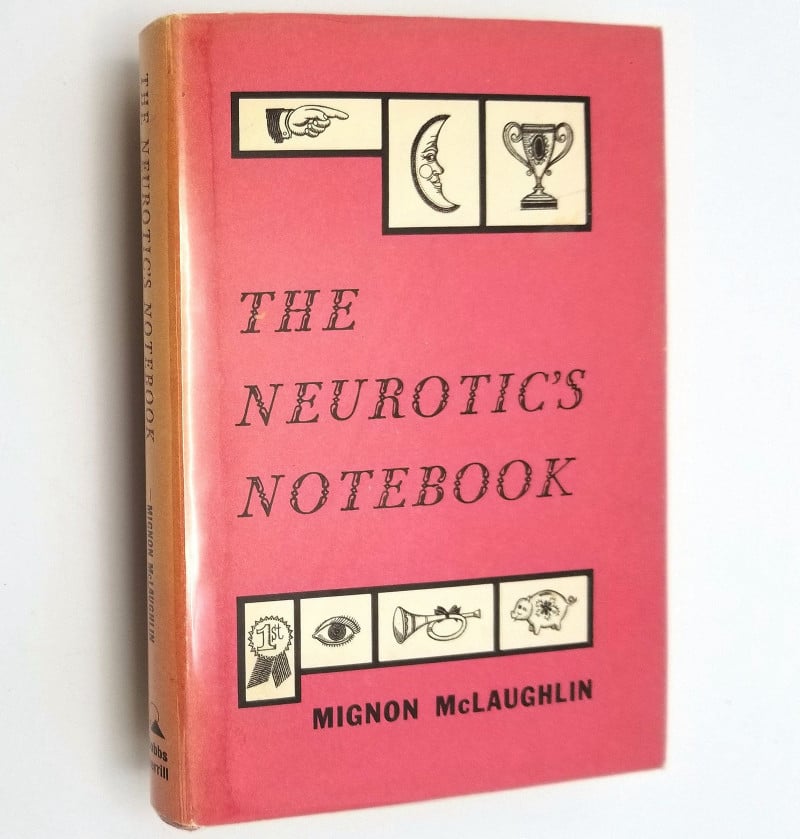
The Neurotic's Notebook
The Neurotic's Notebook is a collection of witty, insightful, and humorous aphorisms on a wide range of topics, including love, marriage, children, society, and life in general.
About the Author

Mignon McLaughlin
Mignon McLaughlin's biography and her insightful quotes on human experience. Discover the literary journey of this celebrated author.
View Profile- OccupationJournalist
- FromUSA