
Book: The Religion of Java
Overview
Clifford Geertz offers a richly textured ethnographic portrait of Java that maps religious life onto patterns of social organization, political allegiance, and cultural meaning. The study centers on the coexistence and interaction of multiple religious orientations within Javanese society and shows how ritual, belief, and habit form coherent systems that shape everyday experience. Geertz pays close attention to symbolic practices and the social contexts that sustain them, presenting religion as a constellation of lived meanings rather than merely doctrine.
Three Religious Streams
A core analytic move distinguishes three principal streams of religiosity among the Javanese: a syncretic, village-based orientation; an orthodox, Islamic orientation; and an elite, courtly orientation infused with Hindu-Buddhist and adat elements. Each stream carries distinct ritual repertoires, moral emphases, and political affiliations, and each embodies a different way of organizing social life and identity. Geertz traces how these orientations coexist, overlap, and compete, producing a dynamic cultural landscape.
Ritual and Symbol
Ritual emerges as the primary vehicle through which religious meaning is enacted and contested. Detailed descriptions of ceremonies, funerary practices, and everyday rites illuminate how symbols operate to produce social order and personal significance. Symbolic forms, gestures, chants, offerings, and hierarchical displays, serve both to stabilize local communities and to signal broader allegiances; their interpretation requires attention to local histories and the web of associations that give actions meaning.
Social Structure and Politics
Religious patterns are closely tied to social position and political orientation. Village-based, syncretic practices tend to align with peasant life and local solidarities, while orthodox Islam links to urban networks, religious education, and reformist movements. The elite orientation maps onto courtly authority, bureaucratic status, and ritualized forms of prestige. These alignments have political consequences, shaping electoral behavior, party formations, and responses to modernization and state power. Religion, in Geertz's analysis, is inseparable from questions of power, authority, and social change.
Method and Interpretation
Close observation and interpretive insight characterize the methodological stance. Thick, evocative descriptions of events and people are used to reconstruct the internal logic of religious systems. Attention to meaning, context, and the reflexive nature of cultural practices anticipates later developments in interpretive anthropology. Geertz privileges the local point of view, seeking to render the felt texture of religious life without reducing it to purely functional explanations.
Reception and Critique
The study became a foundational reference for anthropology of religion and Indonesian studies, praised for its evocative prose and theoretical reach. Critics later challenged elements of the typology as overly neat or static, arguing that the categories risk reifying fluid and historically contingent identities. Debates also emerged about the balance between description and generalization, and about how best to account for change, colonial legacies, and translocal influences. These critiques have extended and complicated Geertz's insights rather than simply overturning them.
Legacy
The account endures as a compelling example of how religious life can be read as a system of cultural meaning linked to social structure and political reality. Its emphasis on symbols, interpretation, and the multiplicity of religious forms influenced subsequent generations of scholars interested in religion, culture, and power. The study remains a touchstone for understanding the cultural complexity of Java and for thinking about how belief and practice shape collective life.
Citation Formats
APA Style (7th ed.)
The religion of java. (2026, February 5). FixQuotes. https://fixquotes.com/works/the-religion-of-java/
Chicago Style
"The Religion of Java." FixQuotes. February 5, 2026. https://fixquotes.com/works/the-religion-of-java/.
MLA Style (9th ed.)
"The Religion of Java." FixQuotes, 5 Feb. 2026, https://fixquotes.com/works/the-religion-of-java/. Accessed 5 Mar. 2026.
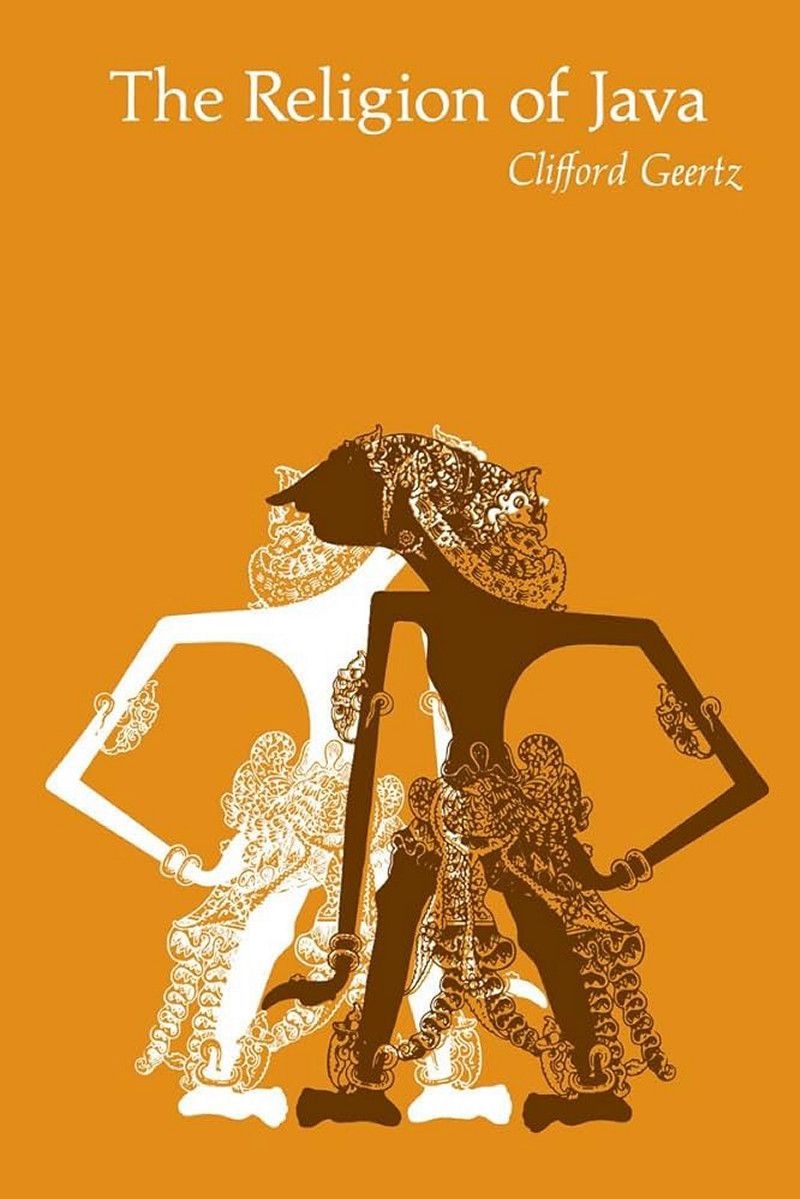
The Religion of Java
An ethnographic study of religious beliefs and social organization in the society of Java, Indonesia. The book investigates the complex interactions between Islam and local religious practices.
- Published1960
- TypeBook
- GenreAnthropology, Religious Studies, Cultural Studies, Non-Fiction
- LanguageEnglish
About the Author

Clifford Geertz
Clifford Geertz, a pioneer in symbolic anthropology and notable academic figure of the 20th century.
View Profile- OccupationScientist
- FromUSA
-
Other Works
- Peddlers and Princes: Social Development and Economic Change in Two Indonesian Towns (1963)
- Deep Play: Notes on the Balinese Cockfight (1973)
- The Interpretation of Cultures (1973)
- Negara: The Theatre State in Nineteenth-Century Bali (1980)
- Local Knowledge: Further Essays in Interpretive Anthropology (1983)