
Epic Poem: The Ring and the Book
Overview
Robert Browning’s The Ring and the Book (1868) is a sprawling verse narrative built from a sensational 1690s Roman murder case. Across twelve books of dramatic monologues, it reconstructs the court record and the clamor of public opinion to test how truth emerges from clashing voices. At its center stands Count Guido Franceschini, an impoverished nobleman who kills his young wife Pompilia and her putative parents, Pietro and Violante Comparini. Around this deed Browning stages a forensic drama of motive, testimony, and judgment, turning legal scraps into a meditation on justice, perception, and art.
Source and Form
Browning based the poem on a vellum-bound “Old Yellow Book” he purchased in Florence, a dossier of pamphlets, pleadings, and depositions from the 1698 trial. He frames the poem with an artisan’s metaphor: a goldsmith tempers pure ore with alloy to make a durable ring, as the poet tempers raw fact with imagination to shape enduring form. Book I and Book XII supply this framing voice; the ten books between are spoken by participants and commentators who contradict, embroider, and expose one another.
The Story
Pietro and Violante Comparini, childless Romans, secure an heir by dubious means when Violante presents the foundling Pompilia as her own. To stabilize their fortunes, they marry the girl to Guido Franceschini of Arezzo, whose title masks decline and resentment. The marriage soon sours: Guido and his family treat Pompilia with cruelty while pressing for money they believe is owed. In fear, Pompilia seeks help from the young priest Giuseppe Caponsacchi. He at first resists but finally escorts her from Arezzo toward Rome in a chaste flight that scandal and gossip paint as adultery.
Authorities overtake them; Caponsacchi is censured and exiled, Pompilia placed in protective seclusion. She bears a child. Months later, Guido, stoking claims of honor and injury, descends on the Comparini house with accomplices, kills Pietro and Violante, and stabs Pompilia. She lingers long enough to testify with lucid courage, naming Guido the murderer and asserting the innocence of her bond with Caponsacchi. Her death seals the moral pivot of the case.
Voices and Judgments
The poem begins with Rome’s chorus: “Half-Rome” blames Pompilia, “The Other Half-Rome” condemns Guido, while a worldly “Tertium Quid” hedges and counts costs. Guido speaks in proud self-justification; Caponsacchi in a fervor that reads as spiritual awakening; Pompilia with quiet, radiant integrity. Two lawyers argue in ornate, often self-revealing rhetoric, one for Guido, one for Pompilia and the priest, their legal brilliances exposing vanity as much as logic.
The climax comes in the long meditation of Pope Innocent XII, who sifts the record and the souls behind it. Aged yet incisive, he rejects Guido’s plea that honor absolves murder, distinguishes justice from revenge, and orders execution. Guido, hearing the verdict, drops the pose of injured husband and shrinks into panicked self-preservation. He is beheaded; the child survives.
Themes and Significance
Browning uses the courtroom to test how truth is made legible when every witness is partial. The poem’s architecture lets competing narratives refract a single event until moral contours sharpen. Pompilia’s voice, stripped of ornament, becomes the touchstone against which eloquence and sophistry fail. The ring-and-book conceit binds poetics to ethics: art, like law, must alloy fact with form to endure, but the alloy cannot be deceit. The poem stands as Browning’s masterwork of ventriloquism and moral inquiry, transforming a faded legal bundle into a living drama of conscience, community, and the hard-won clarity of judgment.
Citation Formats
APA Style (7th ed.)
The ring and the book. (2025, August 22). FixQuotes. https://fixquotes.com/works/the-ring-and-the-book/
Chicago Style
"The Ring and the Book." FixQuotes. August 22, 2025. https://fixquotes.com/works/the-ring-and-the-book/.
MLA Style (9th ed.)
"The Ring and the Book." FixQuotes, 22 Aug. 2025, https://fixquotes.com/works/the-ring-and-the-book/. Accessed 12 Feb. 2026.
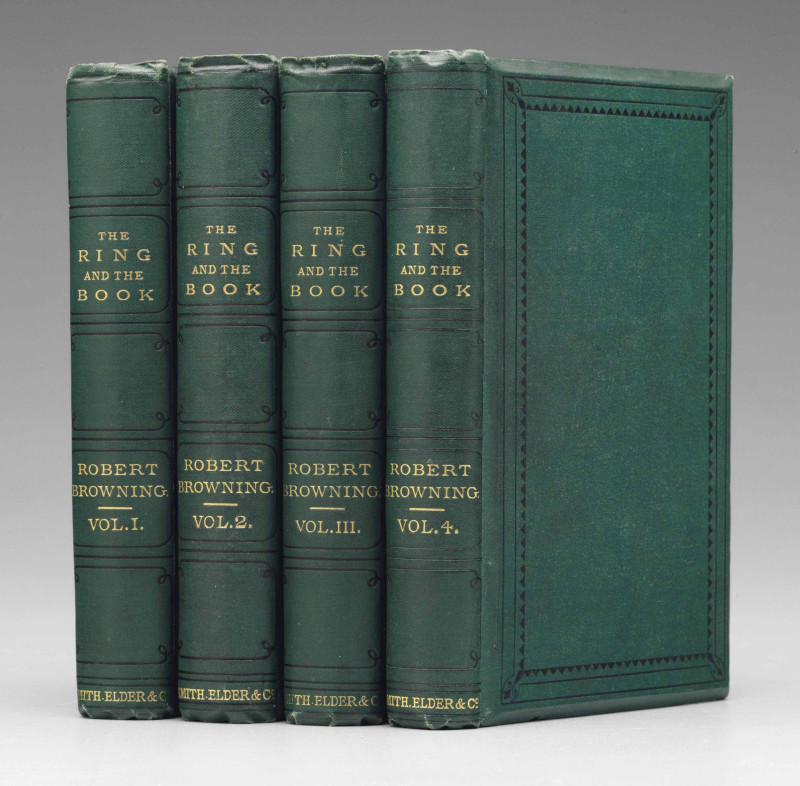
The Ring and the Book
Based on a 17th-century Italian murder trial, this poem consists of 12 dramatic monologues presenting different perspectives on the story.
- Published1868
- TypeEpic Poem
- GenrePoetry, Epic Poetry
- LanguageEnglish
- CharactersGuido Franceschini, Pompilia, Caponsacchi, Pope Innocent XII, Violante, Count Guido, Bettini, Hyacinthus de Archangelis, Giuseppe Caponsacchi, Dominus Hyacinthus, Giovanni, Niccolo
About the Author

Robert Browning
Robert Browning, renowned for his dramatic monologues and poetic influence in 19th-century English literature.
View Profile- OccupationPoet
- FromEngland
-
Other Works
- Pauline (1833)
- Paracelsus (1835)
- Sordello (1840)
- Pippa Passes (1841)
- Men and Women (1855)
- Dramatis Personae (1864)