
Novel: The Scarlet Letter
Overview
Nathaniel Hawthorne’s The Scarlet Letter unfolds in 17th-century Puritan Boston, tracing the moral and psychological costs of sin, secrecy, and social judgment. It centers on Hester Prynne, condemned for adultery and forced to wear a scarlet "A" on her breast, her unacknowledged partner, the revered minister Arthur Dimmesdale, her vengeful husband Roger Chillingworth, and her uncanny child Pearl, who becomes a living emblem of her mother’s transgression. Through rich symbolism and a tightly woven structure, the novel probes the tension between public shame and private conscience, and the fragile boundaries between law, religion, and human compassion.
Setting and Premise
In a theocratic colony that conflates civil authority with spiritual purity, Hester emerges from prison carrying an infant. She is directed to stand on the scaffold, endure scorn, and confess her partner’s name; she refuses, accepting lifelong punishment instead. The embroidered letter, intended as a brand of shame, becomes the focal point through which the community, and the reader, interprets her identity.
Plot
As Hester acclimates to life on the margins, she supports herself through needlework and quietly aids the poor. Over time, some townspeople read the "A" as "Able", a sign of competence rather than disgrace. Pearl, spirited and perceptive, continually draws attention back to the secret at the story’s core.
Hester’s long-absent husband arrives in disguise, calling himself Roger Chillingworth. He demands that Hester conceal his identity and vows to find and punish Pearl’s father. Chillingworth attaches himself to Reverend Dimmesdale, whose brilliant sermons and frail health make him both admired and vulnerable. Suspecting Dimmesdale’s hidden guilt, Chillingworth becomes his intimate physician and psychological tormentor, mining his conscience and magnifying his suffering. Dimmesdale’s self-accusations intensify, erupting in midnight vigils on the scaffold and visions that blur the boundary between providence and projection; a meteor is read by some as the "A" of "Angel", by others as an emblem of adultery.
After seven years, Hester meets Dimmesdale in the forest, where social surveillance recedes. She reveals Chillingworth’s identity and urges Dimmesdale to escape with her to Europe. In a charged scene, she removes the letter and lets down her hair, and sunlight momentarily returns to the narrative. But Pearl demands the letter back, insisting on the truth that binds them. The lovers plan to sail away after Dimmesdale’s forthcoming Election Day sermon.
Climax and Aftermath
Dimmesdale delivers his greatest sermon, then, seeing Chillingworth’s thwarting presence, ascends the scaffold with Hester and Pearl and publicly confesses, acknowledging his bond with them. He dies in their arms; accounts differ about whether an "A" appears upon his chest, reflecting the novel’s persistent ambiguity. Deprived of his quarry, Chillingworth withers and dies within a year, leaving Pearl a substantial inheritance.
Hester and Pearl vanish from Boston. Years later, Hester returns alone to the cottage by the sea and resumes wearing the letter by choice. Women seek her counsel, recognizing in her endurance and charity a hard-won wisdom. After her death, she is buried near Dimmesdale; their shared tombstone bears a heraldic device: "On a field, sable, the letter A, gules".
Themes and Symbols
The scarlet letter evolves from stigma to complex sign, exposing how meaning is assigned by community and transformed by character. The scaffold stages the three great crises of the book, shame, vigil, confession, while the forest offers a counter-space of freedom and moral testing. Pearl embodies nature’s unruly truth, resisting hypocrisy and forcing recognition. Hawthorne’s romance explores sin not as a singular fall but as an ongoing negotiation between law and love, identity and society, secrecy and revelation.
Citation Formats
APA Style (7th ed.)
The scarlet letter. (2025, August 24). FixQuotes. https://fixquotes.com/works/the-scarlet-letter/
Chicago Style
"The Scarlet Letter." FixQuotes. August 24, 2025. https://fixquotes.com/works/the-scarlet-letter/.
MLA Style (9th ed.)
"The Scarlet Letter." FixQuotes, 24 Aug. 2025, https://fixquotes.com/works/the-scarlet-letter/. Accessed 12 Feb. 2026.
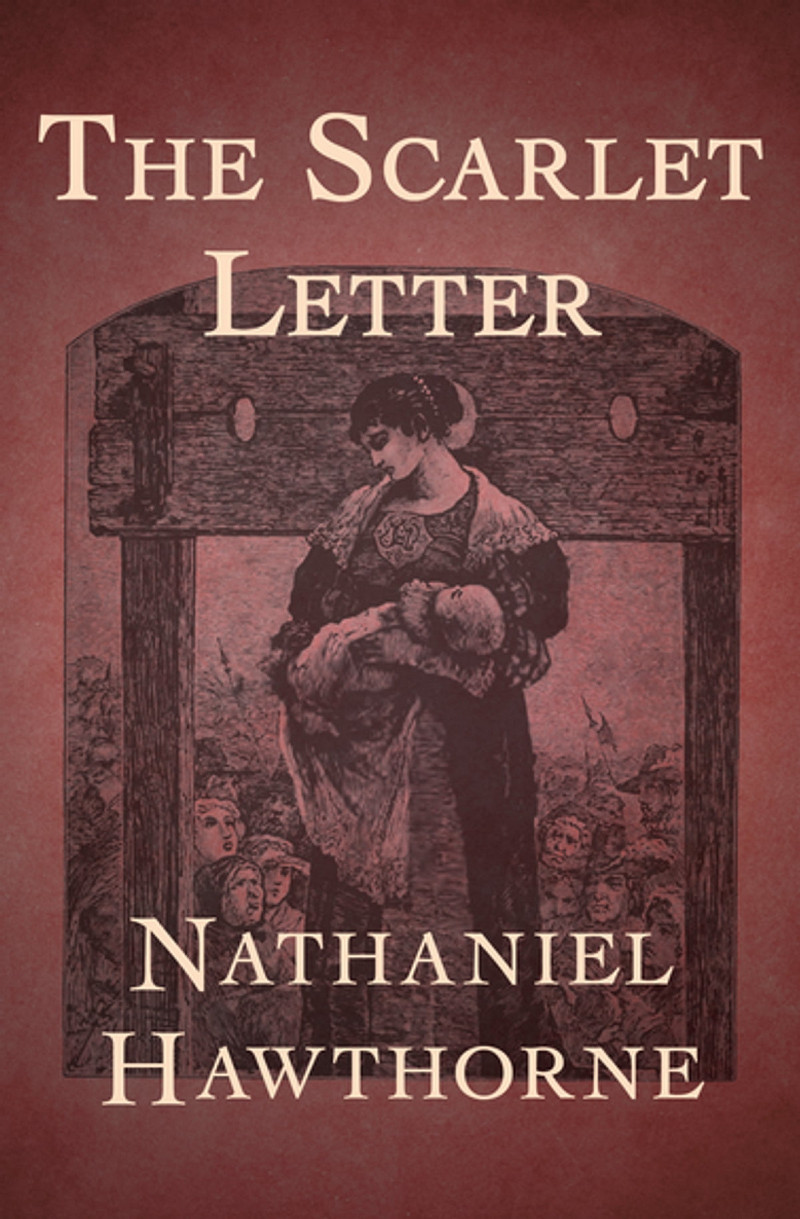
The Scarlet Letter
Original: The Scarlet Letter: A Romance
Set in 17th-century Puritan Boston, the story revolves around a young woman named Hester Prynne who conceives a daughter through an affair. She is ostracized and punished by the community, forced to wear a scarlet 'A' on her chest to signify her sin.
- Published1850
- TypeNovel
- GenreHistorical fiction, Romantic fiction
- LanguageEnglish
- CharactersHester Prynne, Pearl, Roger Chillingworth, Arthur Dimmesdale
About the Author

Nathaniel Hawthorne
Nathaniel Hawthorne, renowned 19th-century American writer known for The Scarlet Letter and more.
View Profile- OccupationNovelist
- FromUSA
-
Other Works
- Twice-Told Tales (1837)
- Mosses from an Old Manse (1846)
- The House of the Seven Gables (1851)
- The Blithedale Romance (1852)
- The Marble Faun (1860)