
Antiphanes Biography Quotes 4 Report mistakes
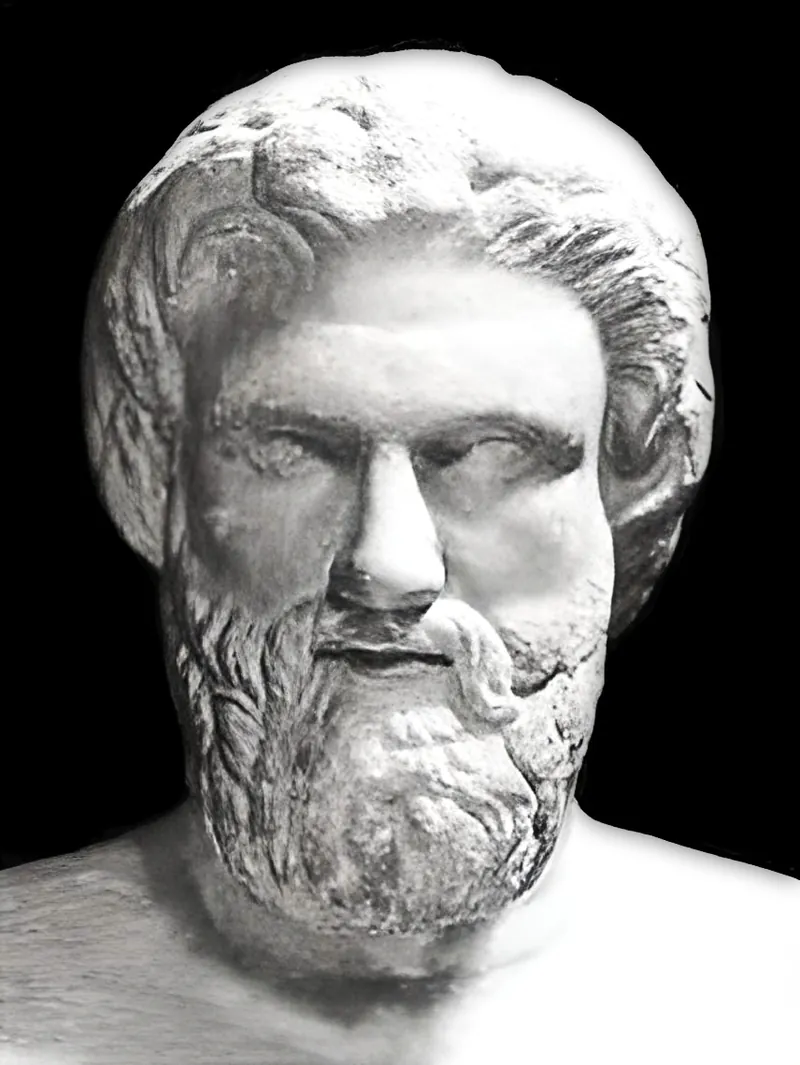
| 4 Quotes | |
| Occup. | Writer |
| From | Greece |
| Born | 408 BC Chios |
| Died | 334 BC |
| Cite | |
Citation Formats
APA Style (7th ed.)
Antiphanes biography, facts and quotes. (2026, February 3). FixQuotes. https://fixquotes.com/authors/antiphanes/
Chicago Style
"Antiphanes biography, facts and quotes." FixQuotes. February 3, 2026. https://fixquotes.com/authors/antiphanes/.
MLA Style (9th ed.)
"Antiphanes biography, facts and quotes." FixQuotes, 3 Feb. 2026, https://fixquotes.com/authors/antiphanes/. Accessed 9 Feb. 2026.
Early Life and Background
Antiphanes was born around 408 BCE into the restless aftermath of Athens' Peloponnesian War defeat, a time when civic pride and civic anxiety lived side by side. Ancient testimonia place him within the orbit of Attic comedy but also mark him as an outsider by origin - a man of the broader Greek world who made his name in Athens, the magnetic center for poets, actors, and producers. In the decades of his youth, the city was rebuilding its finances and its confidence while its public culture remained ravenous for theater that could laugh at current events, social climbing, and the hypocrisies of respectable speech.Comedy in Antiphanes' lifetime was changing its subject matter. The blunt political invective of Old Comedy had ebbed, and the stage increasingly turned toward domestic plots, recognizable types, and the comedy of manners - the middle space now called Middle Comedy. Antiphanes entered that world as a craftsman of urban observation, writing for audiences who wanted both wit and a mirror: the household and the marketplace, not the Assembly, were becoming the standard settings for moral diagnosis.
Education and Formative Influences
His formation was shaped by the institutions that trained a comic poet: familiarity with performance, meters, and the competitive festival system, and an ear tuned to contemporary speech. Antiphanes wrote in a city saturated with rhetorical display and philosophical argument, where sophists, courtroom orators, and Socratic schools competed to define what counted as intelligence. This atmosphere encouraged a comic sensibility that could borrow the cadence of public reasoning while exposing its self-serving logic - an education not only in literature but in how Athenians justified themselves.Career, Major Works, and Turning Points
Antiphanes became one of the most prolific writers of his era, credited in later catalogues with a vast output of comedies (ancient sources speak of hundreds of plays), most now surviving only in fragments. Titles such as Sappho, The Messenian, The Physician, The Heiress, and The Boeotian (among many others) suggest his range - from literary parody to ethnic types, from professional satire to plots organized around inheritance, appetite, and status. His turning point was less a single event than a sustained mastery of the new comic marketplace: he wrote for an Athens increasingly defined by private wealth, hired expertise, and competitive display, and he refined a style of pointed moral observation that later comic poets and anthologists found quotable.Philosophy, Style, and Themes
Antiphanes' fragments show a writer who trusted effort more than inspiration and who treated craft as ethical discipline. His comic voice often praises workmanlike persistence, the steady repetition by which a person reforms both skill and fate: "Everything yields to diligence". Read psychologically, the line sounds like self-instruction from inside the profession itself - a poet reminding himself that audiences are fickle, rivals are many, and only relentless revision keeps a writer afloat. The joke is not merely that diligence wins, but that diligence is what a comic poet can control in a world that rewards luck, patronage, and fashion.Yet he was equally alert to the costs of time and the moral weathering of a life spent seeking advantage. The bleak, compressed image of decline - "Old age is, so to speak, the sanctuary of ills: they all take refuge in it". - reveals a sensibility that could look past festive surfaces to bodily truth. In a genre built on appetite and energy, that line functions like a sudden change of lighting: the body becomes the stage where comedy ends. Likewise his moral criticism of acquisitiveness is not abstract but diagnostic, as if he had watched ordinary people lie to themselves until the lie felt like virtue: "The quest for riches darkens the sense of right and wrong". The theme fits the Athens of his maturity, when mercenary service, banking, and long-distance trade altered what citizens imagined as "enough", and comedy became the art that measured the spiritual fallout.
Legacy and Influence
Although almost all of Antiphanes' plays are lost, his afterlife has been unusually strong for a fragmentary author because his sentences travel well. Later writers mined him for maxims, and the surviving lines preserve a mind that used laughter to test character under pressure - hunger, vanity, age, and money. Historically, he stands as a key shaper of Middle Comedy's turn toward social ethics and everyday psychology, a bridge between Aristophanes' public combat and Menander's domestic realism. His endurance lies in that blend: a craftsman's respect for labor, a satirist's suspicion of wealth, and a clear-eyed awareness that time eventually collects every pretense.Our collection contains 4 quotes written by Antiphanes, under the main topics: Ethics & Morality - Wisdom - Perseverance - Aging.
Other people related to Antiphanes: Athenaeus (Author)
Antiphanes Famous Works
- -350 The Farmer (Play)