
Book: Time and Faith
Overview
William Edward Hickson’s Time and Faith (1857) is a sustained inquiry into how the measurement of time, calendars, cycles, and chronological frameworks, shapes and is shaped by the history of Christian belief. Writing as a reform-minded scholar and editor steeped in historical criticism, Hickson probes the foundations of ecclesiastical chronology and tests the trustworthiness of received narratives about the early Church. The book’s controlling insight is that disputes of doctrine and authority cannot be separated from disputes about timekeeping: the ways communities reckon weeks, feasts, years, and eras become instruments by which traditions are fixed, controversies adjudicated, and legitimacy claimed.
Scope and Method
Hickson gathers and compares evidence from classical, Jewish, and Christian sources, Scripture, patristic writers, chronographers such as Eusebius and Jerome, Roman consular lists, and astronomical cycles attributed to Greek and Alexandrian authorities. He treats these witnesses not as harmonious but as competing testimonies that must be tested against one another. Where anniversaries, martyrdoms, councils, and feast days are dated inconsistently, he weighs internal coherence, external corroboration, and the silent witness of calendar systems. Throughout, he distinguishes the moral and spiritual content of Christianity from the institutional narratives that accumulated around it, arguing that a sound chronological backbone is prerequisite to fair judgment of theological development.
Time: Calendars, Cycles, and Controversies
A central strand of the book examines how calendar science enters ecclesiastical life. Hickson traces the shift from Jewish to Christian reckoning, the adoption and adaptation of the seven-day week, and the practical and symbolic stakes of Sunday observance. He gives particular attention to the Paschal question: whether and how the celebration of Easter should be tied to the Jewish Passover (the Quartodeciman practice) or fixed to a Sunday independent of the fourteenth day of Nisan. Here he elucidates the role of Alexandrian computations, the Metonic cycle, and later Latin tables in striving for uniformity across diverse provinces. He contends that later summaries which credit the Council of Nicaea with a final and flawless settlement oversimplify a long and technically complex process that continued to generate local variation and controversy.
Faith: Doctrine, Authority, and Development
On the plane of belief, Hickson explores how chronological scaffolding enabled the consolidation of authority. The dating of persecutions, the succession of bishops, and the anniversaries of martyrs become mechanisms for establishing continuity and precedence. He scrutinizes the reliance placed on Eusebius and subsequent ecclesiastical historians, noting where apologetic aims or regional interests appear to have colored their timetables. Without dismissing the substance of Christian faith, he resists the uncritical reception of legendary accretions and urges that doctrine be distinguished from the often uncertain timelines that later communities constructed to defend it.
Critical Revisions and Proposals
Hickson offers measured corrections to widely accepted dates and narratives when they conflict with firmer chronological data. He re-evaluates episodes whose placement rests on circular reasoning, highlights the perils of harmonizing discordant sources by fiat, and proposes that certain traditions be regarded as later rationalizations of earlier diversity. His analysis of festal cycles illustrates how compromises forged to achieve unity can later be mistaken for apostolic uniformity. By exposing where the record is thin or contradictory, he calls for intellectual honesty about the limits of what can be known and a willingness to let uncertainty stand rather than be papered over.
Significance
Time and Faith models a historically responsible Christianity that welcomes scrutiny. Hickson shows that careful chronology does not diminish faith but clarifies it, freeing conviction from the weight of doubtful tradition and making room for a more durable unity founded on truth. The book’s enduring contribution lies in its demonstration that the history of doctrine and the science of time are inseparable, and that only by attending to both can the early centuries of the Church be understood with integrity.
Citation Formats
APA Style (7th ed.)
Time and faith. (2025, August 22). FixQuotes. https://fixquotes.com/works/time-and-faith/
Chicago Style
"Time and Faith." FixQuotes. August 22, 2025. https://fixquotes.com/works/time-and-faith/.
MLA Style (9th ed.)
"Time and Faith." FixQuotes, 22 Aug. 2025, https://fixquotes.com/works/time-and-faith/. Accessed 5 Mar. 2026.
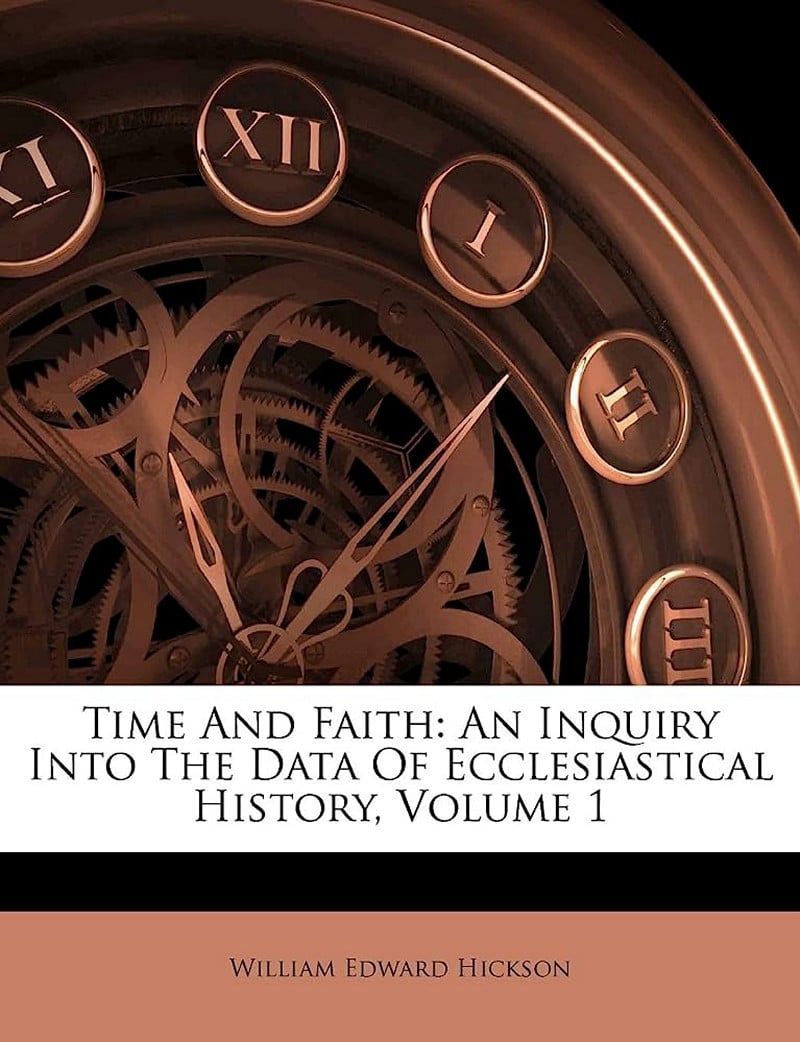
Time and Faith
This book captivates religious thoughts and reflections on faith and its importance in life.
- Published1857
- TypeBook
- GenreReligion
- LanguageEnglish
About the Author

William Edward Hickson
William Edward Hickson, a pivotal 19th-century British writer and social reformer.
View Profile- OccupationWriter
- FromUnited Kingdom
- Other Works