
Trump: The Art of the Comeback
Overview
Donald Trump’s 1997 book charts the arc from late-1980s overreach to a mid-1990s rebound, mixing memoir with blunt business advice and star-fueled self-promotion. Co-written with journalist Kate Bohner, it reads as a counternarrative to headlines predicting his collapse, arguing that a combination of nerve, media savvy, and relentless negotiating turned a near-debacle into a reputational revival. The voice is brash, confessional in selected ways, and geared toward portraying setbacks as staging grounds for bigger deals.
Fall from the boom
At the end of the 1980s, Trump was stretched across trophy assets and costly projects, most notably the Trump Taj Mahal casino and the Plaza Hotel. When the real estate market softened and credit tightened, heavy debt service collided with falling revenues. Lenders pressed hard; the tabloids chronicled a potential implosion. Trump frames this period as a test of nerve rather than a mathematical inevitability, emphasizing his refusal to declare personal bankruptcy, his willingness to slash expenses, and his use of time as a bargaining chip. He gave up or restructured troubled holdings, including the Plaza, cut conspicuous luxuries like the Trump Princess yacht and the Trump Shuttle, and convinced banks that his name and operating skill represented recoverable value.
Negotiating the workout
Central to the narrative is the “workout” with bankers. Trump recounts endless meetings where he leveraged two assets: cash flow from steadier properties, especially Trump Tower, and the brand’s media gravity. He portrays lenders as rational actors who preferred a cooperative borrower to a fire sale that would crater their own balance sheets. Personal guarantees were pared back, maturities were extended, and casino debts were reorganized through court-supervised restructurings. The message is that leverage is more than loan-to-value; it is also the leverage of attention, optionality, and credibility under pressure.
Rebuilding the platform
With the pressure eased, Trump pivots to opportunistic buying and rebranding. He spotlights 40 Wall Street, a neglected downtown skyscraper he picked up at a low basis and repositioned as “The Trump Building, ” and the redevelopment of the old Gulf & Western tower at Columbus Circle into Trump International Hotel and Tower. He touts turning Mar-a-Lago into a high-dues private club to monetize operating costs while enhancing status. He expands into show-business adjacency by acquiring the Miss Universe Organization, arguing that pageants and television amplify the brand, create deal flow, and hedge cyclical real estate. The throughline is discipline on price, aggressive marketing, and a tight focus on cash-generating assets.
Personal image and private life
The book intertwines business and celebrity. Trump leans into a combative public persona, saying the press is both battlefield and megaphone. He sketches his marriage to Marla Maples and his role as a father, presenting family scenes as proof of grounded priorities even while recounting tabloid storms. He reiterates personal rules, no alcohol, long hours, direct calls, framed as habits that compound under stress.
Lessons and themes
Recurring principles include: protect cash flow, negotiate from reality not pride, move quickly on distressed value, and use publicity strategically. He endorses hard-edged reciprocity, reward loyalty, punish betrayal, and champions prenuptial agreements and airtight contracts. Failure is rebranded as a temporary mispricing of risk that can be corrected by stamina, vision, and timing.
Reception and imprint
The book drew mixed reactions: critics saw boastful score-settling and selective accounting; admirers saw a playbook for resilience. As a time capsule, it captures mid-1990s New York deal culture and the fusion of brand, media, and property that would define Trump’s public identity. Its core claim is less about perfect foresight than about survivorship: enduring the cycle, preserving option value, and returning stronger when the market turns.
Citation Formats
APA Style (7th ed.)
Trump: The art of the comeback. (2026, February 4). FixQuotes. https://fixquotes.com/works/trump-the-art-of-the-comeback/
Chicago Style
"Trump: The Art of the Comeback." FixQuotes. February 4, 2026. https://fixquotes.com/works/trump-the-art-of-the-comeback/.
MLA Style (9th ed.)
"Trump: The Art of the Comeback." FixQuotes, 4 Feb. 2026, https://fixquotes.com/works/trump-the-art-of-the-comeback/. Accessed 22 Mar. 2026.
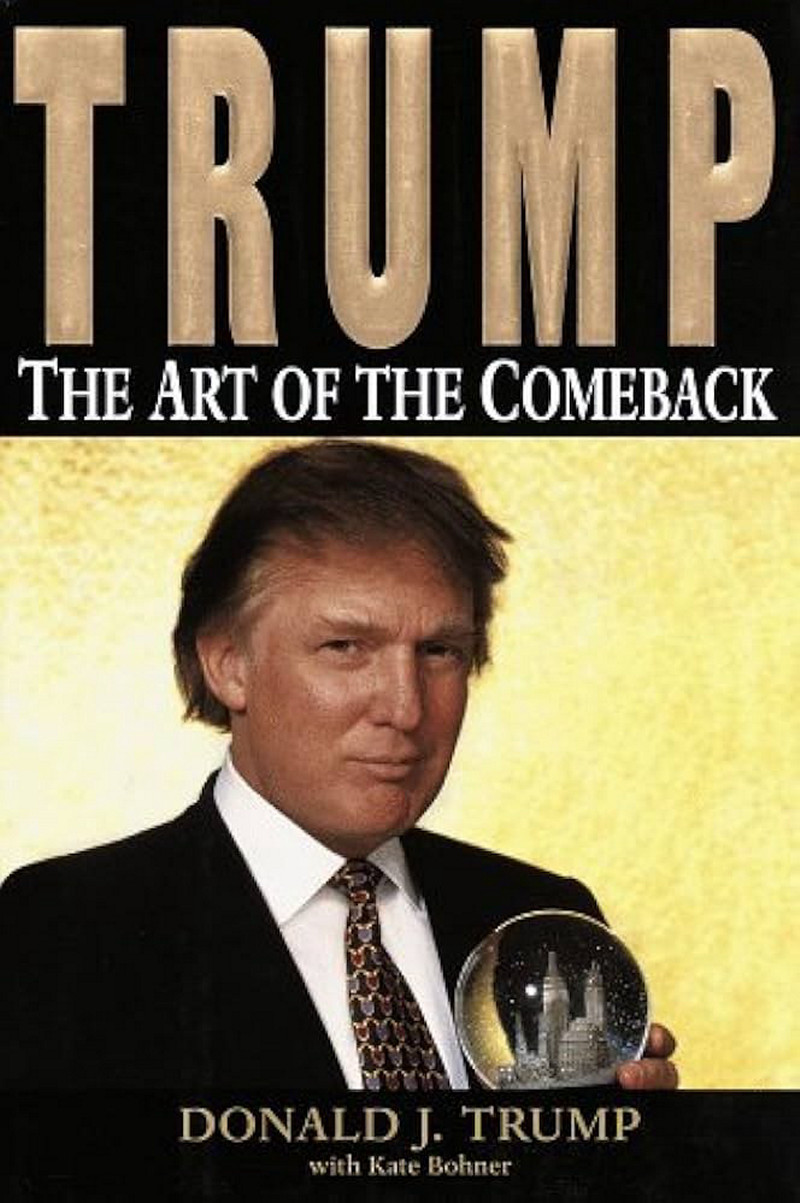
Trump: The Art of the Comeback
Trump discusses his financial troubles in the early 1990s and the process of rebuilding his businesses, offering lessons for overcoming adversity.
- Published1997
- TypeBook
- GenreMemoir, Business, Non-Fiction
- LanguageEnglish
About the Author

Donald Trump
Donald Trump, from real estate mogul to President, through an in-depth biography and memorable quotes.
View Profile- OccupationBusinessman
- FromUSA
- Other Works