
Abdullah Gul Biography Quotes 9 Report mistakes
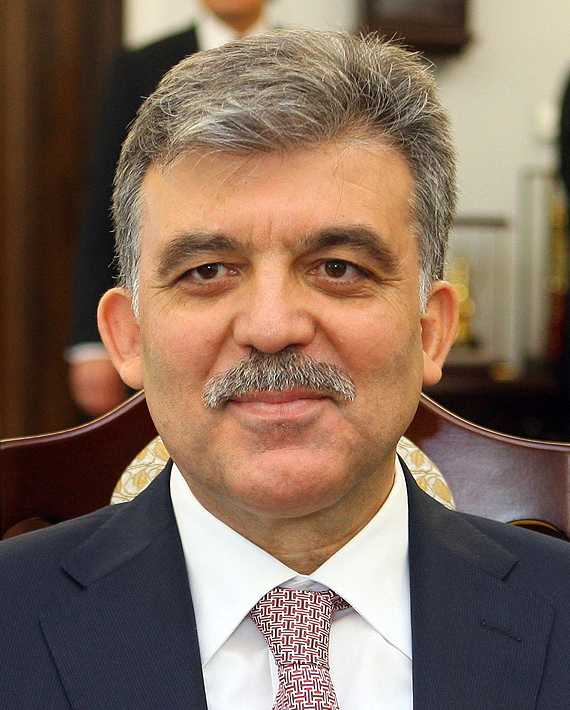
| 9 Quotes | |
| Occup. | President |
| From | Turkey |
| Born | October 29, 1950 Kayseri, Turkey |
| Age | 75 years |
| Cite | |
Citation Formats
APA Style (7th ed.)
Abdullah gul biography, facts and quotes. (2026, February 11). FixQuotes. https://fixquotes.com/authors/abdullah-gul/
Chicago Style
"Abdullah Gul biography, facts and quotes." FixQuotes. February 11, 2026. https://fixquotes.com/authors/abdullah-gul/.
MLA Style (9th ed.)
"Abdullah Gul biography, facts and quotes." FixQuotes, 11 Feb. 2026, https://fixquotes.com/authors/abdullah-gul/. Accessed 12 Feb. 2026.
Early Life and Education
Abdullah Gul was born on 29 October 1950 in Kayseri, a major city of central Anatolia. He studied economics at Istanbul University, an academic path that would shape his technocratic approach to politics. Early in his career he developed an international outlook, working in the 1980s at the Islamic Development Bank in Jeddah, where exposure to global finance and development policy sharpened his interest in economic reform and integration with international institutions. He married Hayrunnisa Gul, and their family life, often in the public eye, would become part of the broader debate in Turkey about religious expression and civic life.Political Beginnings
Gul entered politics through the movement led by Necmettin Erbakan, becoming active in the Welfare Party (Refah). In 1991 he was elected to the Grand National Assembly as a deputy from Kayseri. During the turbulent 1990s, marked by the 1997 military-led intervention and the subsequent closure of parties associated with political Islam, he became known as a pragmatic, internationally minded figure. He took part in parliamentary diplomacy and Turkey's engagement with European institutions, building a reputation for moderation. When the Welfare Party was banned, he moved to the Virtue Party (Fazilet), aligning with a reformist current that included figures such as Bulent Arinc. That current favored democratic consolidation, market reforms, and a more open stance toward Europe.Founding of the AK Party
After the Virtue Party was closed in 2001, Gul joined Recep Tayyip Erdogan and Bulent Arinc to found the Justice and Development Party (AK Party). He helped frame the party's early platform around economic stability, European Union accession, and social conservatism balanced with pluralism. As the movement took shape, he worked closely with rising technocrats such as Ali Babacan, whose economic stewardship complemented Gul's foreign policy focus.Prime Minister and Foreign Minister
The AK Party won the November 2002 elections. Because Recep Tayyip Erdogan was initially barred from holding office, Gul served as Prime Minister from November 2002 until March 2003, during which the government launched early reforms aimed at improving human rights, stabilizing the economy, and aligning Turkey with EU norms. After Erdogan entered parliament and became Prime Minister, Gul moved to the Ministry of Foreign Affairs, serving from 2003 to 2007. As foreign minister, he steered a more active diplomacy: Turkey supported UN efforts on Cyprus and opened EU accession negotiations in 2005. He worked with European counterparts to deepen institutional ties and with the United States during a difficult period shaped by the Iraq war. Gul also relied on the strategic counsel of Ahmet Davutoglu, then a senior adviser, while Ali Babacan took on key roles in economic management and EU negotiations. This team-oriented approach built Turkey's international profile and supported domestic reform.Presidency
A confrontation over the 2007 presidential election tested Turkey's institutions. The AK Party nominated Gul, while the main opposition, led by Deniz Baykal, opposed his candidacy; the military, under Chief of General Staff Yasar Buyukanit, posted an "e-memorandum" warning about secularism. Early elections in July 2007 reaffirmed the AK Party's mandate, and on 28 August 2007 parliament elected Gul the 11th President, succeeding Ahmet Necdet Sezer. His wife, Hayrunnisa Gul, became the first First Lady to wear a headscarf in the presidential palace, a symbolic shift in the public sphere.As president, Gul aimed to be an even-handed, constitutional figure while supporting reforms. Internationally, he launched "football diplomacy" with Armenia, traveling to Yerevan in 2008 at the invitation of President Serzh Sargsyan for a World Cup qualifier, an unprecedented visit that paved the way for the Zurich protocols the following year. He encouraged closer ties with the EU and advocated for regional stability during the upheavals of the Arab Spring. Domestically, he presided during years of strong economic growth and intense political contention, including high-profile court cases and debates about civil-military relations. During the 2013 Gezi Park protests he urged restraint and dialogue, signaling a more conciliatory tone than some within the government. While he and Recep Tayyip Erdogan remained close allies, observers often noted differences in style, with Gul emphasizing institutional balance, rule of law, and Turkey's European vocation.
Later Years and Legacy
Gul's term ended in August 2014, when Erdogan won the first direct presidential election. Stepping down, Gul chose not to found a rival party and kept a measured public profile, acting instead as an elder statesman. He supported educational and civic initiatives, including a university established in his hometown of Kayseri, and occasionally commented on democratic standards, economic governance, and foreign policy. He maintained ties with former colleagues such as Ahmet Davutoglu and Ali Babacan as they charted their own paths in politics.Abdullah Gul's career traces Turkey's political transformation from the 1990s into the 2010s: from reformist opposition to governing party, from a contested presidential election to a head of state who sought to anchor Turkey in global institutions. Known for careful diplomacy and an inclination toward consensus, he worked with and alongside figures such as Recep Tayyip Erdogan, Bulent Arinc, Ahmet Davutoglu, Ali Babacan, Deniz Baykal, and Serzh Sargsyan, leaving a legacy of pro-European engagement, institutional prudence, and an emphasis on bridging domestic divides while widening Turkey's international reach.
Our collection contains 9 quotes written by Abdullah, under the main topics: Freedom - Learning - Resilience - Peace - Human Rights.
Other people related to Abdullah: Silvan Shalom (Politician), Ahmet Necdet Sezner (President)
Source / external links