
Collection: Untitled Film Stills
Overview
Cindy Sherman's "Untitled Film Stills" is a landmark series of 70 small black-and-white photographs made between 1977 and 1980. Each image presents Sherman herself as a different female character, staged in scenes that feel lifted from mid-century cinema and popular media. The pictures do not depict any specific film; rather, they conjure the look and atmosphere of Hollywood B movies, film noir, and European art-house features. Printed at an intimate scale akin to publicity stills, they appear like fragments of a larger narrative, as if an entire film exists just beyond the frame.
Subjects and Themes
Sherman embodies a spectrum of archetypes familiar from postwar screen culture: the ingénue at a train station, the small-town girl in a cheap motel, the urban career woman seen from a low angle between skyscrapers, the housewife caught near a sink, the woman on the run glancing over her shoulder. Though the artist plays every role, the pictures are not traditional self-portraits. They treat identity as a performance constructed through costume, pose, setting, and camera conventions. By mimicking the visual codes that shaped female characters on screen, Sherman lays bare the mechanisms of typecasting and the pressures of the male gaze, while leaving the images open-ended enough that viewers project their own narratives and anxieties onto them.
Style and Process
Working with a 35mm camera, simple props, wigs, and makeup, Sherman acted as director, actor, set designer, and editor. Early photographs were made in apartments and modest interiors; later entries expand into city streets, beaches, highways, and rural margins, increasing the sense of cinematic scale. The compositions rely on familiar film grammar, low and high angles, cropped frames that activate off-screen space, dramatic diagonals, and expressions poised between action and aftermath. The gelatin silver prints’ grain and contrast evoke the texture of midcentury publicity stills and newspaper reproduction. Crucially, the small 8-by-10-inch format disciplines the viewing experience, encouraging a close, almost conspiratorial look that echoes how such images circulated historically.
Narrative Ambiguity
Each photograph is titled only by a number, "Untitled Film Still #21", for example, resisting descriptive cues and preserving narrative suspense. The gestures, settings, and props offer clues yet never resolve into a plot. A glance out a window hints at longing or threat; a suitcase suggests arrival or escape; a looming architecture foreshadows a fall that never comes. This deliberate ambiguity shifts attention from who the character is to how she is made legible, turning the act of looking into the subject of the work.
Context and Reception
Beginning the series after moving to New York in 1977, Sherman drew from mass-media imagery that saturated American culture and from the language of European cinema she encountered in art schools and repertory theaters. The work arrived amid vigorous feminist and postmodern debates about representation, authorship, and appropriation. Rather than copy existing pictures, Sherman appropriated styles and narrative conventions, re-performing them to expose their artifice. The series quickly became a touchstone in discussions of the gaze, spectatorship, and the social construction of femininity, and by the mid-1990s a complete set entered the collection of the Museum of Modern Art.
Legacy
"Untitled Film Stills" redefined what a photographic series could do, merging performance, cinema, and conceptual critique in a compact, persuasive form. Its influence stretches across contemporary photography, fashion imagery, and film, and it set the stage for Sherman's later bodies of work that push persona, archetype, and artifice into new territories. The pictures endure because they make visible the scripts that images write for us, even as they invite the viewer to imagine a different ending.
Citation Formats
APA Style (7th ed.)
Untitled film stills. (2026, February 5). FixQuotes. https://fixquotes.com/works/untitled-film-stills/
Chicago Style
"Untitled Film Stills." FixQuotes. February 5, 2026. https://fixquotes.com/works/untitled-film-stills/.
MLA Style (9th ed.)
"Untitled Film Stills." FixQuotes, 5 Feb. 2026, https://fixquotes.com/works/untitled-film-stills/. Accessed 12 Feb. 2026.
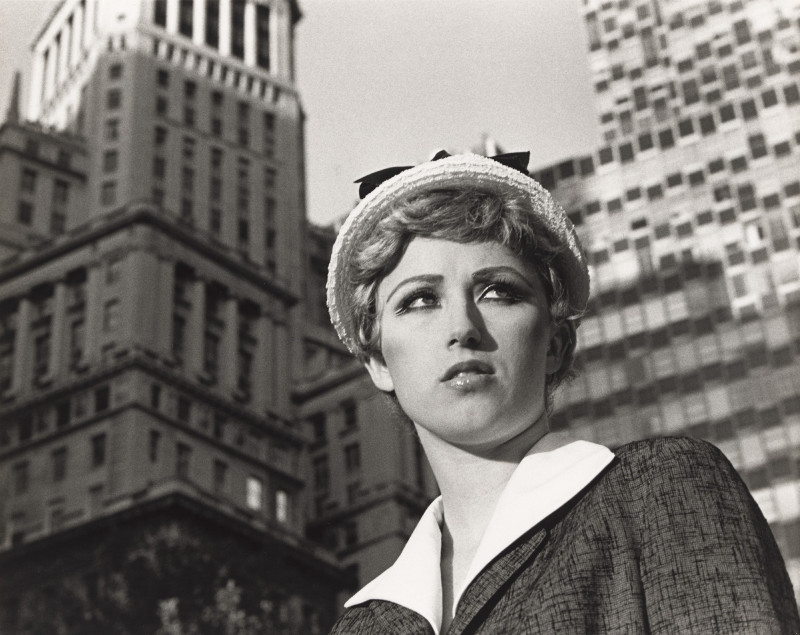
Untitled Film Stills
A landmark series of staged black-and-white photographs (produced 1977–1980) in which Sherman poses as dozens of female characters evoking generic movie stills. The work examines cinematic stereotypes, female identity and the construction of representation.
- Published1977
- TypeCollection
- GenrePhotography, Conceptual art
- Languageen
- CharactersCindy Sherman (as various cinematic female archetypes)
About the Author

Cindy Sherman
Cindy Sherman's biography and quotes, detailing her groundbreaking photography, artistic development, and influential exhibitions.
View Profile- OccupationPhotographer
- FromUSA
-
Other Works
- Centerfolds (1981)
- History Portraits (1989)
- Sex Pictures (1992)
- Office Killer (1997)
- Clowns (2003)
- Society Portraits (2008)