
Greta Garbo Biography Quotes 22 Report mistakes
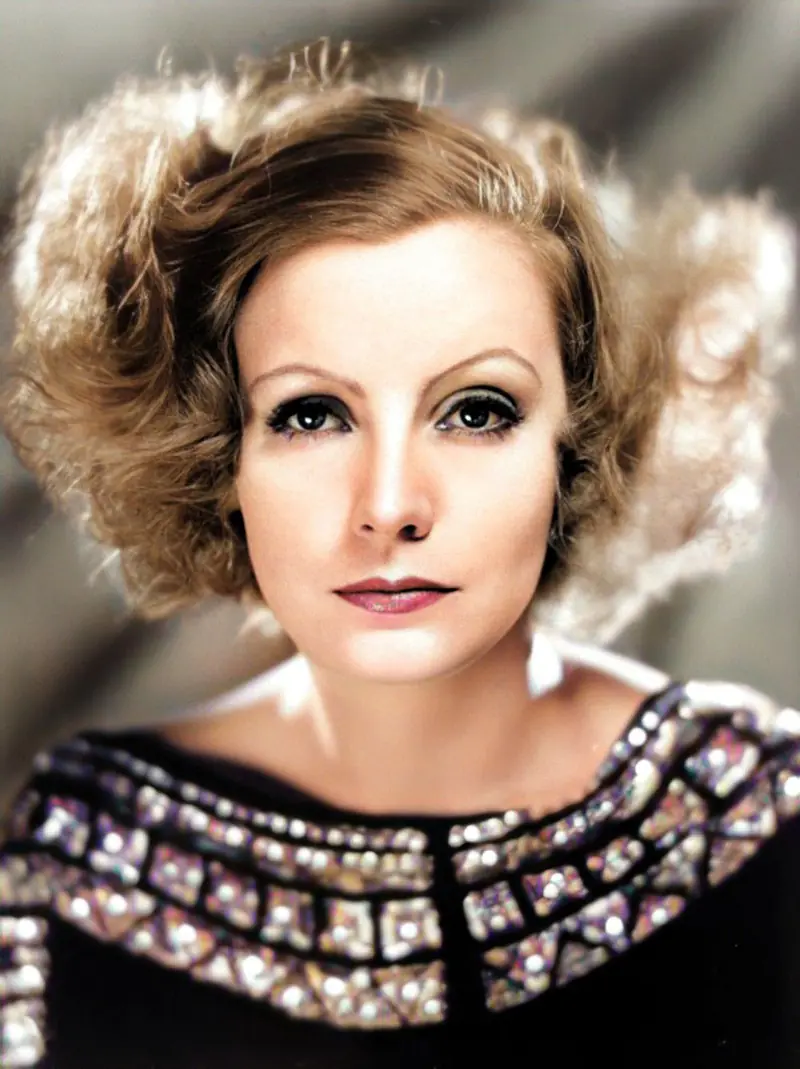
| 22 Quotes | |
| Occup. | Actress |
| From | Sweden |
| Born | September 18, 1905 |
| Died | April 15, 1990 |
| Aged | 84 years |
Greta Lovisa Gustafsson was born on September 18, 1905, in Sodermalm, Stockholm, a working-class district shaped by tenements, factory labor, and the brittle social hierarchies of early-20th-century Sweden. Her father, Karl Alfred Gustafsson, worked as a laborer, and her mother, Anna Lovisa Johansson, kept the household steady through scarcity. Garbo grew up observant and inward, learning early how poverty forces performance: composure in public, private feeling held tightly in reserve.
Loss and responsibility came young. Her father died in 1920, and the family finances tightened further; she took jobs to help support the household, including work at PUB, a Stockholm department store. That environment - mirrors, clothes, customer attention - trained her in the mechanics of image and the exhausting scrutiny attached to it. The future icon formed not as a social butterfly but as a self-protective teenager who learned to disappear even while being looked at.
Education and Formative Influences
A promotional film connected to her retail work opened a door into Swedish cinema, and she soon entered the Royal Dramatic Training Academy (Dramaten) in Stockholm. There she absorbed stage discipline and the European tradition of psychological realism, while director Mauritz Stiller became her crucial mentor, reshaping her screen presence, guiding her through silent-film technique, and helping craft the name "Garbo". Stiller insisted on control - of lighting, posture, pacing, silence - and she learned that withholding could be more powerful than display, a lesson that later defined her stardom.
Career, Major Works, and Turning Points
Garbo broke through in Sweden with Stiller in The Saga of Gosta Berling (1924) before following him to Hollywood, where MGM quickly recognized her magnetism and cultivated her as an adult, enigmatic star rather than a bubbly ingenue. Her silent-era ascendancy included Flesh and the Devil (1926) opposite John Gilbert, and the sound transition only deepened her mystique: "Garbo talks!" was a sensation in Anna Christie (1930). Through the 1930s she delivered a rare run of varied, prestigious vehicles - Mata Hari (1931), Grand Hotel (1932), Queen Christina (1933), Anna Karenina (1935), Camille (1936), and Ninotchka (1939) - balancing romantic tragedy with flashes of comedy while carefully protecting privacy. After Two-Faced Woman (1941) drew critical backlash, she withdrew from filmmaking at 36, an abrupt exit that turned a career choice into legend, leaving audiences with the sense of an unfinished myth.
Philosophy, Style, and Themes
Garbo's inner life, as glimpsed through interviews and behavior, suggests a person who experienced fame less as reward than as intrusion. Her performance style depended on restraint - the slow turn of a head, the calibrated pause, the face that could look both remote and wounded - which matched her instinct to keep emotion unspent. "Your joys and sorrows. You can never tell them. You cheapen the inside of yourself if you do tell them". That principle helps explain her unique screen power: she did not confess; she implied, letting the audience do the reaching.
The roles that defined her - courtesans, queens, spies, exiles, women caught between desire and duty - echo a recurring tension between public identity and private self. She guarded solitude with near-strategic ingenuity, later summarizing her life as "about back entrances, side doors, secret elevators and other ways of getting in and out of places so that people won't bother me". Even the phrase most associated with her, "I want to be alone". , reads less as misanthropy than as a creed: autonomy as survival. In a studio system built on access, she treated distance as the only reliable boundary, and that distance became part of the art.
Legacy and Influence
Garbo died in New York City on April 15, 1990, having spent decades largely out of public view, walking the city anonymously, collecting art, and refusing the comeback narrative Hollywood loves. Her influence is both aesthetic and cultural: she helped define screen acting as intimate psychology rather than theatrical display, proved that a foreign-born woman could command Hollywood on her own terms, and made privacy itself a kind of authorship. In an era of oversharing, her legend persists because it is incomplete by design - a star who understood that the most durable image is the one not fully explained.
Our collection contains 22 quotes who is written by Greta, under the main topics: Witty One-Liners - Wisdom - Justice - Meaning of Life - Hope.
Other people realated to Greta: Coco Chanel (Designer), Billy Wilder (Director), Walter Reisch (Scientist), Sophia Loren (Actress), Indra Devi (Celebrity), Otto Friedrich (Writer)
Source / external links