
Alan Smith Biography Quotes 1 Report mistakes
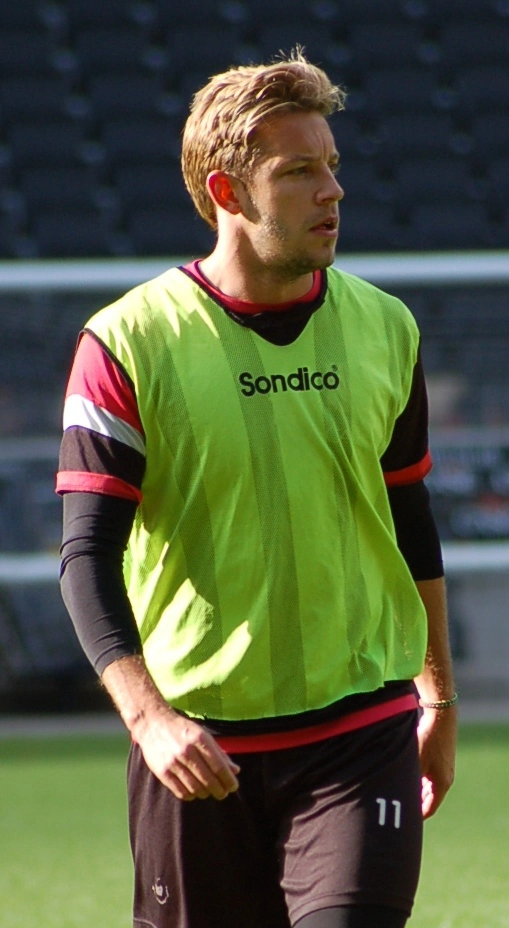
Attr: Glenn Salt, CC BY-SA 2.0
| 1 Quotes | |
| Occup. | Athlete |
| From | England |
| Born | October 28, 1980 Rothwell, West Yorkshire, England |
| Age | 45 years |
| Cite | |
Citation Formats
APA Style (7th ed.)
Alan smith biography, facts and quotes. (2026, February 11). FixQuotes. https://fixquotes.com/authors/alan-smith/
Chicago Style
"Alan Smith biography, facts and quotes." FixQuotes. February 11, 2026. https://fixquotes.com/authors/alan-smith/.
MLA Style (9th ed.)
"Alan Smith biography, facts and quotes." FixQuotes, 11 Feb. 2026, https://fixquotes.com/authors/alan-smith/. Accessed 30 Mar. 2026.
Early Life and Formation
Alan Smith was born in 1980 in Rothwell, West Yorkshire, England, and grew up in a football culture that prized grit as much as flair. Local junior football opened the path to the Leeds United academy, where his intensity, balance, and eye for goal quickly stood out. Coaches noticed a forward who chased lost causes and relished physical battles, an attitude that mirrored the character of the region. The academy environment at Leeds emphasized responsibility and togetherness; older professionals such as Lucas Radebe, David Batty, and Nigel Martyn set examples of resilience and standards that Smith absorbed as he moved toward the senior game.Leeds United Breakthrough
Smith burst into the Leeds first team as a teenager and scored on his debut against Liverpool, a statement moment that captured the blend of fearlessness and timing defining his early years. Under manager David OLeary, Leeds assembled a vibrant, youthful side sometimes dubbed OLearys Babies. Smith thrived among contemporaries and mentors, sharing attacks with Michael Bridges and later Mark Viduka, and combining with creative forces like Harry Kewell and Lee Bowyer. With Jonathan Woodgate and Rio Ferdinand anchoring the back line, Leeds surged into European contention, reaching the UEFA Champions League semifinal in 2001.Those seasons forged Smiths identity: a striker who could finish, harry defenders, and defend from the front. Yet the clubs financial crisis and subsequent instability disrupted momentum. As senior figures departed and results faltered, the team slid, eventually suffering relegation. Through that period, Smith remained prominent on the pitch, embodying fight even as a painful chapter closed for the club and its supporters.
Move to Manchester United and Role Evolution
In 2004 he transferred to Manchester United, a move steeped in controversy given the fierce rivalry with Leeds. Sir Alex Ferguson valued Smiths temperament and adaptability, deploying him at center-forward and increasingly in midfield. Training alongside Roy Keane, Paul Scholes, and Ryan Giggs, and sharing the front line with Wayne Rooney and, at times, Cristiano Ronaldo and Ruud van Nistelrooy, Smith broadened his game. He pressed intelligently, stayed compact between the lines, and learned the discipline of a holding or box-to-box role. The transition demonstrated his commitment to teams needs over personal numbers, reflecting the counsel of Ferguson and his staff.Injury and Resilience
A severe leg break and dislocated ankle sustained during an FA Cup tie at Anfield in early 2006 halted his progress. The injury, suffered while bravely charging down a thunderous free kick, demanded extensive surgery and a lengthy rehabilitation. Support from teammates and opponents alike underscored the respect he had earned across the game. Medical staff guided him through incremental steps: regaining strength, confidence in contact, and match sharpness. His return symbolized resilience, though the setback inevitably influenced his pace and explosiveness and accelerated a more permanent shift toward deeper roles.Newcastle United Years
Smith joined Newcastle United in 2007, recruited initially by Sam Allardyce to bring bite and leadership to a squad in transition. Managerial changes followed, with Kevin Keegan, Joe Kinnear, and later Alan Shearer each trying to stabilize the team amid Premier League pressure. Smiths responsibilities continued to evolve toward a holding midfield berth, where his anticipation, tackling, and communication could marshal the center of the pitch. Following relegation, the club regrouped in the Championship under Chris Hughton, and Smith contributed to the dressing room culture that powered a return to the top flight. He shared leadership duties with senior figures such as Kevin Nolan and Fabricio Coloccini, offering standards to younger teammates even as injuries limited long stretches of play.Later Career: MK Dons and Notts County
Seeking regular football and a chance to mentor, Smith moved to MK Dons, first on loan and then permanently. Manager Karl Robinson valued his experience, asking him to model professionalism for developing players, occupy multiple positions as needed, and set a tone on training days. That combination of flexibility and presence led naturally to player-coach roles, and he later joined Notts County, where he spent several seasons balancing on-field duties with guidance for the clubs younger professionals. When managerial change created a brief vacuum, Smith stepped in as caretaker, steadying the squad until a permanent appointment arrived. Those years cemented his status as a footballer whose influence extended beyond matchdays.International Career
Smith earned recognition with England, moving from youth levels into the senior squad during the early 2000s under Sven-Goran Eriksson. Selected for his aggression, pressing, and willingness to occupy unglamorous spaces, he featured in friendlies and competitive fixtures during a period when England blended established stars with hard-working role players. The major injury in 2006 interrupted momentum at a critical point and complicated his path to summer tournaments, but periodic call-ups reflected the enduring regard for his competitive edge and team-first mentality.Playing Style and Reputation
At his core, Smith was defined by relentlessness. As a striker he hunted defenders, battled aerially despite modest height for a target role, and finished instinctively. As a midfielder he read danger, filled passing lanes, and tackled with edge. He was as comfortable contesting second balls as he was linking play with a deft layoff. That ferocity occasionally drew disciplinary scrutiny, but inside dressing rooms he was valued for honesty and commitment. Coaches such as David OLeary, Sir Alex Ferguson, Sam Allardyce, and Chris Hughton appreciated his adaptability; teammates from Rio Ferdinand and Harry Kewell to Wayne Rooney and Kevin Nolan recognized the unseen work he did to balance sides.Legacy
Alan Smiths career traces a distinctive arc: academy hope, European nights with a fearless Leeds side, a polarizing high-profile transfer, a courageous recovery from a career-threatening injury, leadership through unstable periods at Newcastle, and a thoughtful transition into mentoring roles at MK Dons and Notts County. The most important figures around him - managers who recast his position, senior pros who sharpened his habits, medical staff who pieced him back together, and teammates who relied on his intensity - reveal a professional who adapted to every demand. If statistics only partly capture his value, the respect he earned across rival clubs says more: he was a competitor who gave everything for the shirt, a teammate who took hard yards, and, in later years, a guide who handed hard-won knowledge to the next generation.Our collection contains 1 quotes written by Alan, under the main topics: Tough Times.
Source / external links