
Anthony Hope Biography Quotes 8 Report mistakes
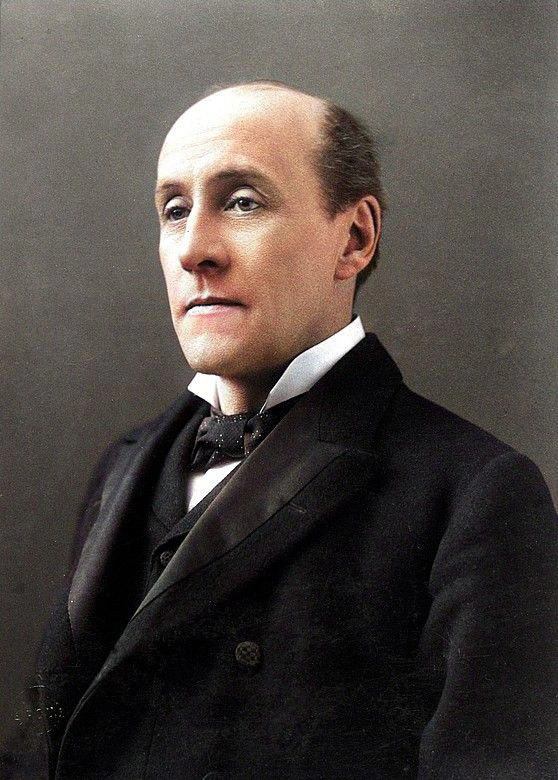
Attr: Alfred Ellis & Walery, British (active mid- to late-19th century), Public domain
| 8 Quotes | |
| Born as | Sir Anthony Hope Hawkins |
| Occup. | Writer |
| From | United Kingdom |
| Born | February 9, 1863 Clapton, London, England |
| Died | July 8, 1933 Walton-on-the-Hill, Surrey, England |
| Aged | 70 years |
| Cite | |
Citation Formats
APA Style (7th ed.)
Anthony hope biography, facts and quotes. (2026, February 11). FixQuotes. https://fixquotes.com/authors/anthony-hope/
Chicago Style
"Anthony Hope biography, facts and quotes." FixQuotes. February 11, 2026. https://fixquotes.com/authors/anthony-hope/.
MLA Style (9th ed.)
"Anthony Hope biography, facts and quotes." FixQuotes, 11 Feb. 2026, https://fixquotes.com/authors/anthony-hope/. Accessed 12 Feb. 2026.
Early Life and Background
Anthony Hope Hawkins was born on February 9, 1863, in London, into the prosperous, professional stratum of late-Victorian England. His father was a barrister; his mother came from a well-connected family whose expectations about respectability, public service, and social polish were typical of the era that produced Hope's fiction. He grew up amid the confidence of empire and the rituals of class, learning early how much of English life was performed through manners - and how easily manners could be turned into comedy, camouflage, or critique.Though he would later be remembered for invented kingdoms and glamorous escapades, Hope's inner fuel was less escapism than observation. He had a keen eye for social types - the nobleman with a private weakness, the clever woman constrained by conventions, the ambitious outsider who understands the rules well enough to bend them. Victorian London, with its clubs, chambers, drawing rooms, and theatres, offered him a laboratory of speech and pretense that would become his natural material.
Education and Formative Influences
Hope was educated at Eton and then at Balliol College, Oxford, where he absorbed a classical training in rhetoric and a modern taste for irony. He was called to the Bar at the Inner Temple in 1887, and his legal education sharpened a lifelong instinct for argument, motive, and the telling detail that gives a story its credible hinge. He read widely, wrote early, and watched closely: the Aesthetic movement, the afterglow of Disraeli-era politics, and the rise of mass-circulation periodicals all formed the literary marketplace in which a witty, lucid storyteller could reach a large audience.Career, Major Works, and Turning Points
After beginning practice as a barrister, Hope turned steadily to writing, publishing novels and stories while working in law. His breakthrough came with "The Prisoner of Zenda" (1894), a swashbuckling romance of doubles, honor, and political intrigue set in the fictional Ruritania, followed by its sequel "Rupert of Hentzau" (1898). These books made his name internationally and helped codify the late-Victorian adventure romance: fast plotting, bright dialogue, and a moral code tested by desire. He continued to publish prolifically - including "Phroso" (1897) and "The Dolly Dialogues" (1894) - and he wrote for the stage as well, navigating the shift from three-volume novel culture to a more commercial, magazine-driven literary economy. In 1918 he was knighted, a recognition of how thoroughly his storytelling had entered public life; he died on July 8, 1933, in London, after decades as a professional writer whose fame was durable even as literary fashions changed.Philosophy, Style, and Themes
Hope's style is engineered for speed and clarity: crisp scenes, talk that reveals character at once, and an ethical backbone that never becomes sermon. He distrusted obscurity as a pose, and his craft insists that pleasure and precision can coexist: "Unless one is a genius, it is best to aim at being intelligible". That preference is not merely technical. It reflects a psychology wary of self-deception - the way people hide behind grand words when they fear being understood - and it aligns with his plots, where peril is often created by misreading, by confusing image with reality, and by the seductive ease of believing what flatters.Under the bright surfaces, Hope wrote repeatedly about performance, temptation, and the fragile construction of social truth. The doubled identity at the heart of "Zenda" is not only a romantic device; it is a moral stress test that asks what a man becomes when he is praised for a role rather than known for himself. His wit, often turned against affectation, was a kind of weaponized common sense - "His foe was folly and his weapon wit". - and that aphoristic edge is visible whenever he punctures aristocratic self-regard or exposes the comedy inside solemn institutions. Yet he was not a cynic: his heroes are drawn to risk, love, and loyalty, even when those virtues require deceit in the short term. Hope understood the paradox that truth delivered without comprehension can curdle into harm, hence his interest in tact, disguise, and the social uses of fiction.
Legacy and Influence
Hope's enduring influence lies in how decisively he shaped modern popular romance-adventure: "Ruritania" became a template for invented European monarchies, royal impostures, and courtly intrigue, echoing through early cinema, stage adaptations, and later writers who borrowed his mixture of elegance and propulsion. He also preserved, in bright miniature, the tensions of his class and time - admiration for honor, skepticism toward privilege, and a belief that identity is both chosen and assigned. If later modernists distrusted his glittering plots, readers kept returning because his stories treat conscience as dramatic, not decorative, and because his prose, true to his own principle of intelligibility, still moves with the clean confidence of a writer who knew exactly how to keep the reader in his hand.Our collection contains 8 quotes written by Anthony, under the main topics: Witty One-Liners - Wisdom - Truth - Poetry - Respect.
Anthony Hope Famous Works
- 1900 Quisanté (Novel)
- 1898 Rupert of Hentzau (Novel)
- 1895 The Chronicles of Count Antonio (Collection)
- 1894 The Prisoner of Zenda (Novel)
- 1894 The Dolly Dialogues (Collection)
Source / external links