
Arthur Guiterman Biography Quotes 2 Report mistakes
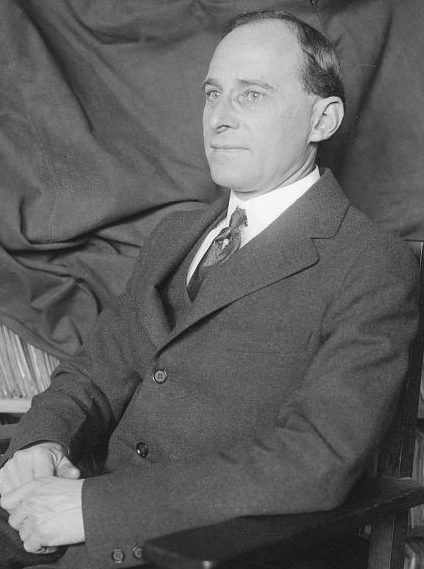
| 2 Quotes | |
| Occup. | Comedian |
| From | USA |
| Born | November 20, 1871 Vienna, Austria |
| Died | January 11, 1943 |
| Aged | 71 years |
| Cite | |
Citation Formats
APA Style (7th ed.)
Arthur guiterman biography, facts and quotes. (2026, February 11). FixQuotes. https://fixquotes.com/authors/arthur-guiterman/
Chicago Style
"Arthur Guiterman biography, facts and quotes." FixQuotes. February 11, 2026. https://fixquotes.com/authors/arthur-guiterman/.
MLA Style (9th ed.)
"Arthur Guiterman biography, facts and quotes." FixQuotes, 11 Feb. 2026, https://fixquotes.com/authors/arthur-guiterman/. Accessed 1 Apr. 2026.
Early Life and Background
Arthur Guiterman was born on November 20, 1871, in Vienna, Austria, to American parents and was taken to the United States while still young, growing up amid the brisk self-invention of the Gilded Age. His early years unfolded in New York City at a time when newspapers were becoming mass entertainment and humor had a clear economic value - the quicker the laugh, the wider the readership. That urban environment, crowded and argumentative, shaped his later preference for short forms: quatrains, epigrams, and comic ballads that could land in a single breath.His life as a humorist was never simply a matter of jokes; it was a temperament. He observed how Americans used wit as social lubrication and as concealment, and he learned the rhythms of public life - trains, theaters, offices, and street talk - that would later furnish his verse with recognizable, everyday settings. By adulthood he had married (to a woman named Jeannette) and built a stable domestic base that contrasted with the hectic, deadline-driven world of magazines, where his reputation was made line by line.
Education and Formative Influences
Guiterman attended the University of New York (now New York University), an education that placed him close to the citys press and publishing machinery. He came of age when light verse was a serious American trade: the tradition ran from newspaper squibs to the polished magazine verse that rewarded formal craft, quick turns, and topicality. Victorian manners were loosening, but the period still prized correctness - a pressure that pushed him toward rhymed structures he could twist into sly, modern punch lines.Career, Major Works, and Turning Points
He became best known as a writer of humorous verse for leading periodicals, most notably Life magazine, and he translated magazine success into widely read collections. His books included The Laughing Muse (1903), A Poet's Proverbs (1924), and Gaily the Troubadour (1933), among others, and he also wrote lyrics and occasional pieces that fit the eras appetite for cultivated amusement. The major turning point was his steady, decades-long integration into the magazine ecosystem: rather than publishing a single defining masterpiece, he built a recognizable voice that editors could trust for dependable comedy with metrical snap. In an age when radio and cinema began to compete with print, he remained committed to the portable pleasure of rhyme, and he died in the United States on January 11, 1943, having made light verse feel like a continuing, professional art.Philosophy, Style, and Themes
Guitermans comedy is often mistaken for mere geniality, but its engine is social diagnosis. He wrote as someone who understood that manners are a form of crowd control and that most people want sympathy without scrutiny. "Don't tell your friends about your indigestion. "How are you“ is a greeting, not a question”. The line is funny because it is true, but it also reveals his psychology: he distrusted public confession, not from coldness, but from a belief that modern life forces people to ration attention. His wit protects boundaries - his own and the readers - while admitting, with a shrug, the limits of everyday compassion.Formally, he favored tight stanza patterns, clean rhymes, and the quick pivot, using polish as a delivery system for mild subversion. His themes return to fallibility, vanity, and the small hypocrisies of polite society, yet he rarely turns cruel; instead he offers a code for recovering dignity after embarrassment. “Admitting Error clears the Score, And proves you Wiser than before”. That couplet-sized ethic clarifies why his humor so often ends not in mockery but in adjustment: the world is complicated, people are inconsistent, and the best defense is to concede gracefully and move on. His work reads like a manual for urban living - how to be human in public without making a spectacle of being human.
Legacy and Influence
Guiterman occupies a central place in the American tradition of light verse, a bridge between 19th-century newspaper wit and the 20th-century magazine age that later elevated poets of humor and social observation. His influence persists less through a single canonical poem than through the durable techniques he normalized: the epigram as social commentary, the proverb retooled as comedy, and the disciplined rhyme that makes an idea memorable enough to travel as a quotation. In an era that often equated seriousness with importance, he demonstrated that levity could be rigorous, and that a well-made joke could function as moral instruction without ever raising its voice.Our collection contains 2 quotes written by Arthur, under the main topics: Witty One-Liners - Learning from Mistakes.
Source / external links