
Ausonius Biography Quotes 5 Report mistakes
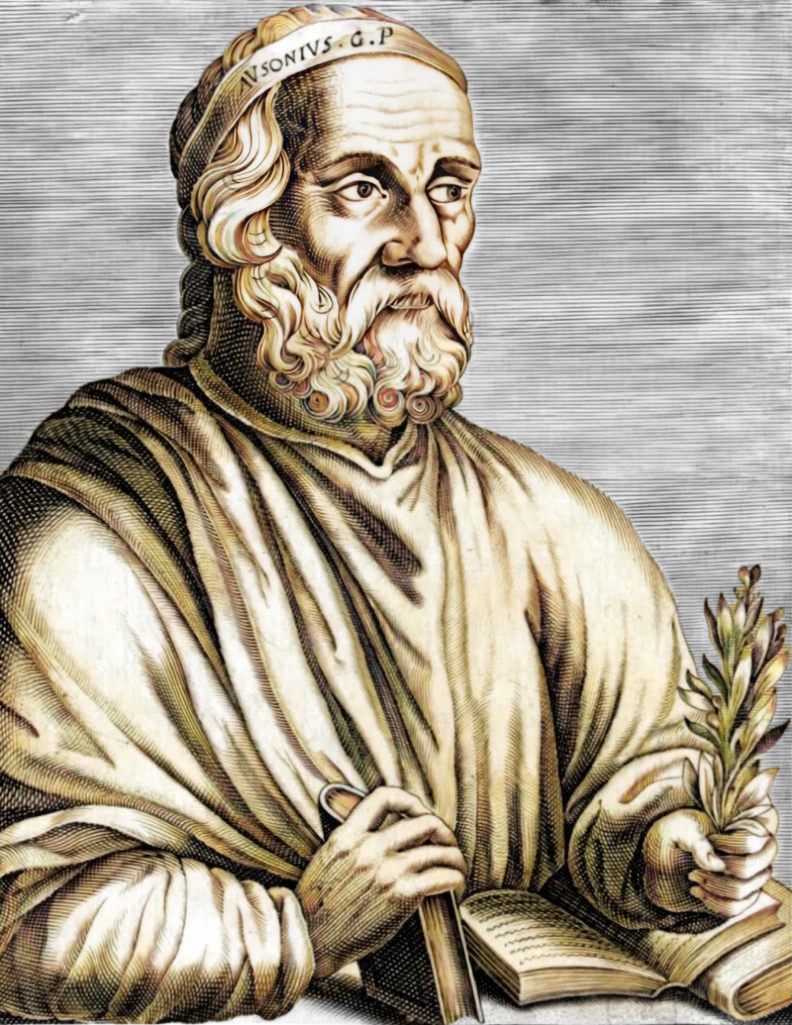
| 5 Quotes | |
| Born as | Decimius Magnus Ausonius |
| Occup. | Poet |
| From | Rome |
| Born | 310 AC Burdigala (now Bordeaux, France) |
| Died | 395 AC |
| Cite | |
Citation Formats
APA Style (7th ed.)
Ausonius biography, facts and quotes. (2026, February 11). FixQuotes. https://fixquotes.com/authors/ausonius/
Chicago Style
"Ausonius biography, facts and quotes." FixQuotes. February 11, 2026. https://fixquotes.com/authors/ausonius/.
MLA Style (9th ed.)
"Ausonius biography, facts and quotes." FixQuotes, 11 Feb. 2026, https://fixquotes.com/authors/ausonius/. Accessed 6 Mar. 2026.
Early Life and Background
Decimius Magnus Ausonius was born around 310 in Burdigala (modern Bordeaux), in the Roman province of Aquitania, not in the city of Rome. His family belonged to the curial and professional elite of a prosperous Gallic port city that traded up the Garonne and lived by law, education, and local patronage. His father, Julius Ausonius, was a physician of standing; the household combined practical learning with a taste for letters, the kind of environment that made a poet out of an administrator and an administrator out of a poet.He grew up during the uneasy calm after Diocletian, when Constantine's dynasty remade the empire even as old civic institutions strained under taxation, recruitment, and court politics. In the western provinces, romanitas was performed through schooling, rhetoric, and the cultivation of classical models - precisely the skills Burdigala prized. Ausonius' earliest imagination was shaped by a city that still believed culture could stabilize life: the classroom as refuge, the poem as social currency, memory as a form of status.
Education and Formative Influences
Ausonius studied grammar and rhetoric at Bordeaux and then in Toulouse, absorbing the canonical Latin tradition (Vergil, Horace, Ovid, Juvenal) through the late antique lens of commentary, declamation, and epigram. His formation was both conservative and opportunistic: he mastered the techniques of praise, catalog, and learned allusion that moved audiences in law courts and imperial receptions. He also learned the Gallic habit of blending public duty with private cultivation, a balance that later let him turn family, friends, and places into literature without abandoning career.Career, Major Works, and Turning Points
He taught rhetoric at Bordeaux for decades, becoming a celebrated professor whose classroom functioned as a provincial talent pipeline to the imperial service. The turning point came when he was summoned to Trier, the western court, to tutor the young Gratian; imperial favor followed, carrying him through high office - including praetorian prefect of Gaul and the consulship in 379. His poetry ranges from the intimate and occasional to the programmatic: Parentalia (elegies for deceased kin), Professores Burdigalenses (portraits of teachers), the topographical and personal Mosella (a river-poem praising the Moselle landscape near Trier), and the playful Technopaegnion and epigrams. After Gratian's murder in 383 and the turbulence of Magnus Maximus and Theodosius, Ausonius withdrew to Aquitaine, living as a landowner and literary elder, writing and revising while navigating a Christian empire that still made room for a classically trained voice.Philosophy, Style, and Themes
Ausonius' inner life is best read in his scale: he does not seek the thunder of epic so much as the accuracy of the miniature. His art is governed by rhetorical clarity, social tact, and an almost documentary impulse to preserve what time erodes - a family tree, a professor's mannerisms, a beloved river, a vanished youth. He can sound like a moralist, but his moralism is pragmatic, meant for survival in court and in old age. The man who rose by speaking well and fitting into changing regimes understood that reputation is a fragile asset; he writes as if each poem were a small insurance policy against oblivion.That sensibility surfaces in the self-managing tone of his maxims. “If fortune favors you do not be elated; if she frowns do not despond”. It is a late Roman creed of emotional discipline, the posture of a courtier who has seen promotions, purges, and the speed with which friendship becomes liability. His restraint is also stylistic: “No man pleases by silence; many I please by speaking briefly”. The line reads like a teacher's credo and an epigrammatist's manifesto - a preference for the pointed turn over expansive confession, for wit that can circulate safely in mixed company. Yet beneath that control lies an anxious tenderness about aging and loss; when he insists, “Let us never know what old age is. Let us know the happiness time brings, not count the years”. he reveals a mind trying to transmute fear into gratitude, to domesticate decline by making it a theme rather than an ordeal.
Legacy and Influence
Ausonius endures as one of the clearest windows into the educated western aristocracy of the fourth century: a world where classical paideia still organized identity even as Christianity and imperial centralization reshaped public life. He influenced medieval school culture as a storehouse of forms - epigram, catalog, occasional verse, and especially the river-poem - and Mosella became a model for later Latin landscape writing. Modern readers value him less for grand invention than for texture: the way his poems preserve the feel of classrooms, villas, patronage, and aging ambition at the hinge-point between classical Rome and Latin Europe.Our collection contains 5 quotes written by Ausonius, under the main topics: Witty One-Liners - Wisdom - Honesty & Integrity - Self-Discipline - Aging.
Ausonius Famous Works
- 370 The Moselle (Poem)
Source / external links