
Ben Jonson Biography Quotes 31 Report mistakes
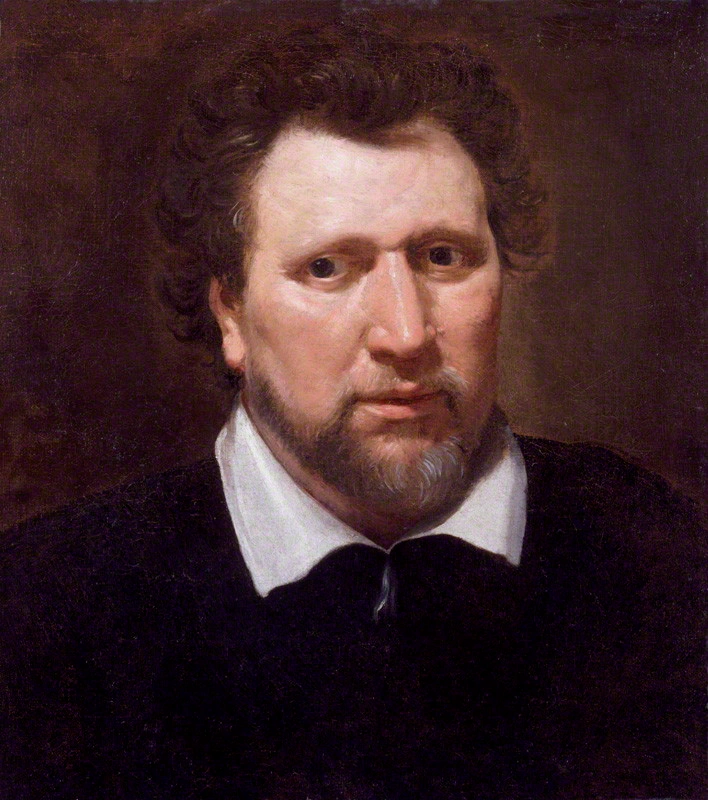
| 31 Quotes | |
| Occup. | Poet |
| From | England |
| Born | June 11, 1572 England |
| Died | August 6, 1637 England |
| Aged | 65 years |
| Cite | |
Citation Formats
APA Style (7th ed.)
Ben jonson biography, facts and quotes. (2026, February 11). FixQuotes. https://fixquotes.com/authors/ben-jonson/
Chicago Style
"Ben Jonson biography, facts and quotes." FixQuotes. February 11, 2026. https://fixquotes.com/authors/ben-jonson/.
MLA Style (9th ed.)
"Ben Jonson biography, facts and quotes." FixQuotes, 11 Feb. 2026, https://fixquotes.com/authors/ben-jonson/. Accessed 12 Feb. 2026.
Early Life and Background
Ben Jonson was baptized in Westminster, London, in 1572, and grew up at the tense seam between Tudor settlement and Stuart ambition. His father died before his birth, and his mother remarried a bricklayer, a practical trade that shadowed Jonson with the threat of obscurity even as London theaters were becoming a public forum for wit, rumor, and political allegory. He came of age in a city of plague closures and sudden reopenings, where playhouses could be raided, sermons thundered against stage vice, and yet new wealth demanded entertainment.That early mixture of deprivation and proximity to power helped form his lifelong posture: fiercely self-made, hungry for reputation, and suspicious of easy praise. Jonson could be convivial and clubbable, but he also carried a combative pride, as if every slight revived the old fear of being dismissed as a tradesmans stepson. The result was an inner life keyed to honor - earned, defended, and recorded in print - and to a moral seriousness that never fully surrendered to mere theatricality.
Education and Formative Influences
Jonson attended Westminster School under the great antiquary William Camden, and the schooling mattered as much as any patron: it gave him Latin, the Roman satirists, and an idea of literature as public argument. He is sometimes said to have studied briefly at Cambridge, but the firm center of his formation was Camden's humanism and a disciplined taste for classical structure, which Jonson later welded to the rough energy of London streets. Short military service in the Low Countries, and a taste for the soldier's code of courage and affront, sharpened his sense that words were weapons as well as ornaments.Career, Major Works, and Turning Points
By the late 1590s Jonson was writing for the commercial stage and living the volatile life of playwrights and players; in 1598 he killed actor Gabriel Spenser in a duel and escaped the gallows by pleading benefit of clergy, an ordeal that branded him with both notoriety and a hard-earned piety. The breakthrough comedies Every Man in His Humour (1598) and Every Man out of His Humour (1599) announced his satiric method, and the trio Volpone (1606), Epicoene (1609), and The Alchemist (1610) secured his stature as the era's great anatomist of greed, credulity, and social performance. Parallel to the public stage ran his court masques with Inigo Jones for James I and later Charles I - spectacular, expensive entertainments that brought him close to power but also into bitter rivalry with Jones over artistic credit. In 1616 his Works appeared in folio, a daring claim that plays deserved the dignity of books; later, the ill-fated tragedy Sejanus (1603) and the political uproar over Eastward Ho! (1605, co-written) showed the risks of satire in a censorious state. A stroke in the 1620s limited his mobility, but not his authority, and he remained a presiding presence in London literary society until his death in 1637.Philosophy, Style, and Themes
Jonson believed that craft was a moral discipline. His comedies are built like arguments: tight plotting, classical unities in aspiration, and a delight in exposing "humours" - obsessive traits that reduce people to predictable machines. Under the laughter sits a wary anthropology: men lie to themselves, and cities amplify the lie into fashion. His epigrams and occasional poems reveal the same ethic in miniature, praising sobriety, friendship, and a civic idea of virtue rather than romantic abandon.He was also a diagnostician of speech, treating language as the quickest evidence of character and self-command. "Language most shows a man, speak that I may see thee". That conviction underwrites his ear for cant, jargon, and the counterfeit eloquence of confidence men; his fools talk themselves into traps while his sharper figures listen for weakness. "Talking and eloquence are not the same: to speak, and to speak well, are two things". Yet his psychological realism includes compassion for the bruised ego behind bravado: the man who survived a duel, prison fears, and professional feuds learned that endurance reveals capacities comfort never tests. "He knows not his own strength that has not met adversity". In Jonson, satire is not mere scorn - it is a bid to force both writer and audience to earn clearer sight.
Legacy and Influence
Jonson left English letters a model of the playwright as scholar-craftsman and of comedy as social criticism with intellectual backbone. His folio made a lasting statement about dramatic authorship; his masques shaped the Stuart imagination of spectacle even as their collaborations exposed the politics of artistic labor. For later generations he became both example and caution: a master of structure, diction, and moral pressure, but also a figure of towering self-regard whose quarrels were as famous as his lines. The "sons of Ben" carried his ideal of learned conviviality into Caroline poetry, while Restoration and Augustan writers drew from his urbane satire and his belief that the stage could diagnose a whole culture.Our collection contains 31 quotes written by Ben, under the main topics: Witty One-Liners - Ethics & Morality - Wisdom - Art - Friendship.
Other people related to Ben: Robert Herrick (Poet), John Ford (Dramatist), George Chapman (Poet), James Howell (Writer), Samuel Daniel (Poet), William Kempe (Actor), Thomas Nash (Writer), James Shirley (Dramatist), Thomas Campion (Composer), Cyril Tourneur (Dramatist)
Ben Jonson Famous Works
- 1614 Bartholomew Fair (Play)
- 1610 The Alchemist (Play)
- 1606 Volpone (Play)
- 1603 Sejanus His Fall (Play)
- 1598 Every Man in His Humour (Play)
Source / external links