
Bill Hicks Biography Quotes 23 Report mistakes
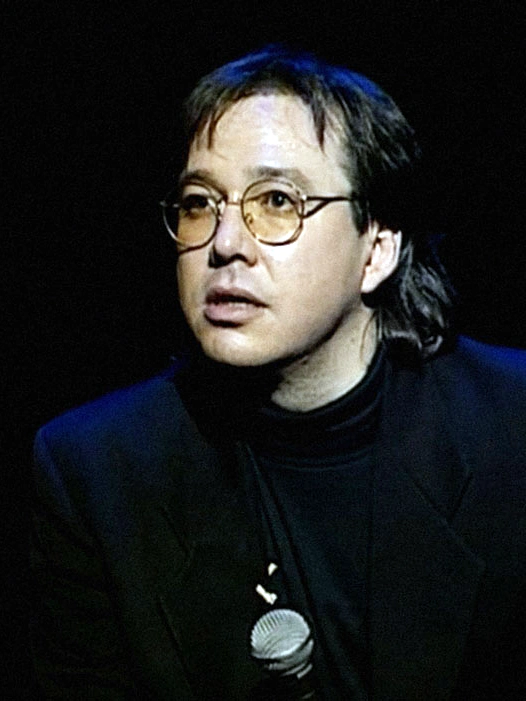
Attr: Scraps from the loft
| 23 Quotes | |
| Born as | William Melvin Hicks |
| Occup. | Comedian |
| From | USA |
| Born | December 16, 1961 Valdosta, Georgia, USA |
| Died | February 26, 1994 Little Rock, Arkansas, USA |
| Cause | Pancreatic cancer |
| Aged | 32 years |
| Cite | |
Citation Formats
APA Style (7th ed.)
Bill hicks biography, facts and quotes. (2026, February 11). FixQuotes. https://fixquotes.com/authors/bill-hicks/
Chicago Style
"Bill Hicks biography, facts and quotes." FixQuotes. February 11, 2026. https://fixquotes.com/authors/bill-hicks/.
MLA Style (9th ed.)
"Bill Hicks biography, facts and quotes." FixQuotes, 11 Feb. 2026, https://fixquotes.com/authors/bill-hicks/. Accessed 12 Feb. 2026.
Early Life and Background
William Melvin Hicks was born on December 16, 1961, in Valdosta, Georgia, into a military family whose moves stitched restlessness into his sense of home. He spent much of his childhood in Texas, notably in and around Houston, where suburban conformity met the afterglow of the 1960s and the hard shine of Reagan-era aspiration. That tension - between advertised wholesomeness and the private anxieties underneath it - became the pressure point he kept pressing onstage, as if comedy could expose the wiring behind the wallpaper.Friends remembered an intense, observant kid with a quick turn toward the darkly funny, the kind of mind that listened for hypocrisy the way others listened for punchlines. His early self-conception was built less around being liked than around being accurate; he treated social scripts as improv prompts, and he learned early that telling the truth at full volume can cost you a room. The need to be seen clearly, and the fear that the culture preferred comforting lies, would later harden into a stage persona that felt like an x-ray.
Education and Formative Influences
Hicks began performing stand-up as a teenager in Houston, absorbing the craft in clubs where timing mattered as much as nerve. He came up in the long shadow of Lenny Bruce and in the era of George Carlin and Richard Pryor, studying how confession, politics, and profanity could become instruments rather than shocks. The comedy boom of the 1980s offered opportunity but also a marketplace that rewarded catchphrases over conscience, pushing him toward a contrarian identity: a comic determined to make the audience think, even when they came to forget.Career, Major Works, and Turning Points
In the 1980s and early 1990s Hicks built a national profile through relentless touring and television spots, including repeated appearances on David Letterman, even as network sensibilities often clashed with his material. His strongest reception came in the UK, where his long-form, idea-driven sets fit a tradition of political satire; British audiences and venues gave him space to stretch. Signature routines targeted consumerism, religion-as-brand, the drug war, and the moral theater of American politics, with albums and specials that later defined his canon, including "Dangerous" (1990), "Relentless" (1992), and "Revelations" (1993). In 1993 he was diagnosed with pancreatic cancer; he kept performing as his health declined, compressing his work into something even more urgent and distilled, before dying on February 26, 1994, at 32.Philosophy, Style, and Themes
Hicks performed like a preacher who had lost his faith in churches but not in revelation. The voice was controlled, the cadence deliberate, the argument always building - he could sound amused and furious in the same breath. His comedy treated mass culture as a sedative and suspicion as a civic duty, and he often framed media as an enemy of inner perception: "Watching television is like taking black spray paint to your third eye". That line is less a joke than a diagnosis, revealing his recurring fear that attention itself was being colonized, that the self could be replaced by programming.He also used self-implication to keep his moralism from curdling into purity. The persona admitted corrosion - "I don't mean to sound bitter, cold, or cruel, but I am, so that's how it comes out". - turning hostility into honesty rather than denial. And when he defended altered consciousness, it was never merely libertine; it was tied to art, empathy, and the history of sound: "If you don't think drugs have done good things for us, then take all of your records, tapes and CD's and burn them". Psychologically, Hicks kept circling one question: why do people protect the stories that harm them? His answer was that the culture trains fear and sells relief, and he saw comedy as a brief jailbreak.
Legacy and Influence
After his death, Hicks grew from cult figure to lodestar, circulated through bootlegs, reissues, and the reverent testimony of comedians who heard in him a template for idea-driven stand-up. His influence runs through modern alt-comedy and political comedy - the insistence that a routine can be an argument, that laughter can be an alarm, and that the comic can risk being disliked in order to be precise. In an age of fragmented attention and performative outrage, Hicks endures because his work is less about topical targets than about the mechanisms that manufacture belief; he remains, for many, a benchmark for artistic fearlessness and the cost that can come with it.Our collection contains 23 quotes written by Bill, under the main topics: Witty One-Liners - Funny - Ethics & Morality - Art - Dark Humor.
Other people related to Bill: Sam Kinison (Comedian)