
Billy Connolly Biography Quotes 21 Report mistakes
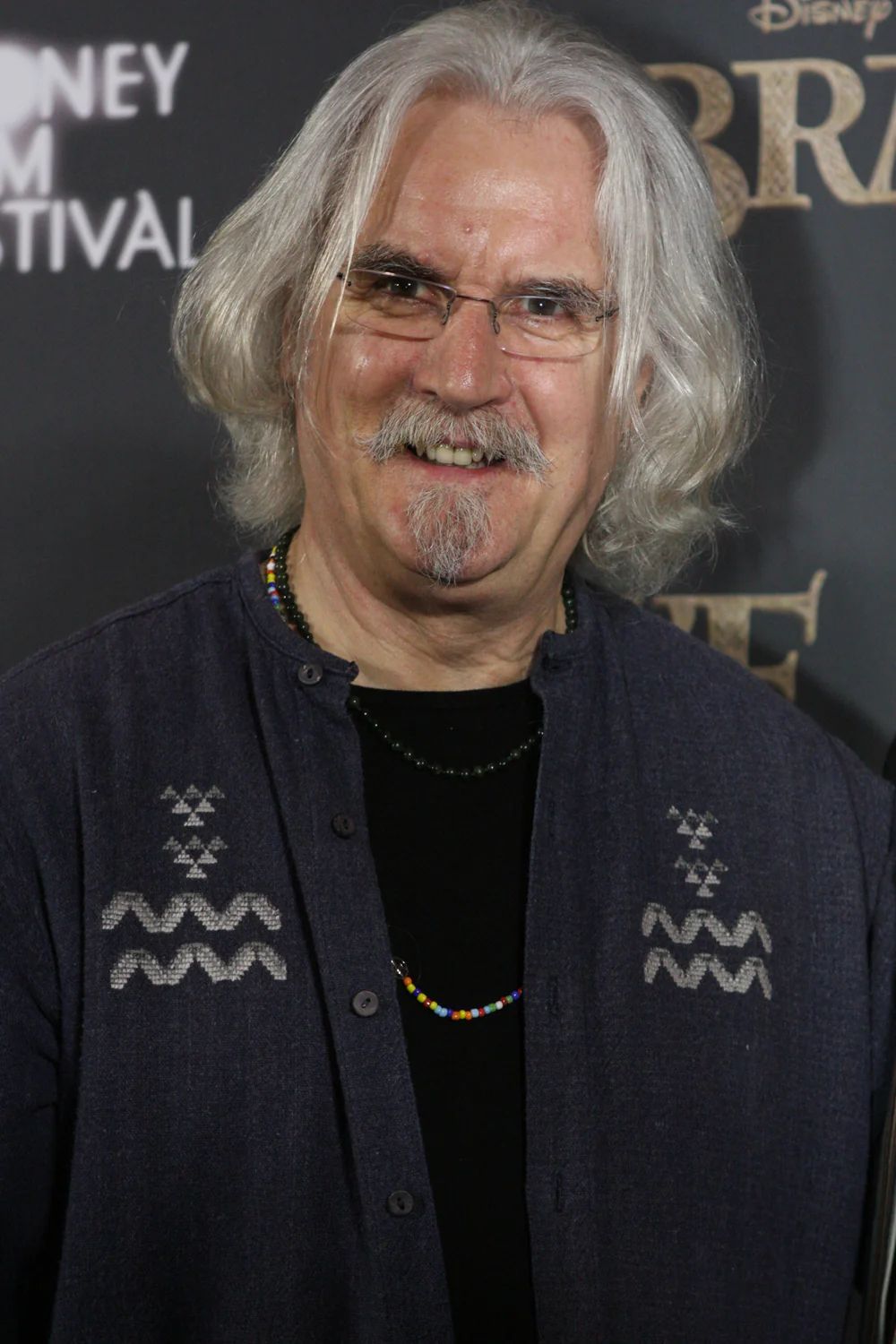
Attr: Eva Rinaldi, CC BY-SA 2.0
| 21 Quotes | |
| Born as | William Connolly |
| Occup. | Comedian |
| From | Scotland |
| Born | November 24, 1942 Glasgow, Scotland |
| Age | 83 years |
| Cite | |
Citation Formats
APA Style (7th ed.)
Billy connolly biography, facts and quotes. (2026, February 11). FixQuotes. https://fixquotes.com/authors/billy-connolly/
Chicago Style
"Billy Connolly biography, facts and quotes." FixQuotes. February 11, 2026. https://fixquotes.com/authors/billy-connolly/.
MLA Style (9th ed.)
"Billy Connolly biography, facts and quotes." FixQuotes, 11 Feb. 2026, https://fixquotes.com/authors/billy-connolly/. Accessed 27 Mar. 2026.
Early Life and Background
William "Billy" Connolly was born on 24 November 1942 in Anderston, Glasgow, a river-and-shipbuilding district already scarred by wartime bombing and postwar deprivation. He grew up in a tight grid of tenements where humor functioned as social currency and defense mechanism - quick, unsentimental, and communal. His father, a shipyard worker and former soldier, was often away; the emotional center of the household was strained, and Connolly later spoke of childhood as something survived as much as lived.A decisive rupture came when his mother, Mary, suffered severe depression and was repeatedly hospitalized; Connolly and his sister were largely raised by relatives. That early exposure to mental illness and instability sharpened his radar for human vulnerability, but also for the strange comedy of ordinary coping. Glasgow in the 1940s and 1950s was a place of hard edges and hard laughs, and Connolly absorbed its speech rhythms - the swift switch from lyric tenderness to streetwise brutality - as a native language.
Education and Formative Influences
He attended Catholic schools and left at 15 with little patience for formal instruction, apprenticing in heavy industry before finding steadier work as a welder in the shipyards. The long hours, danger, and comradeship of Clydeside labor gave him the subjects he would later mine: class, pride, bodily risk, and the democratic theater of men talking to pass time. Folk music drew him away from the yard - first as an audience member, then as a banjo player - and the 1960s revival offered a ladder out: not a respectable ladder, but one built from pubs, clubs, and the appetite for new voices.Career, Major Works, and Turning Points
Connolly emerged in the late 1960s as part of Scotland's folk-and-satire ferment, forming the Humblebums with Gerry Rafferty and performing on the club circuit before comedy decisively took over. By the 1970s he had become a singular stand-up presence: profane, story-driven, physically expressive, and unmistakably Glaswegian, at a time when British television still favored cleaner, more buttoned-up comics. He broke nationally through TV appearances and live specials, then broadened into acting - notably as the sympathetic convict in Scum (1979), and later in major films such as The Boondock Saints (1999), The Last Samurai (2003), and The Hobbit trilogy (2012-2014). His later career carried a second signature: the travelogue as performance, with series like World Tour of Scotland and Route 66 turning curiosity into an episodic, open-air kind of stand-up. In the 2010s, even after being diagnosed with Parkinson's disease, he continued touring and publishing, shifting from sheer physicality toward craft, observation, and a hard-won calm.Philosophy, Style, and Themes
Connolly's comedy is built on the idea that dignity is negotiable and that the body - hungry, aging, embarrassed, aroused, frightened - is the most reliable narrator. He tells long stories that loop and detour like street conversations, using abrupt mime, sudden tenderness, and savage punchlines to keep the listener slightly off balance. Scotland is not a backdrop but a pressure system in his work, a climate of temperament as much as weather; the joke “There are two seasons in Scotland: June and Winter”. is funny because it compresses a national mood of endurance into a single turn of phrase.Beneath the swagger is a skeptical humanism that distrusts grand claims and prefers the comic proof of small experience. He punctures solemnity by treating belief as a practical habit rather than a doctrine: “I don't believe in angels, no. But I do have a wee parking angel. It's on my dashboard and you wind it up. The wings flap and it's supposed to give you a parking space. It's worked so far”. That same mind - irreverent, but not nihilistic - is also turned inward, admitting growth without self-pity: “I think my securities far outweigh my insecurities. I am not nearly as afraid of myself and my imagination as I used to be”. The psychological arc is clear: a boy from a precarious home becomes a man who converts fear into narrative control, then loosens that control into acceptance, letting wonder and absurdity coexist with pain.
Legacy and Influence
Connolly helped redefine what mainstream British comedy could sound like: regional rather than metropolitan, explicit rather than coy, emotionally intelligent without becoming pious. For Scottish culture he became a global emissary who refused tartan sentimentality, presenting Glasgow speech and working-class memory as art materials worthy of international stages. His influence runs through later stand-ups who favor autobiographical sprawl and physical storytelling, and through a wider shift in UK comedy toward confessional candor and social specificity. Honored with a knighthood and widely regarded as one of the greats of modern stand-up, he endures not only for jokes, but for the worldview behind them: a relentless attention to the ridiculousness of being alive, and the courage to keep describing it truthfully.Our collection contains 21 quotes written by Billy, under the main topics: Witty One-Liners - Puns & Wordplay - Faith - God - Work.
Other people related to Billy: Michael Parkinson (Journalist)
Source / external links