
Bob Hope Biography Quotes 29 Report mistakes
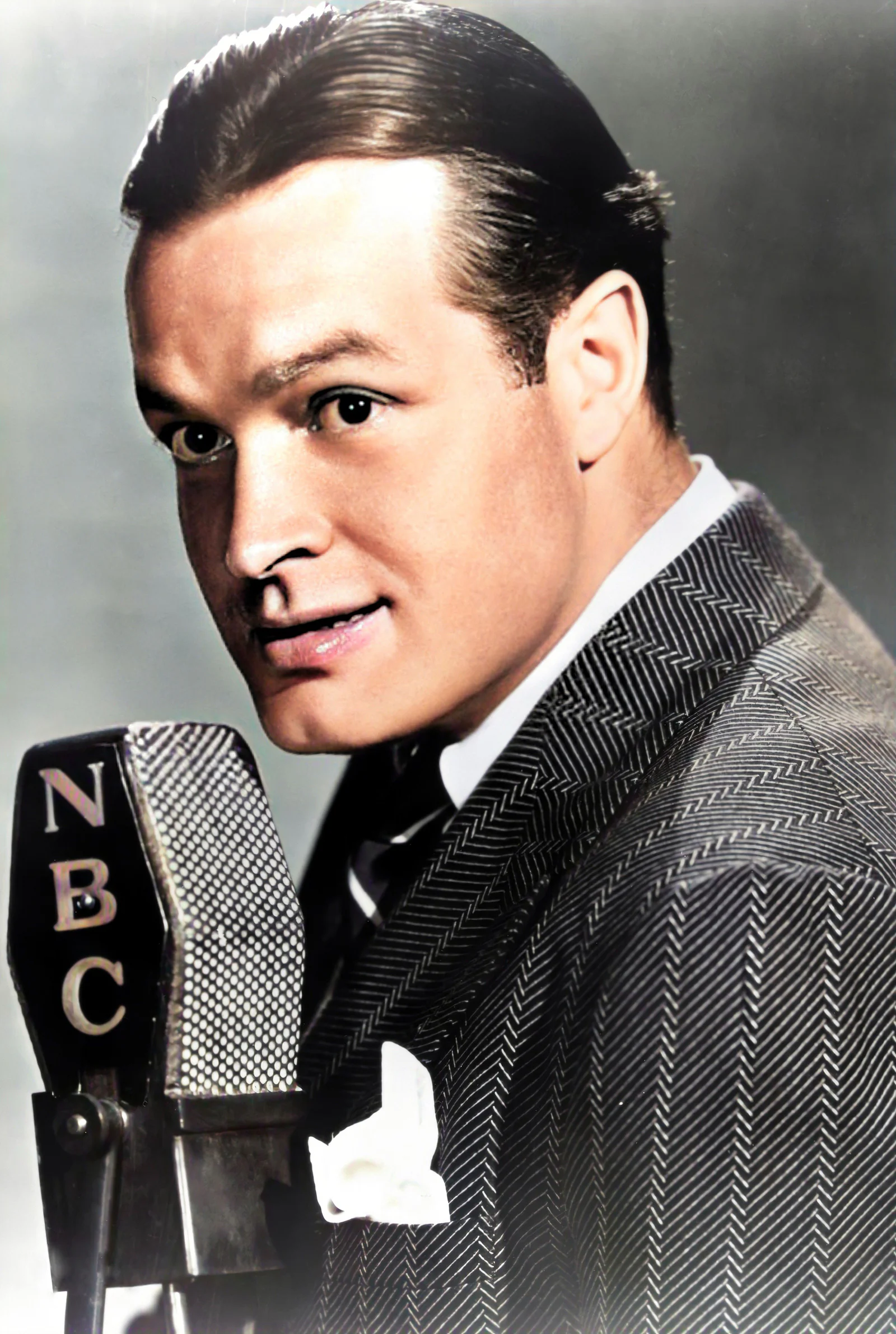
| 29 Quotes | |
| Born as | Leslie Townes Hope |
| Known as | Lester Townes "Bob" Hope |
| Occup. | Comedian |
| From | USA |
| Born | May 29, 1903 Eltham, London, England |
| Died | July 27, 2003 Toluca Lake, California, U.S. |
| Cause | Pneumonia |
| Aged | 100 years |
| Cite | |
Citation Formats
APA Style (7th ed.)
Bob hope biography, facts and quotes. (2026, February 1). FixQuotes. https://fixquotes.com/authors/bob-hope/
Chicago Style
"Bob Hope biography, facts and quotes." FixQuotes. February 1, 2026. https://fixquotes.com/authors/bob-hope/.
MLA Style (9th ed.)
"Bob Hope biography, facts and quotes." FixQuotes, 1 Feb. 2026, https://fixquotes.com/authors/bob-hope/. Accessed 26 Mar. 2026.
Early Life and Background
Leslie Townes Hope was born on May 29, 1903, in Eltham, London, the fifth of seven children in a working-class family shaped by music hall culture and the pressures of making ends meet. His father, a stonemason, and his mother, a singer with a performer`s instinct, raised him amid the bustle of Edwardian Britain, where popular entertainment was both escape and apprenticeship. That blend of austerity and stagecraft would later surface in Hope`s persona: brisk, un-sentimental, and always ready with an exit line.In 1908 the Hopes emigrated to the United States, settling first in Cleveland, Ohio, during a period when industrial America offered wages but demanded hustle. As a teenager he drifted through jobs and amateur contests, learning that timing was a form of social leverage. He began calling himself "Bob" - a plain, American-sounding name - and fashioned a self-protective wit that could turn uncertainty into advantage, a survival skill in immigrant neighborhoods and vaudeville circuits alike.
Education and Formative Influences
Hope`s formal schooling was limited and intermittent, but his real education came from vaudeville, silent-film comedy, and the rhythm of patter acts that valued velocity over confession. He studied comedians like Charlie Chaplin and the vaudeville headliners whose craft depended on reading a room instantly, then pivoting before a joke went stale. By the early 1920s he was performing as a dancer and comic in small-time shows, absorbing how American show business professionalized itself through touring networks, radio sponsorships, and later the national reach of Hollywood.Career, Major Works, and Turning Points
Hope`s breakthrough came via Broadway and radio, where his quick ad-lib style fit the new medium`s demand for constant novelty; "The Pepsodent Show Starring Bob Hope" made him a national voice in the late 1930s and 1940s. Hollywood followed with a run of films that blended romance, farce, and self-mockery, most famously the "Road" pictures with Bing Crosby and Dorothy Lamour - "Road to Singapore" (1940), "Road to Morocco" (1942), and successors that treated plot as a pretext for wisecracks. A defining turning point was his decision to make morale entertainment central to his identity: beginning in World War II and continuing through Korea, Vietnam, and the Gulf era, he traveled with USO tours that fused comedy with patriotic ritual, turning him into a symbol of home-front reassurance. Honors accumulated over decades - including an outsized presence on television specials and award shows - and by the time he died on July 27, 2003, in Toluca Lake, California, he had become less a single performer than an institution.Philosophy, Style, and Themes
Hope`s comedy was engineered rather than confessional: rapid set-ups, topical references, and a persona that acted both cocky and perpetually undercut - the master of the cheap shot who invited the audience to feel smarter with him. He relied on teams of writers, then made their lines sound tossed off, a method suited to the broadcast age where freshness mattered more than depth. Many of his best jokes treat modern life as a system of absurd proofs and penalties - “A bank is a place that will lend you money if you can prove that you don't need it”. The humor is not just cynicism; it is a way of regaining control in a world run by faceless institutions.Aging, too, became a long-running theme as he performed into his late nineties, turning mortality into a running gag so the audience would not have to name it directly: “You know you're getting old when the candles cost more than the cake”. That line captures his psychological approach - deflection as intimacy, laughter as anesthesia, and self-deprecation as a pact with the crowd. Yet he also threaded public-minded moral language through the act, reflecting the civic expectations placed on celebrities after World War II: “If you haven't got any charity in your heart, you have the worst kind of heart trouble”. In Hope, benevolence was both conviction and performance, a way to align personal success with communal obligation.
Legacy and Influence
Hope`s influence sits at the crossroads of vaudeville, radio, studio-era film, and television variety, and his career maps how American mass entertainment learned to sound spontaneous while being carefully manufactured. He helped standardize the modern monologue - topical, fast, and audience-facing - and his partnership model with writers became the template for late-night comedy. His USO tours remain a touchstone for debates about art, propaganda, and service, and his persona - the wisecracking optimist who refuses solemnity - still shadows American stand-up and hosting. If some of his material now reads as dated, his larger achievement endures: he taught a century of audiences to treat anxiety, war, and aging as manageable so long as a punchline arrived on time.Our collection contains 29 quotes written by Bob, under the main topics: Witty One-Liners - Motivational - Dark Humor - Puns & Wordplay - Hope.
Other people related to Bob: Woody Allen (Director), Rich Little (Comedian), Jane Russell (Actress), Eddie Bracken (Actor), Ray Evans (Musician), Tony Bennett (Musician), Don Rickles (Comedian)
Source / external links