
Brock Yates Biography Quotes 8 Report mistakes
| 8 Quotes | |
| Occup. | Editor |
| From | USA |
| Spouse | Gail Yates |
| Born | October 31, 1933 Lockport, New York, U.S. |
| Died | October 5, 2016 Batavia, New York, USA |
| Cause | Cancer |
| Aged | 82 years |
| Cite | |
Citation Formats
APA Style (7th ed.)
Brock yates biography, facts and quotes. (2026, February 11). FixQuotes. https://fixquotes.com/authors/brock-yates/
Chicago Style
"Brock Yates biography, facts and quotes." FixQuotes. February 11, 2026. https://fixquotes.com/authors/brock-yates/.
MLA Style (9th ed.)
"Brock Yates biography, facts and quotes." FixQuotes, 11 Feb. 2026, https://fixquotes.com/authors/brock-yates/. Accessed 5 Mar. 2026.
Early Life
Brock W. Yates was born on October 21, 1933, in Lockport, New York. Raised in upstate New York, he developed an early fascination with machines and the culture surrounding automobiles. From the start, his curiosity ran less toward engineering blueprints than toward the people, institutions, and myths that shaped the American car. That orientation toward storytelling and critique would define his career and help him become one of the most recognizable voices in automotive journalism.Car and Driver and the Voice of a Critic
Yates joined Car and Driver magazine in the 1960s and quickly became a central figure in its transformation into a brash, influential platform for car enthusiasts and skeptics of the status quo. He rose to roles including senior editor, executive editor, and later editor-at-large. Working alongside editor-in-chief David E. Davis Jr., he helped set a tone that mixed road tests and humor with cultural criticism. Yates was particularly incisive in his writing about Detroit automakers, taking aim at complacency in the executive suites and the disconnect between corporate decision-makers and the real needs of drivers. He challenged both industry orthodoxy and government policy, and he became known for a style that fused investigative bite with an enthusiast's passion.The Cannonball Idea
In 1971 Yates conceived the Cannonball Baker Sea-to-Shining-Sea Memorial Trophy Dash, an outlaw, point-to-point run to protest creeping regulation, celebrate real-world endurance, and honor long-distance pioneer Erwin "Cannon Ball" Baker. The run began at the Red Ball Garage in New York City and ended at the Portofino Inn in Redondo Beach, California. In the inaugural competitive event, Yates co-drove with racing great Dan Gurney in a Ferrari 365 GTB/4 Daytona, completing the journey in under 36 hours. Gurney's deadpan quip from that run became lore, and the Cannonball's legend grew with each edition through the 1970s. Yates's organizing, reporting, and participation made him inseparable from the story, and his writing captured the mix of risk, camaraderie, and social commentary that the event embodied.Books and Long-Form Writing
Beyond magazine work, Yates built a substantial bibliography. He authored a widely read and controversial critique of the U.S. auto industry's missteps in The Decline and Fall of the American Automobile Industry. His biography Enzo Ferrari: The Man and the Machine, published in 1991, became a touchstone for readers seeking a deeply reported portrait of Ferrari's life and the company's culture. He chronicled the Cannonball in Cannonball!: World's Greatest Outlaw Road Race and returned to midcentury motorsport's triumphs and tragedies in Against Death and Time. Earlier titles such as Sunday Driver showed his knack for blending reportage with the human stories behind competition. Across formats, Yates wrote with clarity and literary ambition, always positioning cars within a wider narrative about business, regulation, and American identity.Film and Popular Culture
Yates's work moved into film at the dawn of the 1980s. He wrote the screenplay for The Cannonball Run, directed by Hal Needham and starring Burt Reynolds, translating his renegade cross-country concept into pop-culture spectacle. He also contributed to Smokey and the Bandit II, reinforcing his connection to Needham and to a broader Hollywood appetite for fast cars and road-trip capers. These projects brought his ideas to a mass audience and helped cement the Cannonball as a cultural touchstone, even as the films softened the edges of the real events he had created and documented.One Lap of America and Later Projects
Recognizing that the original Cannonball could not and should not continue in its original form, Yates devised One Lap of America in the 1980s as a legally structured endurance challenge. Tied to track days and time trials instead of public-road racing, the event preserved the spirit of long-distance, multi-venue automotive adventure while respecting evolving laws and safety expectations. Over time, One Lap became a rite of passage for enthusiasts, and his son, Brock Yates Jr., later took on a leading role in organizing and sustaining it. The shift from underground race to sanctioned endurance challenge captured Yates's ability to evolve without surrendering the core of his philosophy: real cars, real distances, and real consequences.Method and Influence
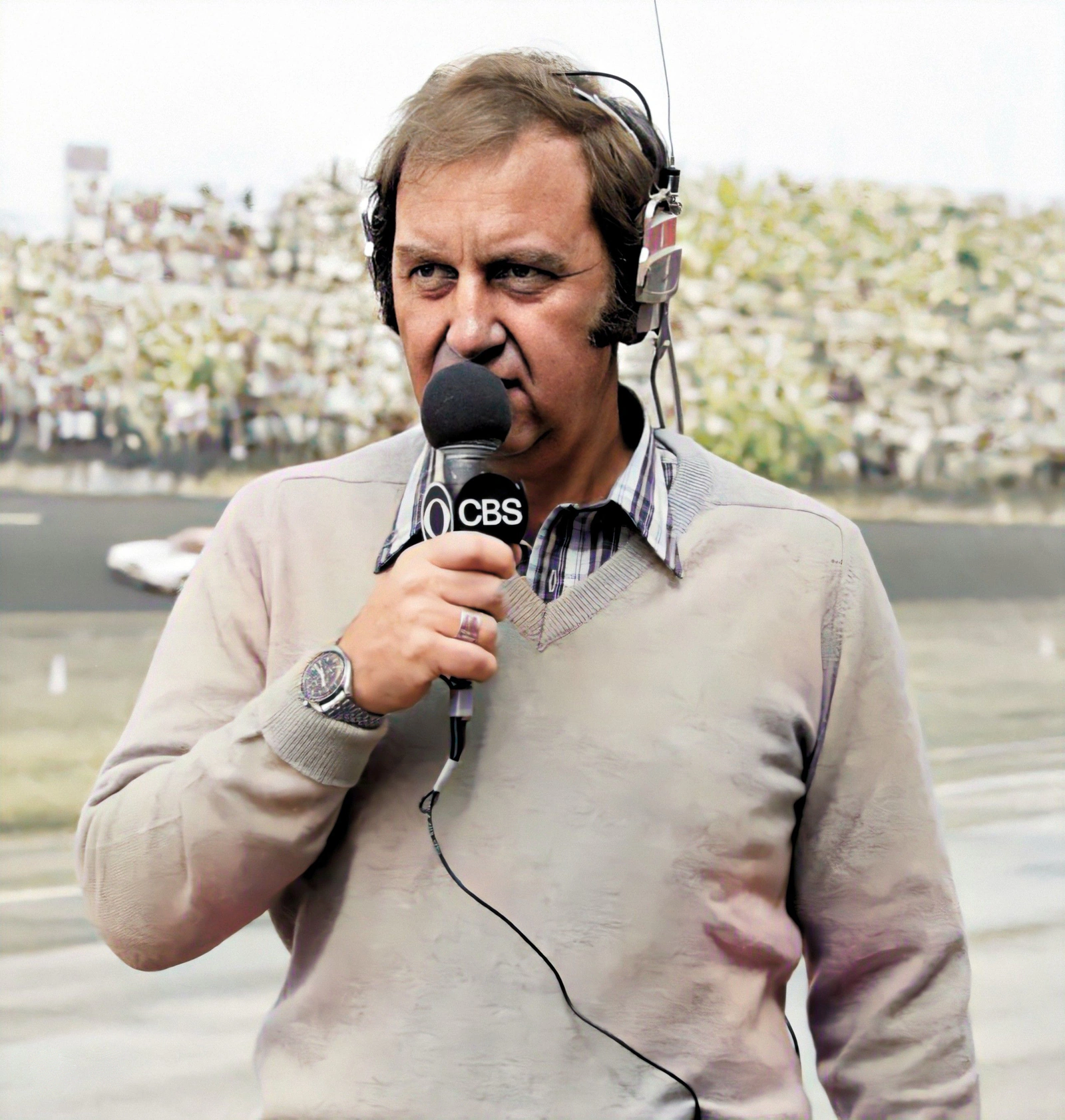
Yates proved that automotive writing could be cultural criticism. He refused to segregate cars from economics, labor, design, and politics, and he insisted that enthusiasts deserved both fun and honesty. He influenced a generation of journalists and shaped magazine voices that were more skeptical, more personal, and more willing to challenge conventional wisdom. Colleagues and rivals alike acknowledged his nerve and his prose. His friendship and collaborations with figures such as David E. Davis Jr. and Dan Gurney gave his work professional ballast, while his presence on television as a motorsports commentator helped carry his perspective to audiences beyond print.Personal Life
Behind the public persona, Yates maintained a family life that kept him connected to the next generation of enthusiasts and organizers. He was married to Pamela Yates, who was a steady presence as his career bridged journalism, books, and film. The continuation of One Lap of America under Brock Yates Jr. underscored the personal dimension of his projects; they were not merely professional ventures but family endeavors, carried forward by those closest to him.Illness and Death
In his later years, Yates faced Alzheimer's disease, a long and difficult chapter that he and his family confronted with candor. He died on October 5, 2016, in New York state. The news prompted remembrances across the automotive world, from veteran racers and editors to younger writers and fans who knew him through his books and the enduring legends he helped create.Legacy
Brock Yates left a legacy that stretches from magazine pages to racetracks and movie screens. He showed that an automotive journalist could be a storyteller, a critic, a provocateur, and an organizer of events that became part of automotive folklore. By working with figures like Dan Gurney, Hal Needham, and Burt Reynolds, and by building projects sustained by Pamela Yates and Brock Yates Jr., he built a network of relationships that amplified his ideas. Decades after the first run from the Red Ball Garage, his writing still reads as fearless and clear, and One Lap of America continues to channel his core insight: that the best way to understand cars is to drive them far, think about them hard, and tell the story without flinching.Our collection contains 8 quotes written by Brock, under the main topics: Witty One-Liners - Book - Time - Grandparents - Fitness.
Brock Yates Famous Works
- 2004 NASCAR Off the Record (Book)
- 1999 Outlaw Machine: Harley-Davidson and the Search for the American Soul (Book)
- 1991 Enzo Ferrari: The Man, the Cars, the Races (Book)
- 1983 The Decline and Fall of the American Automobile Industry (Book)
- 1972 Sunday Driver (Book)
- 1971 Cannonball! (Book)
- 1955 The Indianapolis 500: The Story of the Motor Speedway (Book)
Source / external links