
Charles W. Pickering Biography Quotes 9 Report mistakes
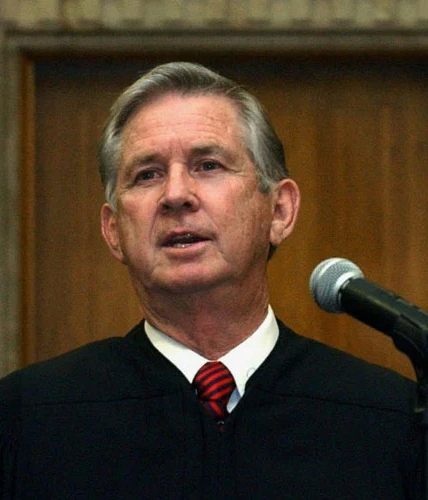
| 9 Quotes | |
| Born as | Charles Willis Pickering Sr. |
| Occup. | Judge |
| From | USA |
| Born | May 29, 1937 Laurel, Mississippi, U.S. |
| Age | 88 years |
| Cite | |
Citation Formats
APA Style (7th ed.)
Charles w. pickering biography, facts and quotes. (2026, February 11). FixQuotes. https://fixquotes.com/authors/charles-w-pickering/
Chicago Style
"Charles W. Pickering biography, facts and quotes." FixQuotes. February 11, 2026. https://fixquotes.com/authors/charles-w-pickering/.
MLA Style (9th ed.)
"Charles W. Pickering biography, facts and quotes." FixQuotes, 11 Feb. 2026, https://fixquotes.com/authors/charles-w-pickering/. Accessed 6 Mar. 2026.
Early Life and Background
Charles Willis Pickering Sr. was born on May 29, 1937, in the United States and came of age in the long shadow of World War II and the gathering upheavals that would remake the South and the nation. He was raised in Mississippi, where the distance between law on the books and law in practice could be measured in courthouse steps and segregated public squares. In that environment, civic life was intensely local and intensely personal: reputations mattered, churches were social anchors, and the legitimacy of institutions depended less on abstract theory than on whether neighbors believed officials were fair.The moral pressure of that world shaped Pickering's public identity: a judge who spoke in the language of duty and community norms rather than ideological abstraction. His adulthood coincided with civil rights conflicts, federal-state friction, and later the rise of crime-and-punishment politics and culture-war debates. Through it all, he cultivated the posture of a courthouse conservative - skeptical of social experimentation, attentive to order and tradition, and convinced that the character of a society is tested in its everyday conduct, not just in its grand constitutional claims.
Education and Formative Influences
Pickering pursued higher education and legal training in Mississippi, entering the profession when the federal courts were increasingly central to desegregation, voting rights enforcement, and the nationalization of constitutional disputes. Those years formed his instinct for process: hearings, records, and the slow discipline of precedent. He absorbed a lawyerly sensibility that prized institutions as stabilizers, even as the era demonstrated how institutions could also lag behind justice, leaving ambitious young attorneys to navigate between community expectations and federal mandates.Career, Major Works, and Turning Points
Pickering built his career in Mississippi law and public service, becoming known as a jurist and public figure associated with the federal bench and the contentious politics of judicial selection at the turn of the 21st century. His professional life unfolded during a period when judges were pulled into partisan conflict - not only through rulings, but through hearings, confirmation fights, and media-driven narratives about temperament and ideology. The turning point in his public story was the conversion of judicial biography into national argument: supporters cast him as a principled traditionalist, while critics portrayed him as emblematic of unresolved Southern and civil-rights tensions, illustrating how the bench itself had become a symbolic battleground.Philosophy, Style, and Themes
Pickering's public philosophy consistently framed democracy as a moral ecology. He argued that institutions cannot remain legitimate if the culture that surrounds them prizes cynicism, exploitation, or contempt. “A healthy democracy requires a decent society; it requires that we are honorable, generous, tolerant and respectful”. That sentence captures his inner logic: the rule of law is not merely enforcement but a social covenant, dependent on the virtues citizens practice when no court is watching. In psychological terms, he spoke like a man wary of erosion - not just of statutes, but of habits that make self-government possible.His style leaned toward admonition and stewardship. He treated mass media and public broadcasting as civic spaces where standards signal who a people believe themselves to be. “America does not want vulgarity and sexual exploitation to be our values and we do not want the world to think those are our standards. We want to be a better nation and a better people, with better standards”. The intensity of that phrasing reveals a judge attentive to shame and aspiration as political forces: he feared that cultural coarsening would weaken respect for law, family, and public trust. Likewise, “The public airwaves provide a chance to affirm we want to be a good, decent people; a good, decent nation”. In his worldview, decency was not prudishness but a public ethic - a signal that freedom and restraint can coexist without collapsing into either authoritarianism or indulgence.
Legacy and Influence
Pickering's enduring significance lies less in a single landmark opinion than in what his career represents about the modern American judiciary: the way a judge's character, rhetoric, and regional biography can become proxies for national disputes over history, culture, and legitimacy. To admirers, he modeled seriousness about civic virtue and the cultural preconditions of constitutional government; to detractors, his prominence underscored how contested the meaning of justice remains in a country still reckoning with its past. Either way, his life illustrates a central fact of the era he inhabited: courts do not stand outside society - they interpret it, discipline it, and are judged by it in return.Our collection contains 9 quotes written by Charles, under the main topics: Ethics & Morality - Justice - Freedom - Honesty & Integrity - Respect.
Source / external links