
Che Guevara Biography Quotes 7 Report mistakes
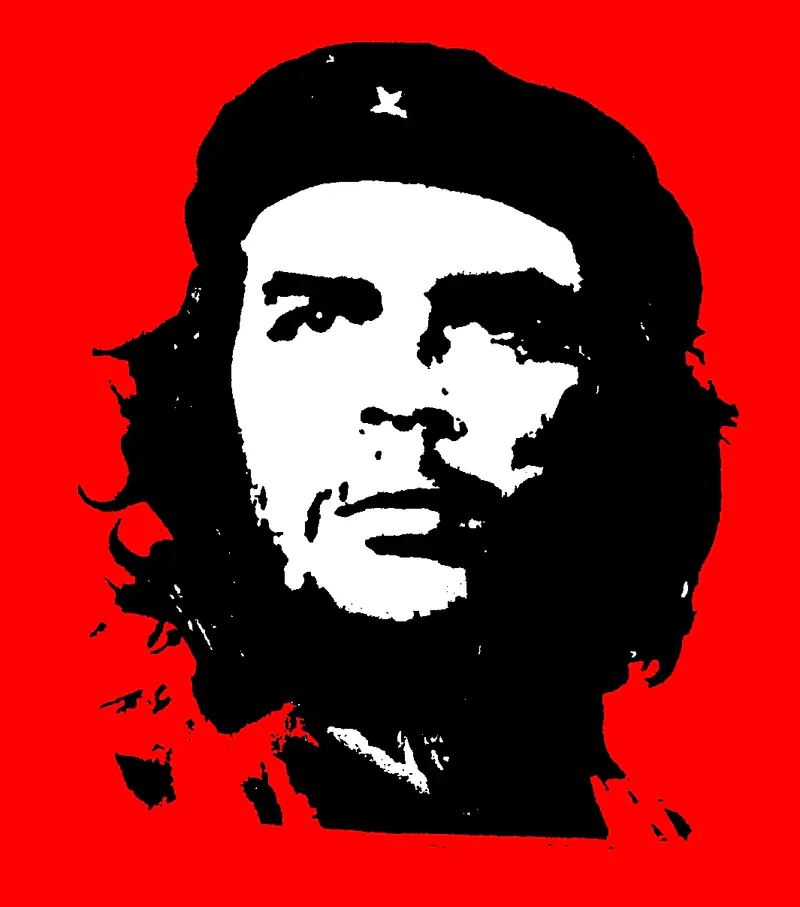
| 7 Quotes | |
| Occup. | Revolutionary |
| From | Argentina |
| Born | June 14, 1928 |
| Died | October 9, 1967 |
| Aged | 39 years |
Ernesto Guevara de la Serna was born on 1928-06-14 in Rosario, Santa Fe, Argentina, into a politically alert, middle-class family shaped by the aftershocks of World War I, the Great Depression, and Argentina's own cycles of military intervention and populist upheaval. His parents, Ernesto Guevara Lynch and Celia de la Serna, fostered a home where books and argument were everyday tools, and where sympathy for the Spanish Republic and suspicion of oligarchy circulated alongside the privileges of education and social connection.
Childhood asthma was not a footnote but a formative constraint that trained his will. Long nights of breathlessness, plus the regimen of sport he imposed on himself in defiance of weakness, produced a characteristic blend of austerity and daring. The young Guevara learned to treat the body as an instrument to be disciplined for a larger cause, a habit that later translated into the relentless itinerancy of guerrilla life and a moral impatience with comfort - in himself first, then in others.
Education and Formative Influences
He studied medicine at the University of Buenos Aires, but his education widened through travel: a 1951-1952 journey across South America, later popularized in The Motorcycle Diaries (compiled from his notes), exposed him to the social geography of deprivation from rural Argentina to the Andean highlands and leper colonies. The encounter with exploited miners, indigenous communities, and the informal economies of the continent moved him from humanitarian concern to structural diagnosis, and the Cold War context - US influence, local elites, and unstable democracies - gave that diagnosis a political edge that medicine alone could not satisfy.
Career, Major Works, and Turning Points
In 1954 he was in Guatemala during Jacobo Arbenz's reformist government and its US-backed overthrow, an event that hardened his conviction that Latin American reform would be met with counterforce. He fled to Mexico, met Fidel Castro, and joined the July 26 Movement; after landing in Cuba on the Granma in 1956, he became both commander and disciplinarian in the Sierra Maestra. Victory in January 1959 made him a symbol and an administrator: he oversaw revolutionary tribunals at La Cabana, ran the National Bank, and served as Minister of Industries while arguing for moral incentives and a new socialist person in essays later collected in works such as Guerrilla Warfare and his writings on the Congo and Bolivia. Increasingly restless with state roles and convinced revolution needed export, he left Cuba for the Congo in 1965 and then organized an insurgency in Bolivia, where he was captured and executed on 1967-10-09 near La Higuera.
Philosophy, Style, and Themes
Guevara's inner life fused romantic idealism with an almost clinical severity. He saw revolution less as historical inevitability than as willed rupture, insisting that agency had to be trained like a muscle. "The revolution is not an apple that falls when it is ripe. You have to make it fall". The sentence is more than rhetoric: it reveals his intolerance for passivity, his suspicion of gradualism, and his tendency to treat politics as a test of character under pressure. In diaries and speeches, he returned to the problem of fear - not denying it, but subordinating it to duty through repetition, discipline, and example.
His style was terse, didactic, and self-incriminating: he demanded from himself the hardship he prescribed. That ethic included a frank embrace of risk and mortality, not as spectacle but as an organizing principle for commitment. "Many will call me an adventurer - and that I am, only one of a different sort: one of those who risks his skin to prove his platitudes". The psychology here is revealing: he feared hypocrisy more than failure, and he treated coherence between belief and action as a form of moral hygiene. At the end, facing execution, he reduced the struggle to a final assertion of meaning beyond the individual: "Whenever death may surprise us, let it be welcome if our battle cry has reached even one receptive ear and another hand reaches out to take up our arms". It was a creed of transmissible courage - a belief that an idea survives by moving into other bodies.
Legacy and Influence
Guevara's legacy is double-edged and unusually durable: to admirers he is the exemplar of internationalist sacrifice and the icon of anti-imperial defiance; to critics he embodies revolutionary coercion, the moral hazards of armed utopianism, and the violence of state-building after victory. His writings helped codify foco theory, shaping insurgencies from Latin America to parts of Africa and Asia, even as many failed in conditions unlike Cuba's. Alberto Korda's 1960 photograph turned his face into a global brand that often floats free of his hard asceticism and authoritarian streak, yet the image persists because it compresses a twentieth-century tension: the longing for purity in politics against the compromised realities of power.
Our collection contains 7 quotes who is written by Che, under the main topics: Wisdom - Leadership - Legacy & Remembrance - Mortality - Change.
Other people realated to Che: Jean-Paul Sartre (Philosopher), Gael Garcia Bernal (Actor)
Source / external links