
Clarence Thomas Biography Quotes 24 Report mistakes
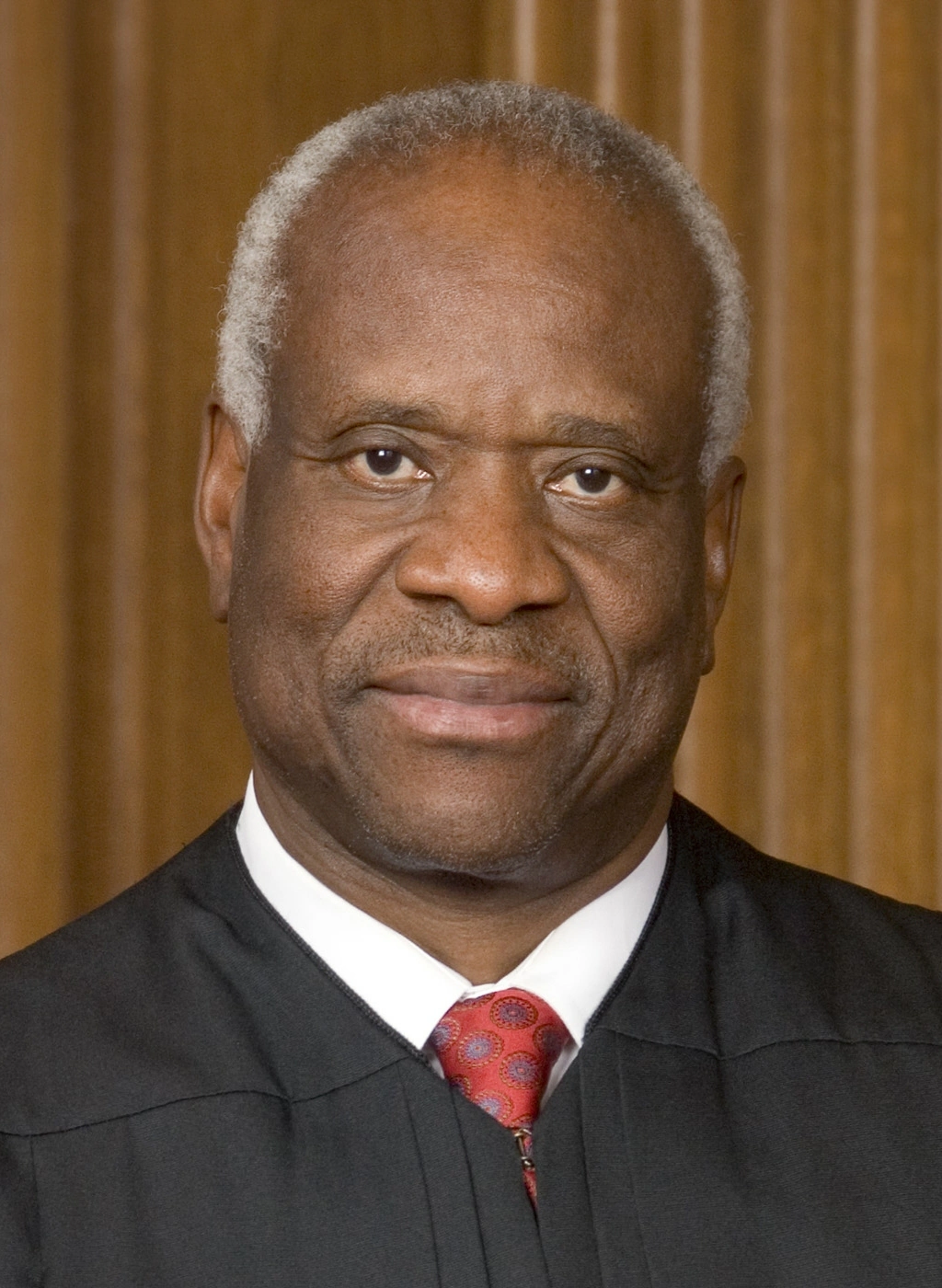
| 24 Quotes | |
| Occup. | Judge |
| From | USA |
| Born | June 23, 1948 Pin Point, Georgia, U.S. |
| Age | 77 years |
| Cite | |
Citation Formats
APA Style (7th ed.)
Clarence thomas biography, facts and quotes. (2026, February 11). FixQuotes. https://fixquotes.com/authors/clarence-thomas/
Chicago Style
"Clarence Thomas biography, facts and quotes." FixQuotes. February 11, 2026. https://fixquotes.com/authors/clarence-thomas/.
MLA Style (9th ed.)
"Clarence Thomas biography, facts and quotes." FixQuotes, 11 Feb. 2026, https://fixquotes.com/authors/clarence-thomas/. Accessed 12 Feb. 2026.
Early Life and Background
Clarence Thomas was born on June 23, 1948, in Pin Point, Georgia, a small Gullah-Geechee community outside Savannah where tides, shrimp boats, and Catholic ritual shaped daily life as much as Jim Crow did. His father left early; his mother, Leola Williams, worked long hours and expected discipline. Poverty was not abstract but practical - unreliable heat, patched shoes, and a constant sense that dignity had to be defended in public spaces designed to deny it.A turning point came when a fire damaged the family home and, in the early 1950s, Thomas and his younger brother were sent to live with their maternal grandfather, Myers Anderson, in Savannah. Anderson, a stern, self-made man who ran a small business, insisted on work, church, and impeccable conduct. The regimen was both shelter and pressure: the boy absorbed a code that linked self-command with survival, and learned to read power in tone, posture, and the fine print of rules - habits that later colored his suspicion of institutions that promised uplift while demanding deference.
Education and Formative Influences
Thomas attended segregated Catholic schools staffed by nuns, then entered St. John Vianney Minor Seminary on Isle of Hope, and later studied at Conception Seminary College in Missouri. The assassination of Martin Luther King Jr. in 1968 shook his faith in gradualism and pushed him out of the seminary; he transferred to the College of the Holy Cross, graduating in 1971 amid the turbulence of Vietnam-era politics and campus activism. He earned a J.D. from Yale Law School in 1974, where he later described feeling both trained and typecast - marked by affirmative action debates that, in his telling, complicated how employers evaluated him and helped harden his insistence on individual merit and inward resilience.Career, Major Works, and Turning Points
After brief stints in Missouri (including work as an assistant attorney general) and private practice, Thomas moved into Republican administration circles, serving as a legislative assistant to Senator John Danforth and then in the Reagan administration: Assistant Secretary for Civil Rights at the Department of Education (1981-1982) and Chairman of the Equal Employment Opportunity Commission (1982-1990). In 1990 President George H.W. Bush appointed him to the U.S. Court of Appeals for the D.C. Circuit; a year later Bush nominated him to succeed Thurgood Marshall on the Supreme Court. The 1991 confirmation hearings - dominated by Anita Hill's testimony and Thomas's fierce denial - became a national referendum on race, sex, and credibility. Confirmed by a narrow 52-48 vote, he entered a Court reshaped by conservative legal movements, and over time became its most consistent originalist voice, often writing separately to press arguments farther than the majority would go.Philosophy, Style, and Themes
Thomas's jurisprudence revolves around a strict reading of constitutional text and history, skepticism of judicially invented tests, and a willingness to revisit precedent. In areas like federal power, the administrative state, and the Second Amendment, he argues that modern government has drifted from constitutional design; his opinions frequently treat separation of powers and enumerated rights as personal liberty's main defenses, not mere institutional etiquette. He is also unusually attentive to how law shapes everyday dependence: in speech and writing he returns to the belief that freedom is fragile and can be lost by increments, a mood captured in his warning, "I do think that our freedoms are at risk". That anxiety is less panic than a lifelong reflex from growing up where formal rules enforced informal humiliations.His style is spare, often uncompromising, and psychologically revealing: the driving fear is not conflict but coerced conformity. He has said, "And I don't think that government has a role in telling people how to live their lives. Maybe a minister does, maybe your belief in God does, maybe there's another set of moral codes, but I don't think government has a role". This helps explain his resistance to broad regulatory mandates and his preference for clear constitutional limits. The same temper appears in his civil-rights heterodoxy, where he rejects racial sorting as a cure for racial injustice: "I don't believe in quotas. America was founded on a philosophy of individual rights, not group rights". Beneath the doctrine sits an autobiographical creed learned from his grandfather - that self-respect requires both manners and boundaries, and that any system claiming to help can also quietly demand submission.
Legacy and Influence
Thomas has reshaped conservative legal thought by making originalism less rhetorical and more operational - a method used to challenge long-settled precedents in areas from federal agencies to substantive due process. His long tenure, frequent solo concurrences, and eventual alignment with a more originalist Court turned once-marginal arguments into mainstream ones, influencing clerks, lower-court judges, and the Federalist Society pipeline that now dominates Republican judicial selection. At the same time, his life story and confirmation battle made him a permanent symbol in America's culture wars: admired as a jurist of iron consistency and self-reliance, criticized as a judge whose readings of history narrow modern protections. Either way, Clarence Thomas endures as a figure who fused biography into jurisprudence - a man whose sense of freedom, authority, and dignity was forged in the South's hard constraints and then projected onto the nation's highest court.Our collection contains 24 quotes written by Clarence, under the main topics: Witty One-Liners - Leadership - Freedom - Equality - Knowledge.
Other people related to Clarence: Carol Moseley Braun (Politician), Janet Napolitano (Politician), Elena Kagan (Judge), Joe Biden (Vice President), John Paul Stevens (Judge), Stephen Breyer (Judge), John Bolton (Statesman), Jane Mayer (Journalist), Anthony Kennedy (Judge), Nina Totenberg (Journalist)