
Cristiano Ronaldo Biography Quotes 13 Report mistakes
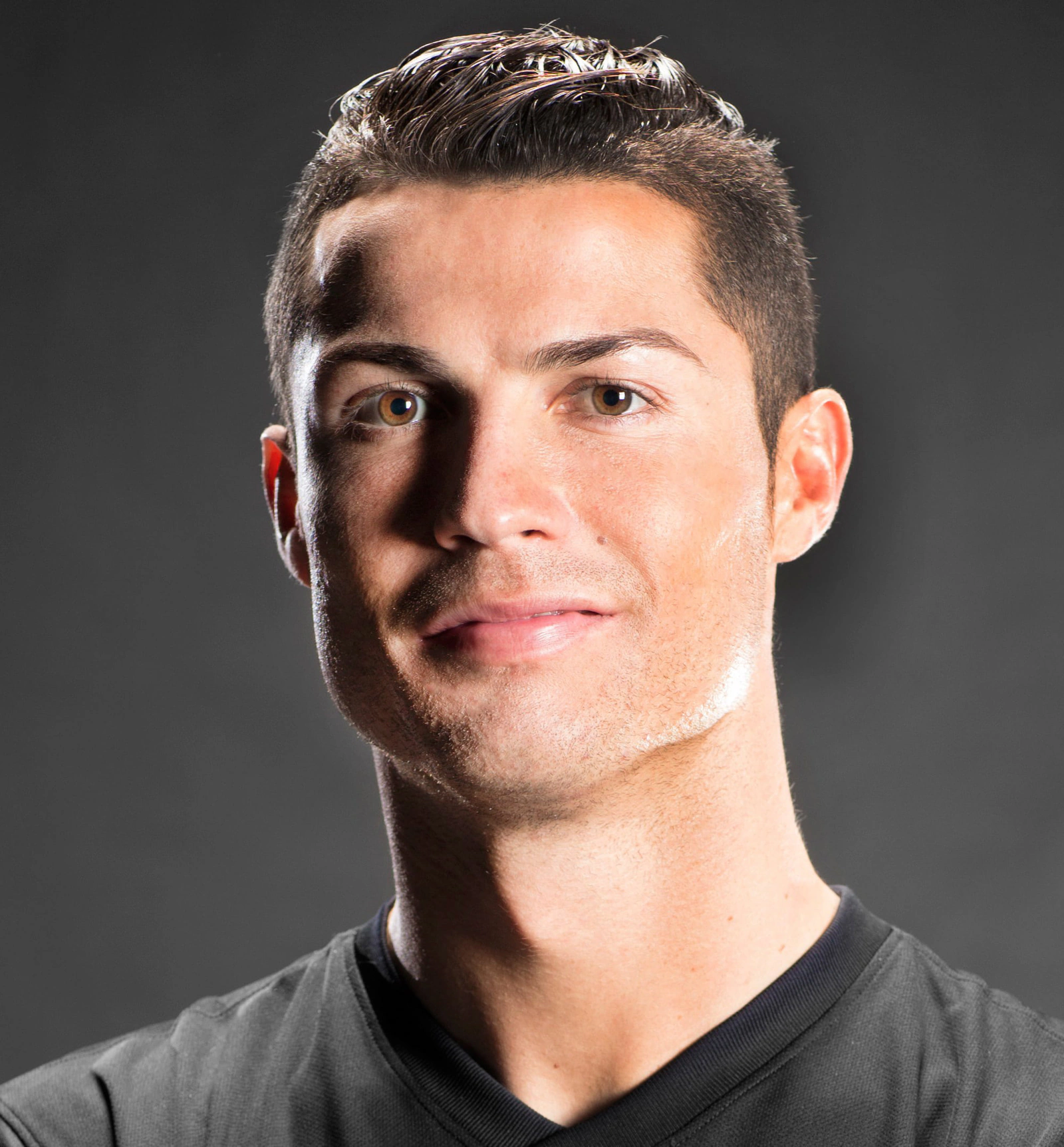
| 13 Quotes | |
| Born as | Cristiano Ronaldo dos Santos Aveiro |
| Occup. | Athlete |
| From | Portugal |
| Born | February 5, 1985 Funchal, Madeira, Portugal |
| Age | 41 years |
| Cite | |
Citation Formats
APA Style (7th ed.)
Cristiano ronaldo biography, facts and quotes. (2026, February 11). FixQuotes. https://fixquotes.com/authors/cristiano-ronaldo/
Chicago Style
"Cristiano Ronaldo biography, facts and quotes." FixQuotes. February 11, 2026. https://fixquotes.com/authors/cristiano-ronaldo/.
MLA Style (9th ed.)
"Cristiano Ronaldo biography, facts and quotes." FixQuotes, 11 Feb. 2026, https://fixquotes.com/authors/cristiano-ronaldo/. Accessed 20 Mar. 2026.
Early Life and Background
Cristiano Ronaldo dos Santos Aveiro was born on 1985-02-05 in Funchal, Madeira, Portugal, a working-class Atlantic island whose remoteness sharpened ambition as much as it limited opportunity. The youngest of four children, he grew up in Santo Antonio with a family economy that required improvisation and sacrifice. His father, Jose Dinis Aveiro, worked in municipal roles and as a kit man; his mother, Maria Dolores dos Santos Viveiros Aveiro, held multiple jobs to keep the household afloat. Football, played on streets and dusty lots, became both escape and identity.From early adolescence, his competitiveness was less a pose than a temperament - quick to tears at defeat, quicker to return to the ball. In a small community where reputation travels fast, his gifts drew attention, but so did his appetite for work: extra sessions, repeated drills, a body already treated like an instrument. Madeira produced talent, yet rarely global superstardom; Ronaldo grew up hearing, implicitly, that leaving was the price of becoming.
Education and Formative Influences
At 12, he left home for Sporting Clube de Portugal's academy in Lisbon, an abrupt migration that reshaped his inner life: loneliness became fuel, and routine became comfort. A well-documented heart condition in his teens was treated with a procedure that allowed him to continue at full intensity, deepening his sense that a career could be lost quickly if not protected fiercely. In the academy system, he absorbed Portuguese technical schooling while fixating on elite professional standards, modeling himself on the concentration and physical preparation he associated with the best European players.Career, Major Works, and Turning Points
Ronaldo debuted for Sporting in 2002; a 2003 friendly against Manchester United accelerated his ascent, and he joined United that year, becoming the club's first Portuguese player of the Premier League era. Under Sir Alex Ferguson, raw flair hardened into end product: Premier League titles, a UEFA Champions League triumph in 2008, and his first Ballon d'Or the same year. The 2009 move to Real Madrid, then a world-record fee, turned him into a weekly referendum on greatness; he delivered a club-record 450 goals, four Champions League titles (including the three-peat from 2016-2018), and a defining rivalry with Lionel Messi that set the era's metrics. With Portugal, he endured near-misses before captaining the team to Euro 2016 and the 2019 UEFA Nations League, redefining what the national side could imagine. Later chapters - Juventus (2018-2021), a return to United (2021-2022), and a lucrative move to Al Nassr in Saudi Arabia - showed a star managing decline in one register while extending dominance in another, always negotiating legacy in real time.Philosophy, Style, and Themes
Ronaldo's psychology is built around controlled hunger: an athlete who treats desire as a discipline rather than a mood. His self-myth is not effortless genius but deliberate construction, crystallized in the blunt credo, “Talent without working hard is nothing”. That sentence is less motivational poster than self-description - the rationale for the private repetitions, the calibrated diet, the sleep regimen, the insistence that a career is won on ordinary days.His style evolved with his body and with football's tactics. Early on, he was a wide attacker of feints and acceleration; later he became a penalty-box finisher whose timing and aerial power punished small lapses. Beneath the highlight reel sits an emotional engine that converts pressure into performance. When he says, “Your love makes me strong. Your hate makes me unstoppable”. , he reveals a mind that metabolizes judgment, turning hostility into focus instead of fragility. Even his public confidence often reads as armor for a deeper anxiety about waste - years, chances, seasons. He frames it as an ethic of craft: “I am not a perfectionist, but I like to feel that things are done well. More important than that, I feel an endless need to learn, to improve, to evolve”. The theme is constant self-revision - not only skills, but roles, from winger to scorer to leader.
Legacy and Influence
Ronaldo's enduring influence lies in how he fused modern celebrity with old-fashioned professionalism, making preparation itself part of the spectacle. Statistically, he helped redefine the ceiling for scoring in the Champions League and in international football; culturally, he became a template for global athletes from small places who sell both excellence and relentlessness. His career also marks football's transformation into a hyper-mediated industry - brand, narrative, and performance entwined - yet his most persuasive argument remains sporting: a long arc of adaptation, where ambition was never a phase but a method.Our collection contains 13 quotes written by Cristiano, under the main topics: Motivational - Sports - Work Ethic - Confidence - Teamwork.
Other people related to Cristiano: Luis Figo (Athlete), Ryan Giggs (Athlete), Wayne Rooney (Athlete)
Source / external links