
Darrell Hammond Biography Quotes 26 Report mistakes
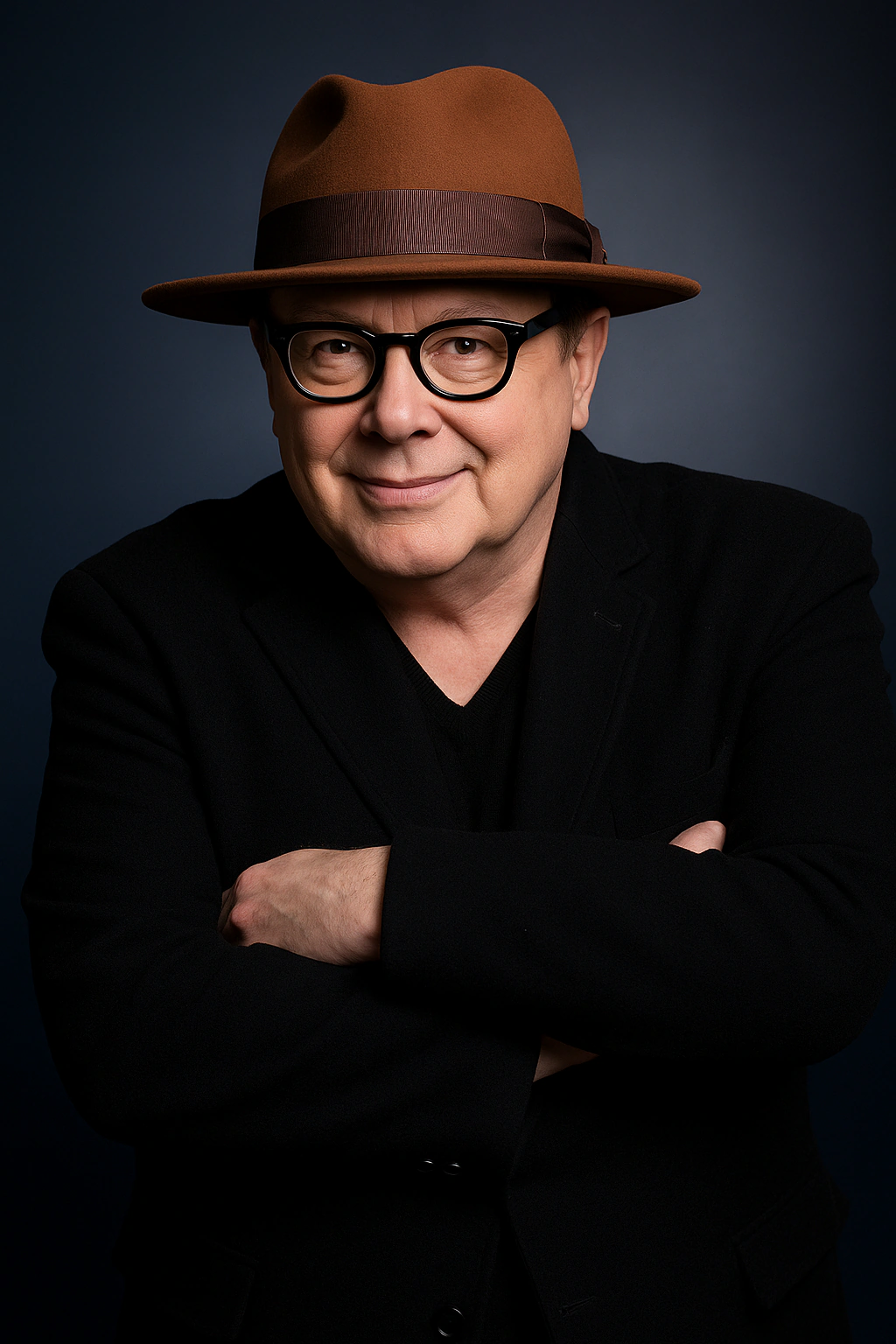
| 26 Quotes | |
| Born as | Darrell Clayton Hammond |
| Occup. | Comedian |
| From | USA |
| Spouses | Elizabeth Hammond (1990-1994) (1997-2012) |
| Born | October 8, 1955 Melbourne, Florida, United States |
| Age | 70 years |
| Cite | |
Citation Formats
APA Style (7th ed.)
Darrell hammond biography, facts and quotes. (2026, February 27). FixQuotes. https://fixquotes.com/authors/darrell-hammond/
Chicago Style
"Darrell Hammond biography, facts and quotes." FixQuotes. February 27, 2026. https://fixquotes.com/authors/darrell-hammond/.
MLA Style (9th ed.)
"Darrell Hammond biography, facts and quotes." FixQuotes, 27 Feb. 2026, https://fixquotes.com/authors/darrell-hammond/. Accessed 28 Mar. 2026.
Early Life and Background
Darrell Clayton Hammond was born on October 8, 1955, in the United States, and grew up in a home that would later become central to how audiences understood his comedy: not as carefree clowning, but as craft forged under pressure. In interviews and in his memoir, he described a childhood marked by violence and emotional deprivation, with a mother who was abusive and a household where unpredictability trained him to read faces and shifts in mood with the precision of a professional mimic. That hypervigilance - a survival skill first, an artistic tool later - became the seedbed for his uncanny ability to inhabit other people.
By adolescence and early adulthood, Hammond was already living with the aftereffects of chronic trauma: depression, self-harm, and addiction would recur across decades. Yet even then, performance offered a double promise. It was an escape from a dangerous interior life and a method of control - a way to set the terms of attention. The irony of his later fame is that the skill audiences celebrated, his exacting impressions, was inseparable from the child who learned to anticipate danger by studying tone, posture, and micro-expression.
Education and Formative Influences
Hammond attended the University of Florida, and his transition to college exposed how quickly private suffering could become public crisis; he later recalled arriving and almost immediately intersecting with the mental-health system. “When I left my parents' home when I was 19, I went to the University of Florida, and within 24 hours was in the mental health department. And within 20 minutes, I was being told by the director there that they didn't have what I needed there”. Alongside that instability, he absorbed the rhythms of American political speech and celebrity mannerisms that would become his raw material, developing impressions not as party tricks but as a way to decode power and belonging.
Career, Major Works, and Turning Points
After years of working the stand-up circuit, Hammond became a defining voice of late-1990s and early-2000s television comedy as a cast member on Saturday Night Live (1995-2009), one of the longest tenures in the show's history. He became famous for impressions that turned public figures into psychological portraits: Bill Clinton as a charmingly predatory glad-hander; Sean Connery as swaggering menace; Donald Trump as blustering confidence; and an array of announcer voices that proved as controlled as his character work. The job also amplified his struggles, and he has spoken openly about addiction and psychiatric hospitalization during and after his run. A major turning point came when he transitioned from on-camera work to becoming SNL's announcer, inheriting a sonic role once defined by Don Pardo - a recognition that his instrument was not only his face, but his voice as an institution.
Philosophy, Style, and Themes
Hammond's comedy is built on the premise that identity is performative and power is audible. He listens for the hidden metronome in a person's speech - the pauses, the self-soothing repetitions, the way an ego leans on certain syllables. His best impressions do not merely imitate; they expose the desires beneath the public mask: hunger for approval, the need to dominate, the fear of appearing weak. This is why his political work lands even when it is not overtly partisan - it treats leaders as characters shaped by insecurity, vanity, and appetite, not as abstractions.
Underneath the technical virtuosity is a private ethic of incremental survival, the sense that progress is made not by a single transformation but by accumulation. “I've become fascinated by the idea that it's really achievable to make two or three small improvements in a week, and by the end of the year, it's 150 improvements”. The line reads like self-help, but in Hammond's context it is closer to a recovery strategy: replace catastrophe with manageable steps. He is also unusually candid about the costs his volatility imposed on others, puncturing the romantic myth that great comedy requires destruction. “I have to give the SNL crew props - it cannot have been easy to work with me”. That admission frames his body of work as a negotiation between brilliance and damage, discipline and compulsion.
Legacy and Influence
Hammond endures as one of SNL's most technically accomplished impressionists and one of its most revealing case studies in what it takes to keep producing under psychic strain. His influence is audible in the modern expectation that impressions should be not just accurate but interpretive - a compressed biography delivered in posture and cadence. Just as importantly, his openness about trauma, hospitalization, and addiction widened the public vocabulary around comedic success, making space for a truer story: that the voice behind the laughter can be both masterful and wounded, and that endurance in a high-pressure cultural institution can be an act of craft, compromise, and hard-won repair.
Our collection contains 26 quotes written by Darrell, under the main topics: Witty One-Liners - Funny - Dark Humor - Justice - Sarcastic.
Other people related to Darrell: Ana Gasteyer (Comedian)
Frequently Asked Questions
- Darrell Hammond book: Darrell Hammond wrote a memoir titled “God, If You’re Not Up There, I’m F*cked,” about his life, career, and struggles with trauma and addiction.
- Darrell Hammond movies and TV show's: Darrell Hammond has appeared in films and TV shows such as Scary Movie 3, Blues Brothers 2000, Law & Order: SVU, and various comedy specials.
- Darrell Hammond young: As a young man, Darrell Hammond developed his talent for impressions early and later honed it in stand‑up comedy before joining SNL.
- What is Darrell Hammond net worth? Estimates of Darrell Hammond’s net worth commonly range around a few million dollars, though exact figures vary by source.
- Darrell Hammond Trump: Darrell Hammond portrayed Donald Trump on Saturday Night Live for many years before Alec Baldwin took over the role.
- Darrell Hammond SNL: Darrell Hammond was a long‑time cast member on Saturday Night Live, known for his celebrity impressions and later serving as the show’s announcer.
- Darrell Hammond the office: Darrell Hammond did not have a major role in the U.S. version of The Office; he is best known for his work on Saturday Night Live.
- Darrell Hammond Sean Connery: Darrell Hammond is famous for his recurring impression of Sean Connery on the Saturday Night Live ‘Celebrity Jeopardy!’ sketches.
- How old is Darrell Hammond? He is 70 years old
Source / external links