
Demetri Martin Biography Quotes 30 Report mistakes
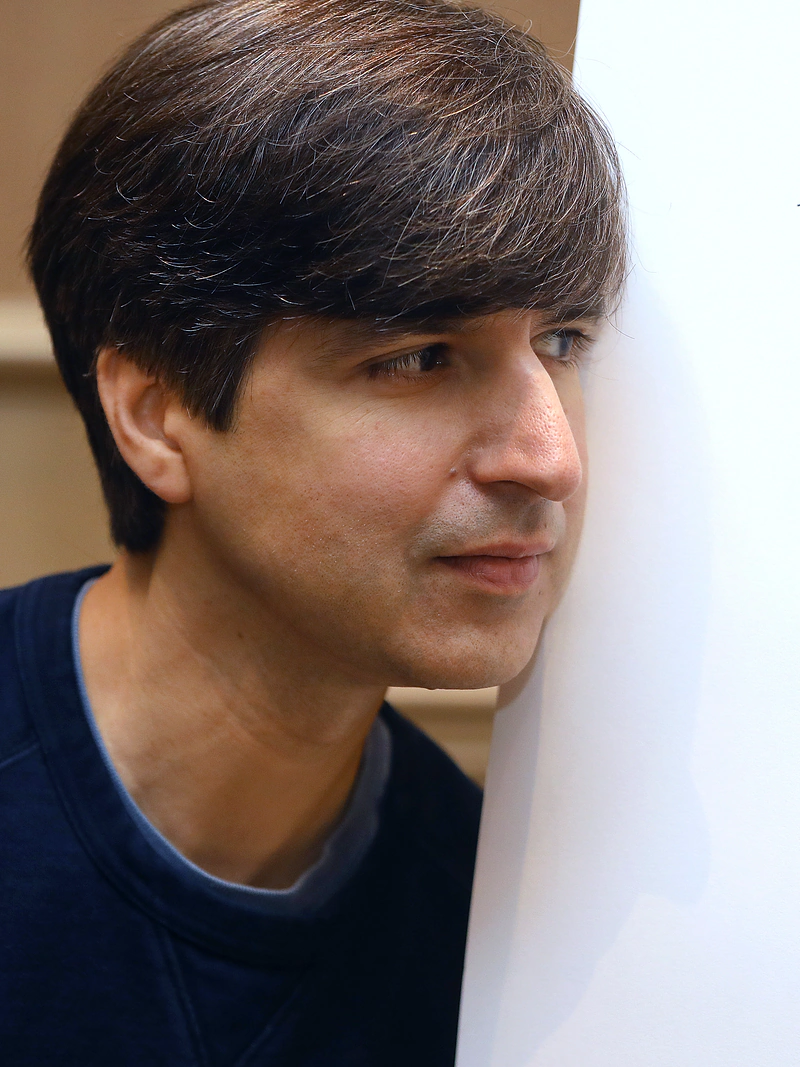
| 30 Quotes | |
| Born as | Demetri Evan Martin |
| Occup. | Comedian |
| From | USA |
| Spouse | Rachael Beame (m. 2012–2015) |
| Born | May 25, 1973 New York City, New York, USA |
| Age | 52 years |
| Cite | |
Citation Formats
APA Style (7th ed.)
Demetri martin biography, facts and quotes. (2026, February 11). FixQuotes. https://fixquotes.com/authors/demetri-martin/
Chicago Style
"Demetri Martin biography, facts and quotes." FixQuotes. February 11, 2026. https://fixquotes.com/authors/demetri-martin/.
MLA Style (9th ed.)
"Demetri Martin biography, facts and quotes." FixQuotes, 11 Feb. 2026, https://fixquotes.com/authors/demetri-martin/. Accessed 26 Mar. 2026.
Early Life and Background
Demetri Evan Martin was born May 25, 1973, in New York City, and grew up in the Northeast in a household that combined professional discipline with artistic curiosity. His father, a Greek Orthodox priest, brought a tradition of ritual language and moral parable into daily life, while his mother worked in health care, grounding the family in pragmatic service. That mix - lyrical speech on one side, clinical exactness on the other - later surfaced in his comedy as a constant negotiation between wordplay and logic.As a teenager in the 1980s and early 1990s, Martin absorbed an American culture newly saturated with stand-up on cable, alternative comedy clubs, and a rising reverence for observational wit. He was not a confessional comic by temperament; friends and early audiences noted a reserved, analytical presence that seemed to watch the room while performing in it. The persona that emerged was less about dominance than about precision - a mind arranging the world into surprising categories, often with the soft authority of someone who would rather edit reality than argue with it.
Education and Formative Influences
Martin attended Yale University, graduating in 1995, then pursued law, studying at Harvard Law School. The academic path mattered not as biography ornament but as training: law sharpened his instinct for definitions, edge cases, and the comedy hidden in phrasing. Before finishing a conventional legal trajectory, he gravitated toward performing, a pivot that suggested a deeper need than career optimization - the need to turn analysis into art, to make thought visible and social by placing it onstage.Career, Major Works, and Turning Points
In the late 1990s and early 2000s he built credibility through clubs and television, writing for Late Night with Conan O'Brien and becoming a frequent presence on The Daily Show, where his cerebral delivery fit the era's appetite for irony and compressed argument. His stand-up albums and specials, including These Are Jokes (2006) and Person (2007), defined his signature toolkit: one-liners, list structures, drawings, and musical interludes that treated comedy as a multi-format essay. He expanded into film with his feature debut as writer-director-star in Taking Woodstock (2009), and later in Dean (2016), showing a parallel ambition to translate his interior voice into narrative - quieter than his stage work, but similarly concerned with how people manage loss, longing, and self-invention.Philosophy, Style, and Themes
Martin's comedy is built on the premise that language is the first unreliable narrator. He treats common phrases as contracts with hidden clauses, exposing how habit dulls meaning until a joke restores the original strangeness. When he quips, “Saying, 'I'm sorry' is the same as saying, ' I apologize.' Except at a funeral”. he is not merely toggling synonyms - he is testing the emotional weight of formal speech, showing how context, not vocabulary, decides sincerity. The psychology beneath the punch line is characteristic: he distrusts automatic expression, preferring a deliberate, almost legalistic attention to what words are doing to other people.His style is similarly skeptical of the props we accept as necessary. “A lot of people like lollipops. I don't like lollipops. To me, a lollipop is hard candy plus garbage. I don't need a handle. Just give me the candy”. reads like a consumer complaint, but it is really a worldview - strip away the handle, remove the pretense, keep the essential. Even his more elaborate observational riffs use logic as a playful weapon, with the narrator acting baffled by a world that refuses to be consistent: “I noticed that there are no B batteries. I think that's to avoid confusion, cause if there were you wouldn't know if someone was stuttering. 'Yes, hello I'd like some b-batteries.' 'What kind?' 'B-batteries.' 'What kind?' 'B-batteries!' and D-batteries that's hard for foreigners. 'Yes, I would like de batteries.'”. In this, the deeper theme is empathy through pedantry - the attempt to imagine how systems fail different people, then transmute that attention into laughter rather than grievance.
Legacy and Influence
Martin helped define a 2000s strain of American comedy that prized intelligence without cruelty, abstraction without detachment, and experimentation without contempt for the classic joke. His integration of drawings, diagrams, and musical fragments anticipated the era of multimedia stand-up and the internet-native expectation that a comedian can be a designer of forms, not only a teller of stories. For audiences, he normalized a persona of quiet intensity - a performer who looks like he is thinking in real time - and for younger comics he offered a durable lesson: rigor can be funny, and restraint can be its own kind of charisma.Our collection contains 30 quotes written by Demetri, under the main topics: Witty One-Liners - Dark Humor - Puns & Wordplay.
Source / external links