
Denis Diderot Biography Quotes 46 Report mistakes
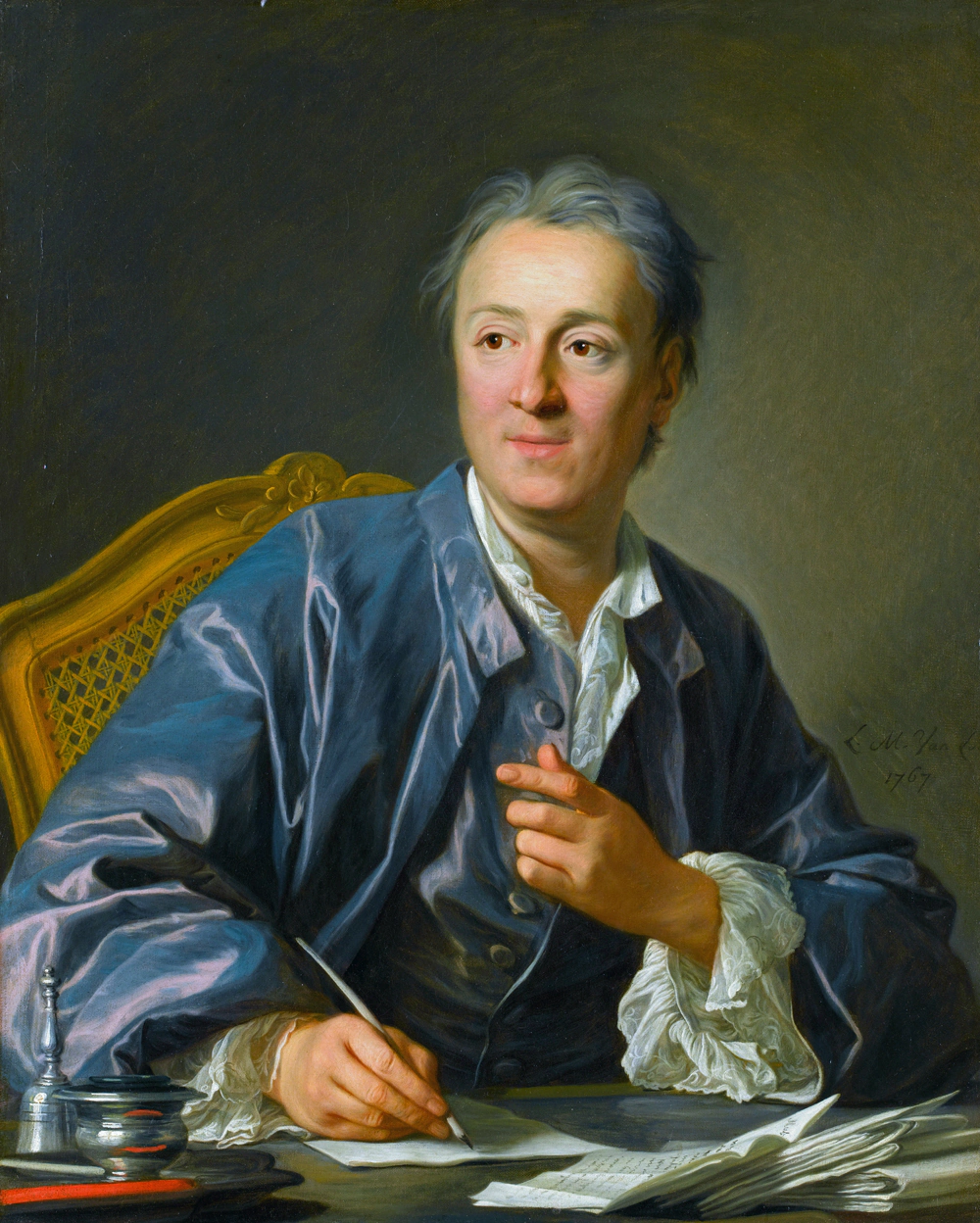
Attr: Louis-Michel van Loo
| 46 Quotes | |
| Known as | Diderot |
| Occup. | Editor |
| From | France |
| Spouse | Antoinette Champion |
| Born | October 5, 1713 Langres, Champagne, France |
| Died | July 31, 1784 Paris, France |
| Cause | Natural Causes |
| Aged | 70 years |
| Cite | |
Citation Formats
APA Style (7th ed.)
Denis diderot biography, facts and quotes. (2026, February 11). FixQuotes. https://fixquotes.com/authors/denis-diderot/
Chicago Style
"Denis Diderot biography, facts and quotes." FixQuotes. February 11, 2026. https://fixquotes.com/authors/denis-diderot/.
MLA Style (9th ed.)
"Denis Diderot biography, facts and quotes." FixQuotes, 11 Feb. 2026, https://fixquotes.com/authors/denis-diderot/. Accessed 25 Mar. 2026.
Early Life and Background
Denis Diderot was born on 5 October 1713 in Langres, a cathedral town in Champagne where craft, clergy, and civic tradition were tightly interwoven. His father, Didier Diderot, was a respected master cutler; the family expected the bright boy to rise through the Church, the most secure ladder of advancement in provincial France. That early proximity to both artisan discipline and ecclesiastical authority shaped him: he learned to respect skill and workmanship while instinctively bristling at inherited power.He arrived in Paris as a young man during the long afterglow of Louis XIV and the new reign of Louis XV, when salons, clandestine booksellers, and police surveillance coexisted in a tense equilibrium. Diderot lived precariously - tutoring, translating, borrowing - in a city where ideas could buy a dinner or a prison term. His marriage in 1743 to Anne-Toinette Champion, made against his father's wishes, marked a decisive private rebellion; domestic strain and money worries never left him, but neither did the stubborn insistence on choosing his own life.
Education and Formative Influences
Educated first by Jesuits in Langres, Diderot studied philosophy and theology and took the Master of Arts at the University of Paris in 1732, but his real schooling came from Paris itself: English empiricism (Locke), Newtonian science, the theater, and the argumentative culture of cafes and salons. He trained his mind on translation and synthesis - especially through rendering works by Shaftesbury and others into French - and he absorbed the era's central question: whether knowledge and morality could be grounded in nature rather than revelation, without losing human warmth, pleasure, or pity.Career, Major Works, and Turning Points
Diderot's early publications moved quickly from deism to a more radical naturalism: Pensees philosophiques (1746) tested religious orthodoxy; Lettre sur les aveugles (1749), using the case of the blind to probe perception and belief, triggered his arrest and imprisonment at Vincennes, a shock that hardened his caution without dimming his audacity. His defining labor began in 1747 when he became editor, with Jean le Rond d'Alembert, of the Encyclopedie, a vast collaborative project (1751-1772) that reorganized knowledge around arts, trades, and critical inquiry; harassment, bans, and betrayal forced Diderot to write, revise, and negotiate in semi-secrecy while holding the enterprise together by sheer stamina. Alongside this he produced fiction, criticism, and dialogue - including Rameau's Nephew (composed later, circulated in manuscript), Jacques the Fatalist, Le Fils naturel, and Salon reviews - and he advised Catherine II of Russia after her purchase of his library in 1765, a patronage arrangement that kept him solvent while he remained intellectually independent.Philosophy, Style, and Themes
Diderot's inner life was a contest between appetite and conscience, skepticism and longing, a temperament that distrusted systems yet craved explanations large enough to hold the whole human animal. He imagined thought as a physical process, mind as matter in motion, and ethics as a problem of sensibility - how bodies learn sympathy. His most characteristic form was the restless dialogue: ideas collide, contradict themselves, test their own limits, and turn toward theater because he believed truth often appears as performance, not as lecture. The Encyclopedie was therefore not merely a reference work but an anthropology of making and knowing, treating the workshop as seriously as the academy and smuggling a new dignity for ordinary labor into elite culture.His epistemology was openly methodological and psychological: he wanted the courage to doubt, the patience to observe, and the honesty to revise. “There are three principal means of acquiring knowledge... observation of nature, reflection, and experimentation. Observation collects facts; reflection combines them; experimentation verifies the result of that combination”. That triad was also a portrait of his own mind - collecting impressions hungrily, recombining them in dazzling analogies, and then asking reality to arbitrate. His anti-clericalism was not mere spite but a response to institutional coercion and the fear it cultivated; he sharpened that anger into moral asymmetry: “The philosopher has never killed any priests, whereas the priest has killed a great many philosophers”. Yet he insisted that intellectual ambition required emotional heat as well as logic, a view that explains his erotic frankness, his compassion for outsiders, and the fervor behind his polemics: “Only passions, great passions can elevate the soul to great things”.
Legacy and Influence
Diderot died in Paris on 31 July 1784, five years before the Revolution that later readers felt pulsing in his pages, and he left behind a body of work whose full range became clear only as manuscripts surfaced and censored texts circulated. As an editor he modeled a modern kind of authorship: not solitary genius but organizer of networks, curator of expertise, and strategic writer under pressure. The Encyclopedie helped normalize secular, technical, and critical ways of thinking across Europe; his dialogues and narrative experiments prefigured modernist self-questioning; his art criticism anticipated a language of perception and affect. Above all, he bequeathed an Enlightenment with nerves - a philosophy that dared to be embodied, argumentative, and alive.Our collection contains 46 quotes written by Denis, under the main topics: Witty One-Liners - Motivational - Ethics & Morality - Truth - Wisdom.
Other people related to Denis: Robert Bresson (Director), Pierre Bayle (Philosopher), Peter Gay (Historian)
Denis Diderot Famous Works
- 1796 The Nun (Novel)
- 1796 Jacques the Fatalist (Novel)
- 1770 This is Not a Story (Novella)
- 1769 D'Alembert's Dream (Play)
- 1761 Rameau's Nephew (Play)
- 1751 Encyclopédie (Book)
Source / external links