
Don Mattingly Biography Quotes 3 Report mistakes
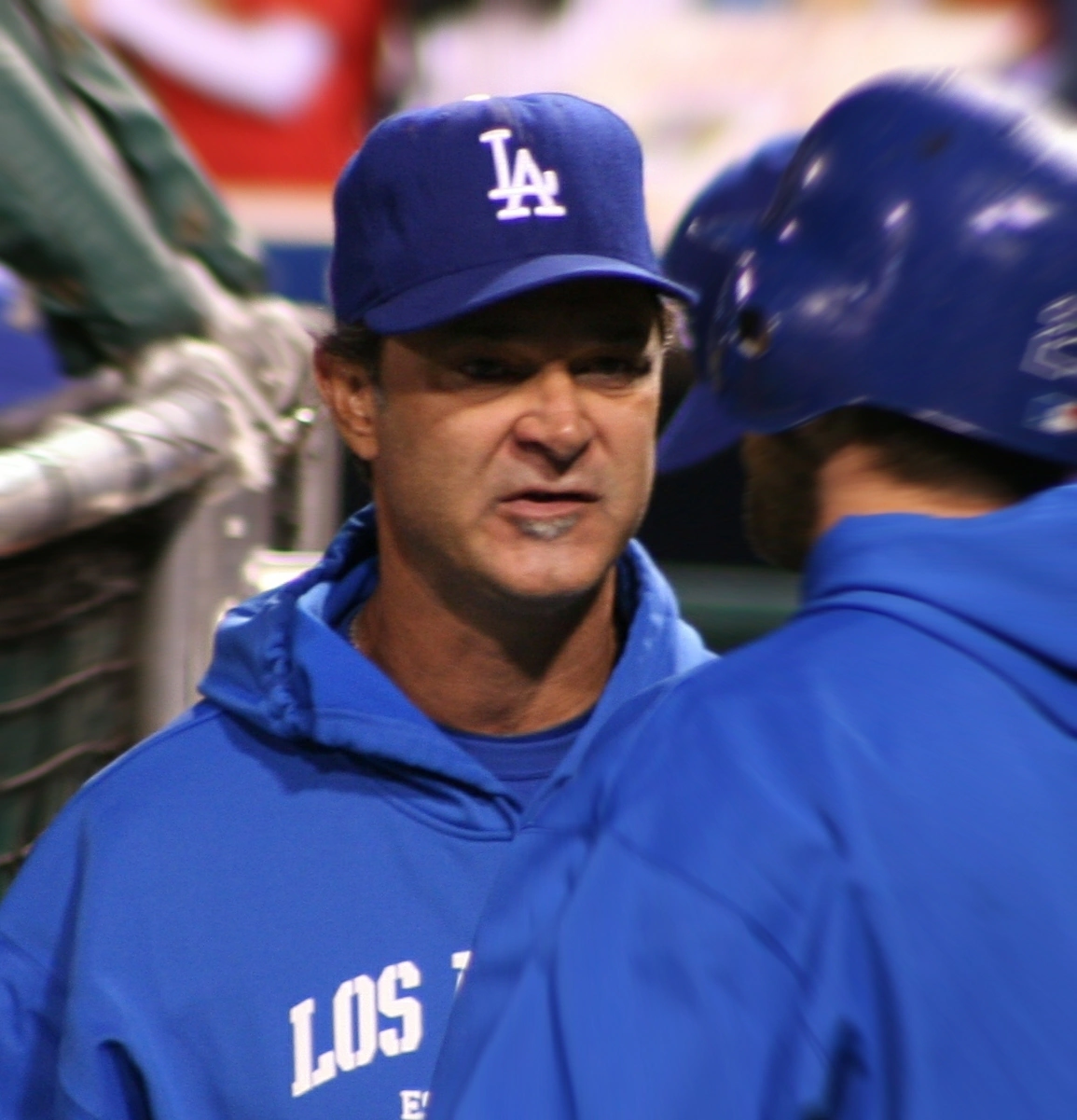
| 3 Quotes | |
| Born as | Donald Arthur Mattingly |
| Known as | "The Hit Man" or "Donnie Baseball" |
| Occup. | Athlete |
| From | USA |
| Born | April 20, 1961 Evansville, Indiana |
| Age | 64 years |
| Cite | |
Citation Formats
APA Style (7th ed.)
Don mattingly biography, facts and quotes. (2026, February 11). FixQuotes. https://fixquotes.com/authors/don-mattingly/
Chicago Style
"Don Mattingly biography, facts and quotes." FixQuotes. February 11, 2026. https://fixquotes.com/authors/don-mattingly/.
MLA Style (9th ed.)
"Don Mattingly biography, facts and quotes." FixQuotes, 11 Feb. 2026, https://fixquotes.com/authors/don-mattingly/. Accessed 28 Mar. 2026.
Early Life and Background
Donald Arthur Mattingly was born April 20, 1961, in Evansville, Indiana, a Midwestern river city where Catholic parishes, factory shifts, and high school gyms still set the calendar. In a household that prized steadiness and work, he grew up in a culture that treated baseball less as celebrity theater than as a craft - something learned by repetition, played after school, and argued over at kitchen tables. That early distance from big-league mythology helped form his later persona: intensely serious, often self-effacing, and suspicious of hype.Left-handed, broad-shouldered, and unusually coordinated, Mattingly became a local phenomenon at Reitz Memorial High School, where he hit with both power and uncommon bat control. He set national high school records for RBIs in a season and career, forcing scouts to fly into southern Indiana to see a hitter who looked built for a pro park. The attention did not transform him into a showman; it hardened his preference for privacy and for letting results speak, a temperament that would later fit New York pressure better than it seemed it should.
Education and Formative Influences
Mattingly was drafted by the New York Yankees in 1979 and signed out of high school, entering an organization still living on the aura of the 1970s dynasty even as it slid into the Steinbrenner era of impatience and churn. In the minors he learned two lessons that would define him: shorten the stroke, and keep your composure when the organization changes plans. By the early 1980s he had remade his swing into a line-drive machine, and he absorbed the old Yankee expectation that professionalism is a daily behavior, not a postseason reward.Career, Major Works, and Turning Points
Mattingly debuted in 1982, became the Yankees' everyday first baseman in 1983, and by 1984-86 was the franchise face - a Captain without the title at first, then officially named in 1991. His 1985 season (AL MVP) distilled his peak: elite contact, emerging home-run power, Gold Glove defense, and a quiet command of the clubhouse. He won nine Gold Gloves, three Silver Sluggers, and led the league in hits (1984), doubles (1986), and RBIs (1985). The great turning point was his back: chronic problems beginning in the late 1980s narrowed his swing and limited his durability, and the Yankees around him never reached October until his final season. In 1995 he finally played in the postseason and was brilliant, including a home-run barrage against Seattle, but the Yankees fell in the Division Series; he retired after 1995 just before the dynasty of 1996-2000. He later built a second career as a coach and manager: Yankees hitting coach (2004-06), Los Angeles Dodgers manager (2011-15) - winning NL Manager of the Year in 2015 - and Miami Marlins manager (2016-22), followed by returning to the Yankees organization in 2024 as bench coach.Philosophy, Style, and Themes
Mattingly's inner life as a baseball figure was shaped by distance - from celebrity, from nostalgia, and eventually from his own physical prime. He once admitted, “Honestly, at one time I though Babe Ruth was a cartoon character. I really did, I mean I wasn't born until 1961 and I grew up in Indiana”. The line reads like a joke, but it reveals an athlete who approached the sport without inherited myth. For him, greatness was not a museum; it was a standard you tried to meet on Tuesday night with sore hands, a plane ride tomorrow, and a lineup card full of problems.As a player, his style was economy: short stride, quick hands, and an obsession with squaring the ball, paired with technically clean defense at first base. As a manager, the same economy turned into blunt diagnostics. “I'd like to say this was our worst game. Unfortunately, I can't”. That candor signals not cruelty but a refusal to romanticize struggle - he believed clarity was a form of respect. He also carried a deep empathy for labor and status, and a willingness to say uncomfortable truths about a workplace. “The players get no respect around here. They give you money, that's it, not respect. We get constantly dogged and players from other teams love to see that. That's why nobody wants to play here”. It shows a leader who measured organizations by how they treat people when the cameras are off, and it helps explain why he valued consistency, routine, and dignity as competitive advantages.
Legacy and Influence
Mattingly endures as a paradox: one of the most beloved Yankees never to play in a World Series, yet also a template for how to carry a famous uniform without becoming consumed by it. In New York he became a symbol of professional excellence during lean years, and his No. 23 was retired in 1997, fixing his image in the franchise's moral memory as much as its statistical record. Across generations he influenced hitting approaches that favor contact quality over spectacle, and he modeled leadership that is quiet but exacting - the kind that treats the game as a job worth doing perfectly, even when perfection is impossible.Our collection contains 3 quotes written by Don, under the main topics: Sports - Respect - Defeat.
Other people related to Don: Derek Jeter (Athlete), Barry Bonds (Athlete)
Source / external links