
Donatella Versace Biography Quotes 11 Report mistakes
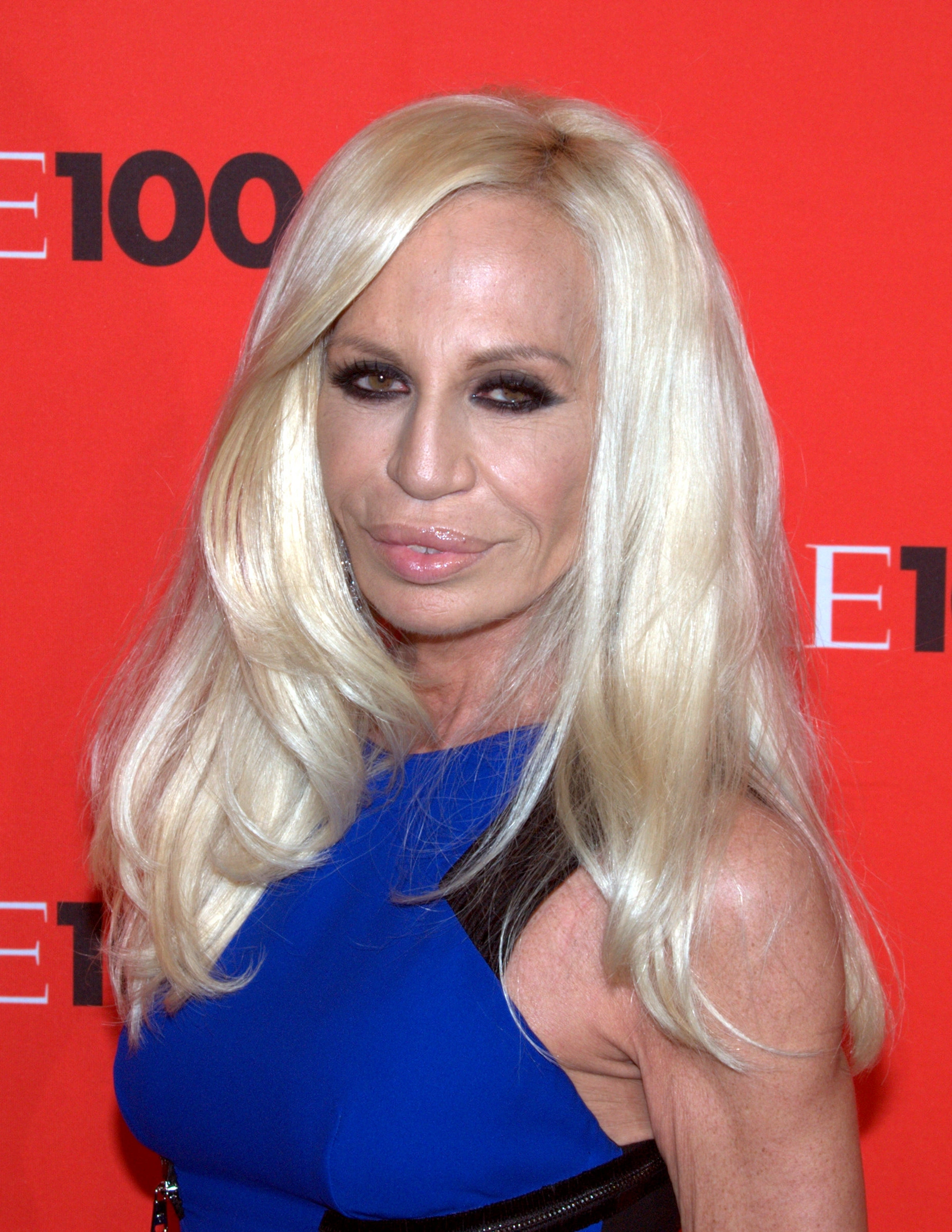
Attr: David Shankbone, CC BY 3.0
| 11 Quotes | |
| Occup. | Designer |
| From | Italy |
| Born | May 2, 1955 Reggio di Calabria, Italy |
| Age | 70 years |
| Cite | |
Citation Formats
APA Style (7th ed.)
Donatella versace biography, facts and quotes. (2026, February 11). FixQuotes. https://fixquotes.com/authors/donatella-versace/
Chicago Style
"Donatella Versace biography, facts and quotes." FixQuotes. February 11, 2026. https://fixquotes.com/authors/donatella-versace/.
MLA Style (9th ed.)
"Donatella Versace biography, facts and quotes." FixQuotes, 11 Feb. 2026, https://fixquotes.com/authors/donatella-versace/. Accessed 27 Mar. 2026.
Early Life and Background
Donatella Versace was born on May 2, 1955, in Reggio Calabria, at the toe of southern Italy, into a close-knit family whose daily rhythms mixed practicality with display. Her mother, Francesca, ran a dressmaking atelier that exposed Donatella early to fittings, fabrics, and the intimate negotiations between a woman's body and her self-image. The youngest of four, she grew up watching how style could be armor in a region marked by tradition, Catholic ceremony, and the social scrutiny of a small city.Her relationship with glamour was never abstract. As a teenager she began dyeing her hair, a deliberate act of self-invention that would later become part of the Versace silhouette as much as any cut or print. In the 1970s, Italy was modernizing fast - television, pop music, and Milanese fashion offered a vocabulary beyond Calabria - and Donatella learned to read fashion as both aspiration and language, something that could signal power, eroticism, belonging, or refusal.
Education and Formative Influences
She moved north to Florence to study languages and literature at the University of Florence, but her real education ran parallel: proximity to her brother Gianni Versace, already building his career, and immersion in the Italian fashion system as it professionalized into a global industry. The Milan of that era fused design with nightlife, celebrity, and the new machinery of brand building, and Donatella became a trusted sounding board - a sister with sharp instincts for youth culture, music, and the psychology of image at the moment when fashion was starting to behave like media.Career, Major Works, and Turning Points
By the late 1970s she was working closely with Gianni in Milan, advising on campaigns and aesthetics, and later shaping lines aimed at a younger consumer; she became vice president of the Versace Group and the creative force behind Versus, the brand's sharper, more playful counterpoint. The turning point came on July 15, 1997, when Gianni was murdered in Miami Beach, leaving her to take over as creative director amid public grief, internal pressure, and relentless comparison to a founder whose vision had defined an era of supermodels and high-octane glamour. Donatella's first couture show in 1998 was read as a test of legitimacy, and her subsequent years became a study in survival: preserving the Medusa-coded identity while evolving it through the 2000s, steering the house through corporate restructuring and an increasingly digital fashion economy, and ultimately guiding it into the late-2010s sale of Versace to Michael Kors Holdings (later Capri Holdings) while remaining the brand's public face and creative leader.Philosophy, Style, and Themes
Versace under Donatella is a sustained argument that fashion is not decoration but a high-stakes social signal - confidence engineered through cut, color, and attitude. Her instincts favor impact over moderation, a preference she articulates bluntly: “I don't like balance. Balance is not a word you can use in Versace fashion”. That refusal of neutrality is psychological as much as aesthetic; it suggests a designer who understands glamour as a survival skill, especially for women asked to shrink themselves. Her clothes often amplify the body rather than apologize for it - chainmail shimmer, slashed silhouettes, neon and baroque prints - yet the emphasis is less on the male gaze than on the sensation of command, the wearer as protagonist.Her public persona also reveals a pragmatic spine beneath the spectacle. “Fashion is not frivolous. I am a businesswoman, a very serious person”. In practice, that seriousness shows in her focus on brand coherence, celebrity alliances, and the disciplined repetition of recognizable codes - the Medusa, the Greek key, the printed opulence - while still feeding the audience's appetite for novelty. At the same time, she frames fashion's emotional purpose with disarming clarity: “Fashion is all about happiness. It's fun. It's important. But it's not medicine”. That line captures a core Versace tension: indulgence as a legitimate human need, but never a substitute for life itself - a worldview shaped by sudden loss, constant judgment, and the knowledge that image can empower without curing.
Legacy and Influence
Donatella Versace's legacy lies in keeping a founder-led house alive without embalming it. She transformed personal catastrophe into an enduring creative mandate, maintaining Versace's maximalist identity while making it legible to new generations raised on pop stardom, social media, and brand storytelling. Her influence reaches beyond runway trends into the modern idea of the designer as both executive and icon - someone who negotiates commerce, celebrity, and artistic continuity in public, and proves that a fashion house can be a living language rather than a finished monument.Our collection contains 11 quotes written by Donatella, under the main topics: Wisdom - Art - Resilience - Confidence - Aesthetic.
Other people related to Donatella: Maya Rudolph (Actress)
Source / external links