
Earl Warren Biography Quotes 29 Report mistakes
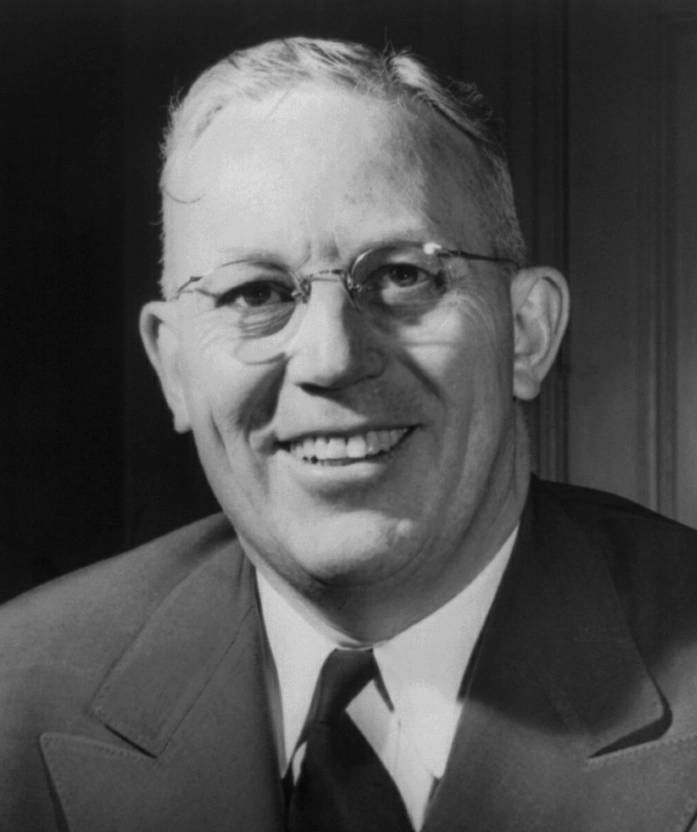
| 29 Quotes | |
| Occup. | Judge |
| From | USA |
| Born | March 19, 1891 Los Angeles, California |
| Died | July 9, 1974 Washington, D.C. |
| Aged | 83 years |
| Cite | |
Citation Formats
APA Style (7th ed.)
Earl warren biography, facts and quotes. (2026, February 11). FixQuotes. https://fixquotes.com/authors/earl-warren/
Chicago Style
"Earl Warren biography, facts and quotes." FixQuotes. February 11, 2026. https://fixquotes.com/authors/earl-warren/.
MLA Style (9th ed.)
"Earl Warren biography, facts and quotes." FixQuotes, 11 Feb. 2026, https://fixquotes.com/authors/earl-warren/. Accessed 26 Mar. 2026.
Early Life and Background
Earl Warren was born on March 19, 1891, in Los Angeles, California, and grew up largely in Bakersfield in the San Joaquin Valley, where his father, Matt Warren (born Morten Warren in Norway), worked for the Southern Pacific Railroad. The railroad world - schedules, rules, unions, accidents, and hard-won wages - formed his earliest picture of the state as an instrument that could protect ordinary people or abandon them. The family lived close to the pressures of a boom-and-bust West: agriculture, oil, and rail traffic brought money and volatility, while local politics often revolved around patronage and policing.A defining trauma arrived in 1911 when his father was found murdered in Bakersfield, a killing never credibly solved. For Warren, the unsolved case was not merely private grief; it was an education in the limits of law-and-order rhetoric and the corrosive effects of indifference, incompetence, and unequal attention. In later years he would be accused of cold ambition, yet friends and colleagues also saw an inwardly governed man: restrained, attentive to procedure, and unusually sensitive to how institutions mark the powerless - a sensibility rooted in a household that felt both the dignity and vulnerability of working life.
Education and Formative Influences
Warren attended the University of California, Berkeley, earning a BA in political science (1912) and an LLB from UC Hastings College of the Law (1914). Progressive Era California, with its faith in expert administration and suspicion of private power, framed his early civic instincts, while campus life honed his pragmatism and taste for coalition. After admission to the bar, he served briefly in the U.S. Army during World War I, returning to a country newly anxious about radicalism, policing, and the boundaries of dissent - tensions that would later sit at the center of his judicial legacy.Career, Major Works, and Turning Points
Warren built his career in Alameda County: deputy district attorney, then district attorney (1925-1939), where he cultivated a reputation for efficient prosecution and a public-facing morality rooted in civic order. He rose to California attorney general (1939-1943) and then three-term governor (1943-1953), a mainstream Republican in a state turning rapidly modern, overseeing wartime mobilization, postwar growth, highway expansion, and significant investments in public higher education and mental health infrastructure. His record also carried a grave turning point: as attorney general he supported the wartime removal and incarceration of Japanese Americans, a position later widely condemned and often read as the most painful contradiction in his public life. In 1953 President Dwight D. Eisenhower appointed him Chief Justice of the United States, where Warren led a court that reshaped constitutional criminal procedure, racial equality, and representation through decisions including Brown v. Board of Education (1954), Baker v. Carr (1962), Gideon v. Wainwright (1963), Reynolds v. Sims (1964), Miranda v. Arizona (1966), and Loving v. Virginia (1967). After President John F. Kennedy was assassinated, Warren chaired the Warren Commission (1963-1964), an assignment that fused his sense of national stewardship with the era's deepening distrust.Philosophy, Style, and Themes
Warren was not a theorist-judge in the academic sense; he was a civic moralist who treated constitutional law as a working instrument for democratic legitimacy. His opinions and leadership style aimed at broad agreement and public comprehensibility, reflecting a politician's instinct for persuasion and a prosecutor's insistence that rules must bind the powerful as well as the accused. That instinct appears in his insistence that legitimacy depends on institutional self-restraint: “The police must obey the law while enforcing the law”. In the Warren Court's criminal procedure revolution, this was not sentimental sympathy for defendants so much as a hard-minded diagnosis that coerced confessions, lawless searches, and unequal access to counsel poison verdicts and, eventually, public consent.Ethically, Warren viewed law as inseparable from the moral expectations that keep a plural society from sliding into vengeance or domination. He could sound like a Progressive reformer of an earlier age: “In civilized life, law floats in a sea of ethics”. That belief helps explain both his confidence in landmark equal-protection rulings and his impatience with purely formal neutrality where social facts made neutrality a cover for hierarchy. Brown's central premise - that state-enforced segregation stamps children with an inferior status - condensed his conviction that constitutional promises must reach lived experience: “Separate educational facilities are inherently unequal”. Psychologically, Warren's drive for unanimity in Brown and his emphasis on clear rules in Miranda suggest a man wary of fragility - of families, verdicts, and nations - and determined to build procedures strong enough to withstand panic, prejudice, and the temptations of official convenience.
Legacy and Influence
Warren died on July 9, 1974, in Washington, D.C., leaving behind one of the most consequential chief justiceships in American history. Admired by supporters as the architect of a more inclusive constitutional order and criticized by opponents as the symbol of "judicial activism", he remains the reference point for debates about courts and democracy: desegregation, the right to counsel, one person-one vote, and police accountability are now baseline expectations largely because his Court constitutionalized them. His legacy is also inseparable from his wartime stance on Japanese American incarceration and the controversy surrounding the Warren Commission, reminders that even a leader devoted to legality can be shaped by fear, consensus pressures, and institutional loyalties. In full, Warren's influence lies in a governing idea he helped make durable: that constitutional law earns authority not by abstract perfection, but by insisting that power obey the same rules it imposes.Our collection contains 29 quotes written by Earl, under the main topics: Motivational - Ethics & Morality - Wisdom - Justice - Freedom.
Other people related to Earl: Arthur Joseph Goldberg (Statesman), Tom C. Clark (Politician), Count Basie (Musician), Abe Fortas (Judge)
Source / external links