
Eric Cantona Biography Quotes 24 Report mistakes
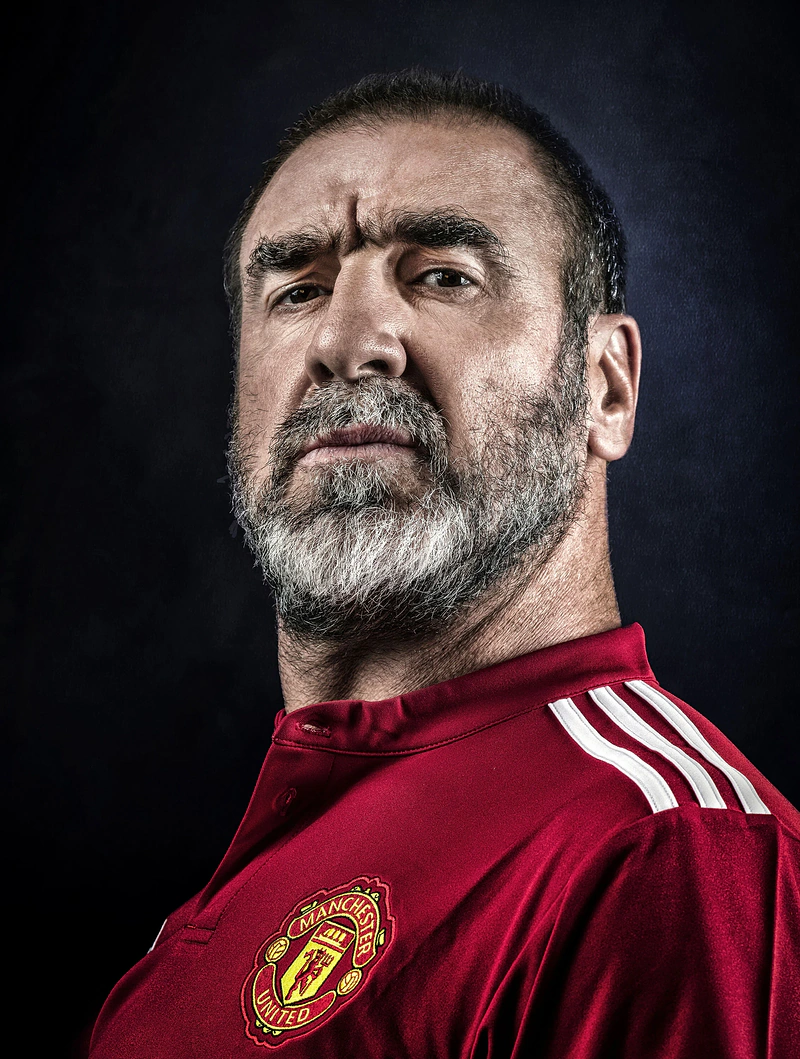
Attr: pcooperphoto.com
| 24 Quotes | |
| Occup. | Athlete |
| From | France |
| Born | May 24, 1966 Marseille, France |
| Age | 59 years |
| Cite | |
Citation Formats
APA Style (7th ed.)
Eric cantona biography, facts and quotes. (2026, February 11). FixQuotes. https://fixquotes.com/authors/eric-cantona/
Chicago Style
"Eric Cantona biography, facts and quotes." FixQuotes. February 11, 2026. https://fixquotes.com/authors/eric-cantona/.
MLA Style (9th ed.)
"Eric Cantona biography, facts and quotes." FixQuotes, 11 Feb. 2026, https://fixquotes.com/authors/eric-cantona/. Accessed 11 Feb. 2026.
Early Life and Background
Eric Daniel Pierre Cantona was born on 24 May 1966 in Marseille, a Mediterranean port city where football is both neighborhood theater and civic religion. He grew up in working- and lower-middle-class surroundings shaped by the noise of the docks, the heat of the streets, and the gravitational pull of Olympique de Marseille. His family background carried a blend of cultures often found in Marseille - a French mother and a father of Sardinian-Italian heritage - and Cantona absorbed early the idea that identity could be plural, proud, and defiant.From childhood he projected an unusual mixture of playfulness and provocation: charismatic, quick to laugh, quicker to bristle at perceived disrespect. Those traits later became public myth, but they began as private temperament - a boy testing authority, using sport as both outlet and stage. In Marseille, the line between performance and survival is thin; Cantona learned to treat every encounter, on or off the pitch, as something to be met with presence rather than caution.
Education and Formative Influences
Cantona developed through Marseille's youth system, where raw talent was abundant and patience was scarce. The late 1970s and early 1980s in French football rewarded tactical discipline, yet he was drawn to improvisation: chest control, feints, pauses, and sudden accelerations that made defenders feel late to their own decisions. Early senior steps with Auxerre (under Guy Roux), returns to Marseille, and loans to clubs such as Martigues and Bordeaux exposed him to contrasting football cultures - provincial structure versus big-club volatility - and hardened an intuition that creativity requires both freedom and a boundary to push against.Career, Major Works, and Turning Points
Cantona's French career oscillated between brilliance and conflict, including suspensions for confrontations with officials and a reputation for volatility that sometimes eclipsed his play. A decisive turning point came in England: after joining Leeds United in 1992 he helped deliver the last First Division title, then moved to Manchester United later that year and became the catalytic figure of the early Premier League era. Wearing the collar up like a personal flag, he combined a striker's instinct with a playmaker's orchestration, guiding United to four league titles in five seasons (1992-93, 1993-94, 1995-96, 1996-97) and two FA Cups (1994, 1996). The 1995 "kung-fu" kick at Crystal Palace - followed by criminal conviction, suspension, and a return defined by leadership rather than apology - fixed his legend in tabloid ink, but his footballing legacy rests equally on the quieter masterpieces: the glide between lines, the disguised pass, the chipped finish, the authority that made teammates braver. He retired abruptly in 1997 at 30, choosing authorship over prolongation.Philosophy, Style, and Themes
Cantona played as if football were a form of authorship: the match not merely to be won, but to be composed. He sought angles others did not see and used stillness as a weapon, turning pauses into traps for defenders and invitations for teammates. His persona was never purely theatrical; it was a method of control, a way to shape the emotional temperature of a stadium. "Sometimes you get submerged by emotion. I think it's very important to express it - which doesn't necessarily mean hitting someone". That distinction captures his self-image: not a man without limits, but a man determined to own the forces that moved him.Public fascination often centered on the moment violence broke through, yet Cantona repeatedly framed himself as an artist of feeling, not its prisoner. "Sometimes in life one experiences an emotion which is so strong that it is difficult to think, or to reason". In his best football, that overpowering sensation became clarity rather than chaos - the intuitive pass, the sudden volley, the decision taken before analysis could dilute it. Even his most cryptic line after the 1995 incident - "When the seagulls follow the trawler, it is because they think sardines will be thrown into the sea". - reads as psychological defense: he cast the media as scavengers and himself as the boat whose movement creates a wake, insisting the story was less about guilt than about appetite and spectacle.
Legacy and Influence
Cantona's influence runs through modern English football culture: the template of the charismatic foreign talisman who changes a club's self-belief, and the Premier League's shift toward global star narrative. At Manchester United he became a bridge between eras - from grit to glamour, from reactive football to an imagination-led dominance that helped define the league's worldwide appeal. After retirement he pursued acting, directing, and later football-related projects including beach soccer, extending the same urge to perform and reinterpret. Yet the enduring Cantona is the one who made contradiction productive: tenderness and menace, discipline and revolt, teamwork and singularity - a player who taught that style can be a form of authority, and that a match can be remembered like a line of poetry.Our collection contains 24 quotes written by Eric, under the main topics: Witty One-Liners - Art - Meaning of Life - Victory - Life.
Other people related to Eric: Paul Ince (Athlete), Paul Parker (Athlete), Ryan Giggs (Athlete), Teddy Sheringham (Athlete)