
Eric Morecambe Biography Quotes 4 Report mistakes
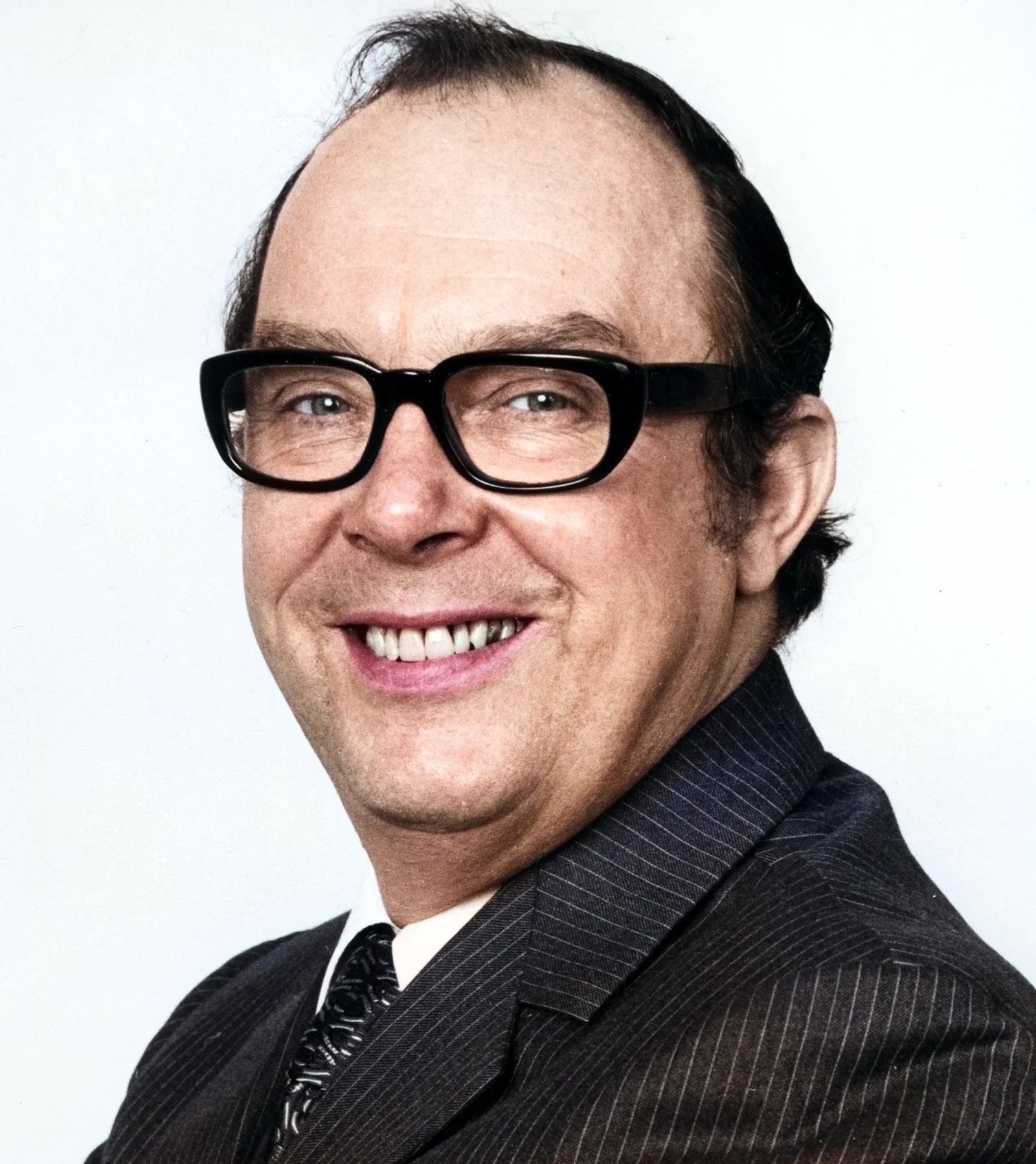
| 4 Quotes | |
| Born as | John Eric Bartholomew |
| Occup. | Comedian |
| From | United Kingdom |
| Spouse | Joan Bartlett (1952) |
| Born | May 14, 1926 Morecambe, Lancashire, England |
| Died | May 28, 1984 Cheltenham, Gloucestershire, England |
| Aged | 58 years |
| Cite | |
Citation Formats
APA Style (7th ed.)
Eric morecambe biography, facts and quotes. (2026, February 11). FixQuotes. https://fixquotes.com/authors/eric-morecambe/
Chicago Style
"Eric Morecambe biography, facts and quotes." FixQuotes. February 11, 2026. https://fixquotes.com/authors/eric-morecambe/.
MLA Style (9th ed.)
"Eric Morecambe biography, facts and quotes." FixQuotes, 11 Feb. 2026, https://fixquotes.com/authors/eric-morecambe/. Accessed 13 Feb. 2026.
Early Life and Background
John Eric Bartholomew was born on 14 May 1926 in Morecambe, Lancashire, a resort town whose piers, boarding houses, and end-of-the-line transience taught a future comedian how quickly an audience can change its mood. Raised in a working-class household during the interwar years, he absorbed the music-hall remnants that still clung to seaside entertainment - cheeky patter, broad physicality, and a respect for timing earned in draughty halls rather than drawing rooms.The 1930s and the Second World War formed the atmosphere of his youth: rationing, anxiety, and the moral pressure to "get on with it". Eric responded not by retreating but by performing. Even as a boy he leaned toward stagecraft and imitation, discovering that charm could be a kind of social currency and that laughter could briefly outrun circumstance. The name "Eric Morecambe" was not merely a pseudonym but a declaration that his hometown, with its brashness and warmth, would be his comedic passport.
Education and Formative Influences
Bartholomew left school young and pursued performance with early seriousness, shaped by variety traditions and the British radio and cinema of the 1930s and 1940s. His formative influences were the disciplines of turn-based comedy - set-up, release, and recovery - and the instinct that a persona must be legible in seconds. In that world he met Ernest Wiseman, later Ernie Wise, and the contrast between his own playful swagger and Wise's careful pragmatism became the engine of a partnership that would outlast fashion and format.Career, Major Works, and Turning Points
The pair began as teenage entertainers before wartime service interrupted their momentum - a break Morecambe later recalled plainly: "We had not had time to establish ourselves as a double act before Ernie joined the Merchant Navy. I teamed up with the brother of the late Dave Morris". After the war they rebuilt through variety circuits and radio, then television, evolving from conventional double-act rhythms into something stranger and richer: a comedy world in which performance itself was the subject. Their defining era came with BBC television in the late 1960s and 1970s - The Morecambe and Wise Show and the Christmas specials - where celebrity guests, meta-jokes, and meticulous choreography turned family viewing into a national ritual. Morecambe suffered serious heart problems and a major heart attack in the late 1970s, but he returned to work, driven by an almost professional refusal to let illness dictate his rhythm, until his death from a heart attack on 28 May 1984 in Tewin, Hertfordshire.Philosophy, Style, and Themes
Morecambe's comedy was built on a paradox: he played the fool with absolute control. His famous line, "I'm playing all the right notes, but not necessarily in the right order". is not just a joke about music - it is his comic method distilled. He understood that British audiences prized competence, so he staged incompetence with such precision that the gap between appearance and reality became the laugh. The persona - cocky, friendly, slightly absurd - invited the viewer to feel superior for a moment, only to reveal that the clown was conducting the room.His themes were domestic, but his mind was formal. He delighted in linguistic traps, literalism, and the subtle authoritarianism of everyday politeness. When he quipped, "My neighbour asked if he could use my lawnmower and I told him of course he could, so long as he didn't take it out of my garden". he exposed a private psychology: generosity fenced in by control, the fear of being imposed upon disguised as geniality. Underneath the warmth sat a craftsman's anxiety about order - the need to keep the stage, the partnership, and the joke's internal logic inside a boundary he could manage. That tension gave his work bite without cynicism and made his innocence feel earned rather than posed.
Legacy and Influence
Eric Morecambe became a benchmark for British television comedy - proof that variety could adapt into the age of the living room without losing its muscular timing. His influence runs through generations of performers who mix character with self-awareness, from sketch comics to sitcom leads who treat the camera as a conspirator. He is remembered not only for catchphrases and the iconic guest sketches, but for modeling a national style: affectionate mischief, high craft hidden inside apparent chaos, and a belief that mainstream entertainment can be both sophisticated in structure and instantly humane in effect.Our collection contains 4 quotes written by Eric, under the main topics: Witty One-Liners - Writing - Brother.
Source / external links