
George Burns Biography Quotes 35 Report mistakes
| 35 Quotes | |
| Occup. | Comedian |
| From | USA |
| Born | January 20, 1896 |
| Died | March 9, 1996 |
| Aged | 100 years |
| Cite | |
Citation Formats
APA Style (7th ed.)
George burns biography, facts and quotes. (2026, February 11). FixQuotes. https://fixquotes.com/authors/george-burns/
Chicago Style
"George Burns biography, facts and quotes." FixQuotes. February 11, 2026. https://fixquotes.com/authors/george-burns/.
MLA Style (9th ed.)
"George Burns biography, facts and quotes." FixQuotes, 11 Feb. 2026, https://fixquotes.com/authors/george-burns/. Accessed 6 Mar. 2026.
Early Life and Background
George Burns was born Nathan Birnbaum on January 20, 1896, on New York City's Lower East Side, the ninth of twelve children in a poor Jewish immigrant family. His father, Louis Birnbaum, a cantor, died when Nathan was a child, leaving the household precarious and pushing the boy early toward work and performance. In a neighborhood thick with Yiddish theaters, vaudeville bills, and street-corner patter, he learned that a quick line could be both shield and currency.He drifted into show business before adolescence, singing, dancing, and doing comedy in small acts under a string of names. The stage name "George Burns" arrived as a practical invention for posters and payrolls, but it also became a persona: a calmly amused observer who could stand slightly aside from the room and still command it. The era rewarded hustle - the United States was urbanizing, entertainment was industrializing, and vaudeville offered an upward ladder for anyone who could fill time and hold attention.
Education and Formative Influences
Burns had little formal schooling; his education was the circuit itself, a rolling apprenticeship in timing, crowd psychology, and survival. He absorbed the grammar of vaudeville - the straight man, the topper, the callback - and watched how ethnic comics translated neighborhood cadences into national laughs without losing the music of their origins. Early partnerships taught him a lifetime lesson: audiences do not only buy jokes, they buy the feeling of being safely guided through them.Career, Major Works, and Turning Points
In 1923 he married Gracie Allen, and their partnership became one of American comedy's defining double acts: his dry, patient realism framing her surreal logic. They conquered vaudeville, then radio with The Burns and Allen Show, where his on-air habit of "talking to the audience" helped invent a modern, self-aware narrator; television followed in the 1950s, turning their domestic set into a weekly national ritual. After Allen's retirement and death (1964), Burns faced the rare late-life reinvention: he returned to nightclubs, wrote bestselling memoirs, and, improbably, became a film star again, winning an Academy Award for The Sunshine Boys (1975). In the 1980s he reached new audiences with Oh, God! and talk-show ubiquity, the living bridge between vaudeville and mass media, still working into his nineties.Philosophy, Style, and Themes
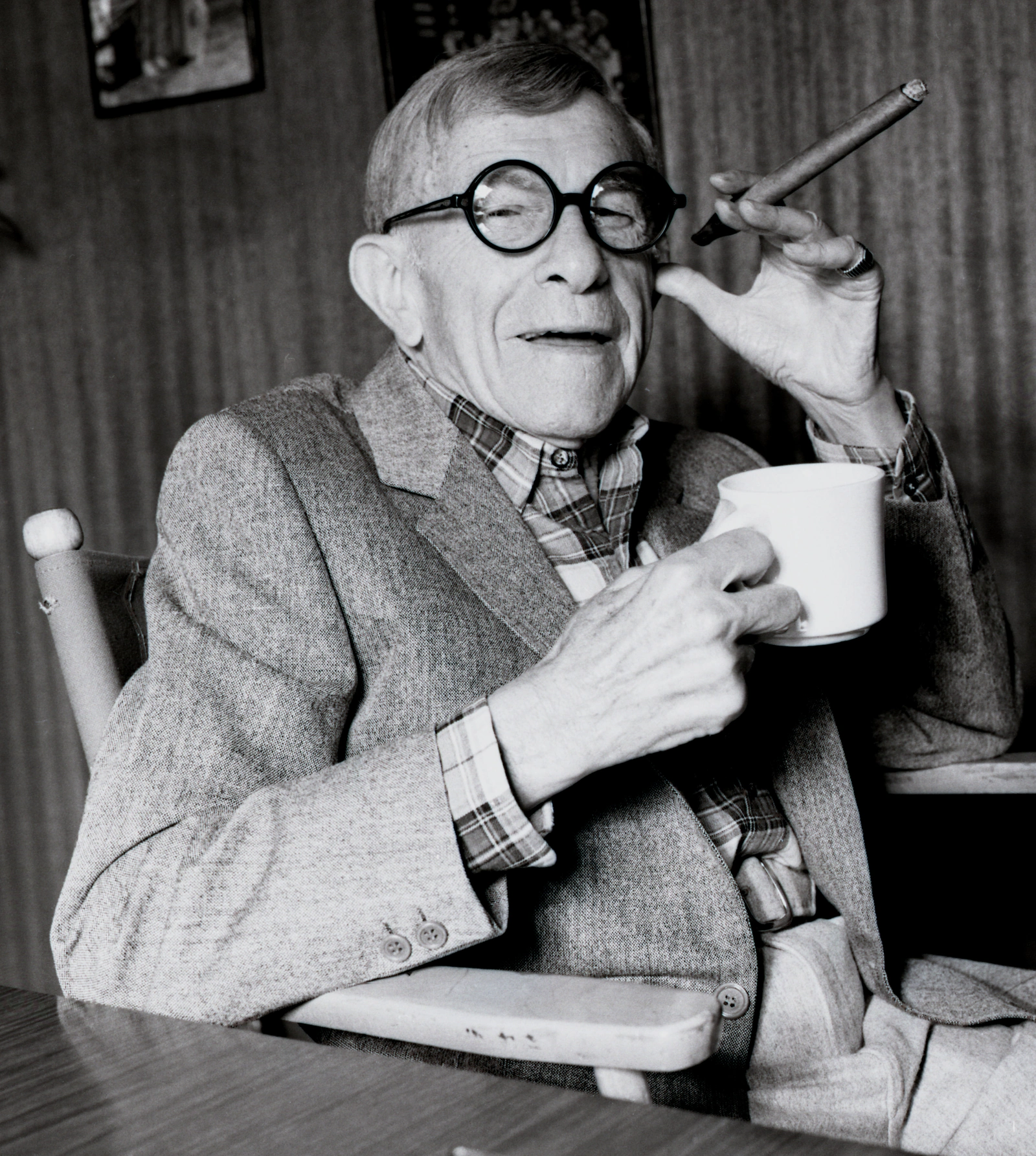
Burns' style looked effortless but was engineered: he played unflappable candor, letting the joke bloom in the pause, the eyebrow, the mild confession. The cigar, the slightly slouched stance, the sense that he had seen everything - these were props for a philosophy of comic detachment. His best humor converted fear into manageable scale: aging, death, marital friction, ambition. When he said, “You can't help getting older, but you don't have to get old”. , it was not a greeting-card slogan but a performance ethic - keep your curiosity and your craft sharp, and time becomes material rather than a verdict.That same ethic powered his relentless self-mythology about longevity and nerves. “If you ask what is the single most important key to longevity, I would have to say it is avoiding worry, stress and tension. And if you didn't ask me, I'd still have to say it”. The line is funny because it is pushy, but psychologically it reveals a man who treated calm as an artistic tool: anxiety ruins timing, and timing is identity. Even his bawdiest riffs about decline - “First you forget names, then you forget faces. Next you forget to pull your zipper up and finally, you forget to pull it down”. - are structured as controlled escalations, a way to domesticate mortality by making it obey a neat comic sequence. Underneath the laughs was discipline: he protected the persona of ease so the audience could feel safe enough to laugh at what they feared.
Legacy and Influence
Burns died on March 9, 1996, at 100, by then a national symbol of show-business durability and a key architect of American comedic voice. He helped define the modern straight man, the direct-address narrator, and the intimate television host who turns performance into conversation. With Gracie Allen he demonstrated how character-based illogic could become a weekly comfort, and alone he proved reinvention could be an art form rather than an emergency. His influence runs through late-night monologues, sitcom husbands who speak in asides, and comedians who treat aging not as exile but as a final, fertile act.Our collection contains 35 quotes written by George, under the main topics: Witty One-Liners - Motivational - Wisdom - Optimism - Aging.
Other people related to George: Walter Matthau (Actor), Teri Garr (Actress), Art Carney (Actor)
Source / external links