
George Carlin Biography Quotes 49 Report mistakes
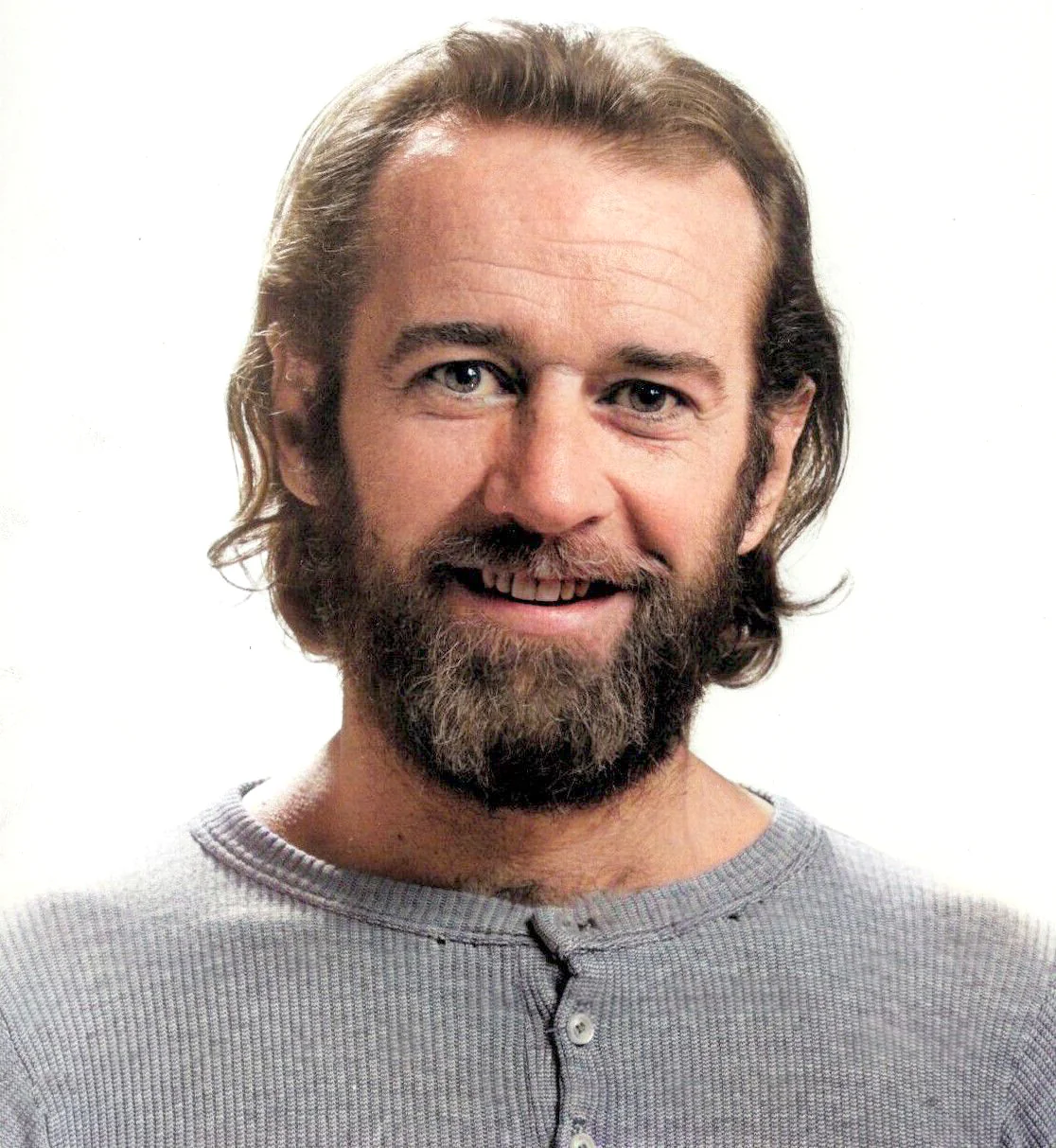
Attr: Little David Records
| 49 Quotes | |
| Born as | George Denis Patrick Carlin |
| Occup. | Comedian |
| From | USA |
| Born | May 12, 1937 New York City, U.S. |
| Died | June 22, 2008 Santa Monica, California, U.S. |
| Aged | 71 years |
| Cite | |
Citation Formats
APA Style (7th ed.)
George carlin biography, facts and quotes. (2026, February 1). FixQuotes. https://fixquotes.com/authors/george-carlin/
Chicago Style
"George Carlin biography, facts and quotes." FixQuotes. February 1, 2026. https://fixquotes.com/authors/george-carlin/.
MLA Style (9th ed.)
"George Carlin biography, facts and quotes." FixQuotes, 1 Feb. 2026, https://fixquotes.com/authors/george-carlin/. Accessed 22 Mar. 2026.
Early Life and Background
George Denis Patrick Carlin was born on May 12, 1937, in Manhattan, New York City, into an Irish Catholic family shaped by Depression-era instability and mid-century urban grit. His father, Patrick Carlin, worked in advertising but struggled with alcoholism; his mother, Mary (Bearey) Carlin, raised George and his older brother largely on her own after the marriage fractured. Carlin grew up in Morningside Heights, close to the rhythms of city talk - street argument, radio patter, parish authority, and the everyday theater of crowded sidewalks.That early mixture of affection and volatility left him with a lifelong sensitivity to control: who gets to name things, who gets to define "normal", who gets to police language. In interviews he often described himself as a kid who listened hard, collecting cadence and contradiction. New York did not offer him serenity, but it gave him a laboratory of voices. The result was a performer who could sound like a friendly neighbor one moment and a prosecuting attorney the next, always tracking the hidden terms in ordinary speech.
Education and Formative Influences
Carlin attended Catholic schools and later Cardinal Hayes High School in the Bronx, but formal education never held him; he was drawn to the sharper education of radio and conversation. In 1954 he enlisted in the US Air Force and trained as a radar technician, stationed at Barksdale Air Force Base in Louisiana. There he worked as a disc jockey for KJOE, learning timing, microphone control, and the mechanics of audience attention - and also learning what happens when authority meets a mouth that will not stay in line. His conflicts with military discipline helped crystallize a private creed: freedom begins in speech, and speech begins in accuracy.Career, Major Works, and Turning Points
After discharge, Carlin built a mainstream comedy career in the 1960s with a clean-cut persona, television appearances, and nightclub work, including a successful partnership with Jack Burns. The decisive turn came in the early 1970s when he abandoned the safe act for an angrier, more searching voice aligned with the counterculture and the unraveling trust of the Vietnam and Watergate years. Albums such as FM & AM (1972) and Class Clown (1972) established him as a major satirist, and his "Seven Words You Can Never Say on Television" became both a cultural flashpoint and a legal landmark after the 1973 radio broadcast that led to the US Supreme Court case FCC v. Pacifica Foundation (1978). In later decades he refined a bleakly comic philosophy across specials and books - including Brain Droppings (1997) and Napalm & Silly Putty (2001) - while taking film roles (notably in Dogma, 1999) and shaping a late-career voice that mixed stand-up, social criticism, and existential complaint. He died on June 22, 2008, in Santa Monica, California.Philosophy, Style, and Themes
Carlin's signature method was linguistic surgery. He treated euphemism as a kind of political anesthesia and insisted on naming the wound. His jokes often began as casual observations, then tightened into moral indictment, as if the laugh were a diagnostic tool. A line like “Have you ever noticed that anybody driving slower than you is an idiot, and anyone going faster than you is a maniac?” looks like mere gripe, but it reveals his deeper obsession: the ego's invisible rules and the way personal convenience masquerades as common sense. He distrusted the soft language of institutions - government, religion, corporate life - because he believed it trained people to accept less reality than they could bear.Psychologically, Carlin's cynicism was rarely smug; it was protective, a way to keep disappointment from becoming despair. He articulated his own inner contradiction with unusual candor: “Inside every cynical person, there is a disappointed idealist”. That disappointment fueled his most corrosive themes - consumerism, militarism, and the sanctimony of public virtue - yet he kept returning to the comic impulse as a survival skill, not a consolation prize. Even his one-liners carried a fatalistic wisdom about the persistence of trouble: “Just cause you got the monkey off your back doesn't mean the circus has left town”. The joke is a shrug, but also a worldview: human beings do not outgrow chaos; they negotiate it, then pretend they have mastered it.
Legacy and Influence
Carlin endures as a hinge figure between nightclub-era craft and the modern stand-up as public intellectual, influencing comics who treat language, power, and hypocrisy as primary material. His role in the censorship debates of the 1970s made him an emblem of free-expression conflict, but his larger legacy lies in how he taught audiences to hear - to notice the trick words, the comforting lies, the moral sales pitches. The intensity of his late work, darker and more philosophical, anticipated a 21st-century mood of institutional distrust and information overload. More than a punchline writer, Carlin became a secular conscience with a comedian's timing, demonstrating that laughter can be both a release and a reckoning.Our collection contains 49 quotes written by George, under the main topics: Witty One-Liners - Motivational - Truth - Wisdom - Dark Humor.
Other people related to George: Jerry Seinfeld (Comedian), Mort Sahl (Journalist), Dave Attell (Comedian), David Brenner (Comedian)
Source / external links