
Graham Chapman Biography Quotes 12 Report mistakes
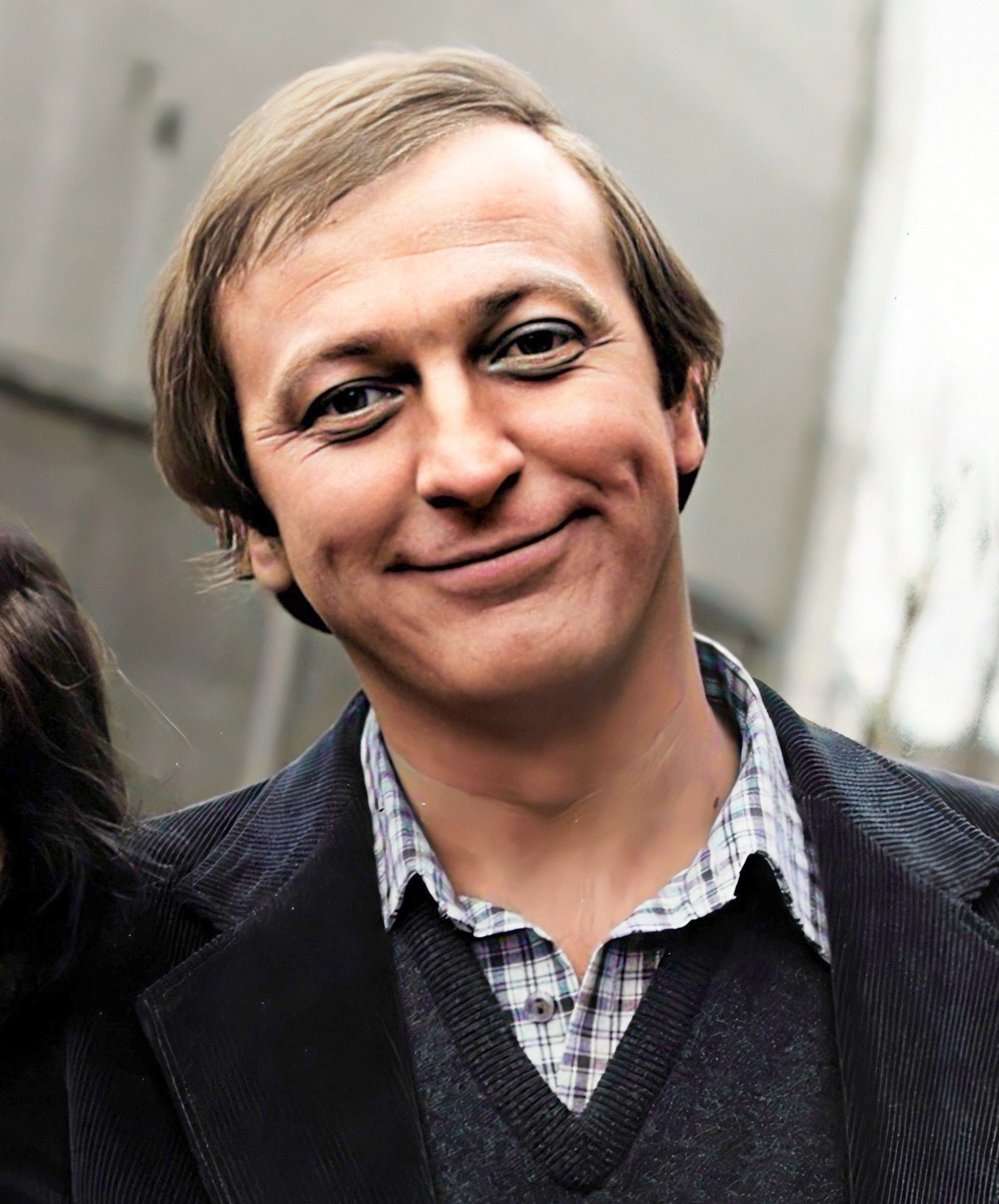
| 12 Quotes | |
| Occup. | Comedian |
| From | United Kingdom |
| Born | January 8, 1941 Leicester, England |
| Died | October 4, 1989 Maidstone, Kent, England |
| Aged | 48 years |
| Cite | |
Citation Formats
APA Style (7th ed.)
Graham chapman biography, facts and quotes. (2026, February 11). FixQuotes. https://fixquotes.com/authors/graham-chapman/
Chicago Style
"Graham Chapman biography, facts and quotes." FixQuotes. February 11, 2026. https://fixquotes.com/authors/graham-chapman/.
MLA Style (9th ed.)
"Graham Chapman biography, facts and quotes." FixQuotes, 11 Feb. 2026, https://fixquotes.com/authors/graham-chapman/. Accessed 26 Mar. 2026.
Early Life and Background
Graham Arthur Chapman was born on January 8, 1941, in Leicester, England, into a country still rationed, exhausted, and quietly reshaping itself after the war. His childhood was framed by the postwar British mood: civic propriety on the surface, with absurdity and contradiction lurking underneath. That tension would later become his comic fuel - the stern voice of authority collapsing into nonsense, the nation sounding official while meaning something else.He grew up in a Midlands culture of grammar schools, amateur theatricals, and cautious ambition, where cleverness was rewarded but strong emotion was often masked by wit. Chapman learned early to project calm and precision even when the inner weather was turbulent - a trait friends later recognized in his sudden switches from geniality to ferocity, from disciplined professionalism to reckless self-sabotage. Long before fame, he was already developing the dual identity that defined him: the tidy medical mind and the anarchic performer.
Education and Formative Influences
Chapman studied medicine at Emmanuel College, Cambridge, becoming a member of the Cambridge Footlights, a proving ground for postwar British satire that combined classical training with impatience toward inherited authority. In Cambridge revues he met future collaborators including John Cleese, and absorbed a style that treated language as a weapon: formal diction sharpened to expose hypocrisy, euphemism, and class pretension. Medicine also left a mark - not only as a credential (he later qualified as a doctor), but as a way of watching people clinically, noticing the bodily mechanics of fear, desire, and embarrassment that comedy can exploit.Career, Major Works, and Turning Points
After Cambridge, Chapman wrote and performed with Cleese in television sketch comedy before becoming central to Monty Python, the six-man troupe that detonated British humor with Monty Python's Flying Circus (BBC, 1969-1974). On the show he often played the straight-faced authority figure - colonels, presenters, judges - whose certainty made the absurd punch harder, and he also embraced drag and grotesquerie as signature tools. He co-wrote and starred as King Arthur in Monty Python and the Holy Grail (1975), then took the messianic lead in Life of Brian (1979), a performance that balanced innocence with stubborn dignity amid blasphemy controversies and media hysteria. Behind the scenes, heavy drinking strained his health and friendships; his later years included sobriety, stage work, and further Python projects such as The Meaning of Life (1983), but also a growing awareness of mortality. He died of cancer on October 4, 1989, in Maidstone, Kent, at 48.Philosophy, Style, and Themes
Chapman's comedy was built on contradiction: the respectable voice saying the indecent thing, the rational man trapped in irrational systems, the brave hero enduring the idiocy of institutions. His lines often functioned like linguistic trapdoors, where official reassurance suddenly admits the truth it tried to hide: “There is no cannibalism in the British navy, absolutely none, and when I say none, I mean there is a certain amount”. Psychologically, that rhythm mirrored Chapman himself - a man capable of immense charm and tenderness, then a hard swerve into belligerence or risk. He loved the moment when order cracks, and he played it not as chaos but as revelation.He was also a performer who understood that comedy is a physical act of disguise and exposure. “Dressing up as decrepit old ladies, and even decrepit young ladies, was one of our staples”. Cross-dressing in Python was not merely a gag; it was a demolition of social scripts, a way of showing that the "proper" face is only a costume. As an openly gay man in a period when British attitudes were still tightening and loosening at once, Chapman treated identity with a blunt candor that refused apology, yet he also carried private vulnerability. His fatalism, expressed without melodrama, became part of his later self-understanding: “Death can really absorb a person. Lik most people, I would find it pleasant not to have to go, but you just accept that it's more or less inevitable”. That acceptance reads less like surrender than like the calm, clinical gaze of the doctor he once trained to be - a refusal to let fear dictate the final tone.
Legacy and Influence
Chapman endures as one of the essential faces of modern British comedy: the tall, blazing-eyed anchor who could make surrealism feel official and make blasphemy feel oddly humane. His performances in Holy Grail and Life of Brian became templates for later satirists - the earnest protagonist surrounded by madness - while his writing helped normalize a humor that targets institutions, not the powerless. He also remains a landmark figure in LGBTQ visibility within mainstream entertainment, remembered by friends as both difficult and deeply loyal, a man whose brilliance was inseparable from his volatility. In the larger story of postwar British culture, Chapman's work captures a nation learning to laugh at its own authority - and, through that laughter, to tell the truth.Our collection contains 12 quotes written by Graham, under the main topics: Witty One-Liners - Funny - Wisdom - Music - Mortality.
Other people related to Graham: Michael Palin (Comedian), Terry Jones (Comedian), Eric Idle (Comedian)
Frequently Asked Questions
- Was Graham Chapman in Fawlty Towers? No, Graham Chapman was not in Fawlty Towers; it starred John Cleese.
- What was Graham Chapman last words? Graham Chapman's last words were reportedly 'Sorry for saying f*ck'.
- Graham Chapman Funeral: Graham Chapman's funeral was on October 9, 1989, with a eulogy by John Cleese.
- Graham Chapman Partner: Graham Chapman's partner was David Sherlock.
- What was Graham Chapman cause of death? Graham Chapman died of throat and spinal cancer.
- How old was Graham Chapman? He became 48 years old
Source / external links