
Horace Greeley Biography Quotes 13 Report mistakes
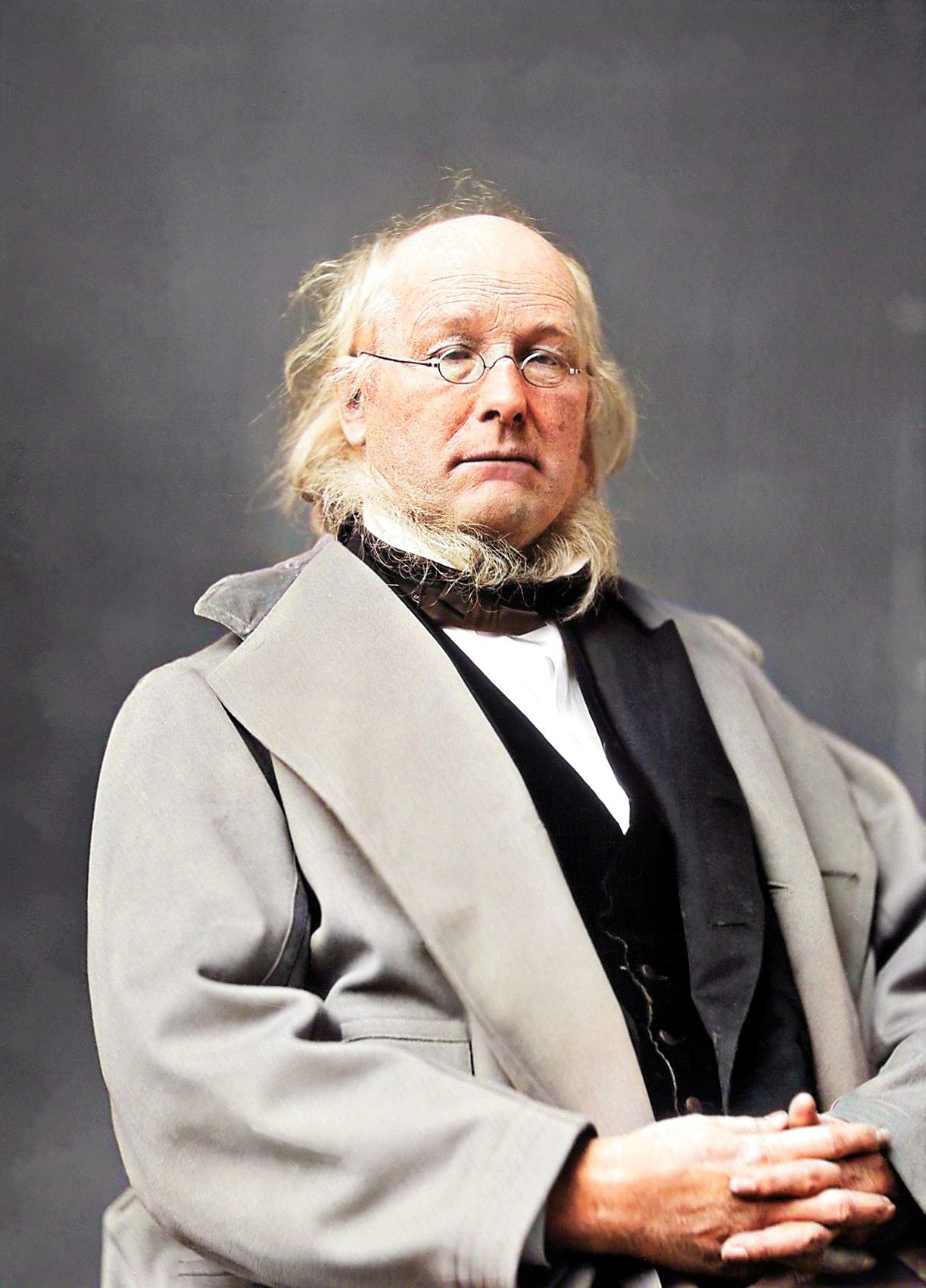
Attr: National Archives at College Park, Public domain
| 13 Quotes | |
| Occup. | Editor |
| From | USA |
| Spouse | Mary Youngs Cheney |
| Born | February 3, 1811 Amherst, New Hampshire, USA |
| Died | November 29, 1872 New York City, New York, USA |
| Cause | Stroke |
| Aged | 61 years |
| Cite | |
Citation Formats
APA Style (7th ed.)
Horace greeley biography, facts and quotes. (2026, February 11). FixQuotes. https://fixquotes.com/authors/horace-greeley/
Chicago Style
"Horace Greeley biography, facts and quotes." FixQuotes. February 11, 2026. https://fixquotes.com/authors/horace-greeley/.
MLA Style (9th ed.)
"Horace Greeley biography, facts and quotes." FixQuotes, 11 Feb. 2026, https://fixquotes.com/authors/horace-greeley/. Accessed 5 Mar. 2026.
Early Life and Background
Horace Greeley was born February 3, 1811, in Amherst, New Hampshire, into a struggling Yankee farm family whose fortunes never stabilized for long. His father, Zaccheus Greeley, repeatedly tried and failed to secure lasting prosperity, and the household learned thrift the hard way - moving when debts or prospects demanded it. That early insecurity left Greeley with a lifelong moral suspicion of easy money and a sympathy for strivers who relied on work, education, and mutual aid rather than pedigree.In the 1820s the family relocated to western New York, part of the restless, canal-linked interior that was rapidly transforming from frontier to market society. Greeley grew up amid evangelical reform energy and political argument, the kind of talk that turned public questions into personal obligations. Small, intense, and bookish, he developed a private discipline that would later translate into public sermonizing: he could be socially awkward, but he was rarely idle, and he treated the printed page as both refuge and weapon.
Education and Formative Influences
Greeley had little formal schooling, but he was voraciously self-educated and apprenticed early to the printing trade, first in local upstate New York shops. Typesetting trained his eye for clarity and his mind for deadlines; it also embedded him in the era's nervous information network of partisan papers, reform tracts, and campaign broadsides. He absorbed the moral fervor of the Second Great Awakening, the labor-reform debates of the Jacksonian age, and the practical lessons of political journalism - that persuasion is built line by line, and that a newspaper can function as an organizing tool as much as a record.Career, Major Works, and Turning Points
After trying his luck as a printer and editor, Greeley reached New York City and in 1841 founded the New-York Tribune, quickly making it one of the most influential newspapers in the United States. The Tribune mixed hard political reporting with reform advocacy: antislavery politics, temperance, labor rights, and experiments in cooperative living, while running literary and foreign correspondence that expanded its authority beyond party loyalists. Greeley helped shape the Whig coalition and then, amid the breakdown of the old party system, became a leading journalistic architect of the new Republican Party; during the Civil War his editorials alternated between impatience with Lincoln's caution and support for Union victory, reflecting the pressures of a divided North. In later years his reach extended into national politics - including a brief term in Congress (1848-1849) and, most dramatically, the 1872 Liberal Republican challenge to Ulysses S. Grant, a grueling campaign that ended in defeat and personal collapse shortly after the death of his wife, Mary Cheney Greeley; he died November 29, 1872, in Pleasantville, New York.Philosophy, Style, and Themes
Greeley's public morality was not a mask but a temperament: he believed character was the only durable capital in a republic addicted to spectacle and speculation. He warned readers that “Fame is a vapor, popularity an accident, and riches take wings. Only one thing endures and that is character”. In his world - panics, booms, and patronage - this was less piety than self-defense, a way to keep reform from being bought and a way to shame a political culture that treated office as loot. His recurrent suspicion of unearned wealth and of cynicism in public life made him sound, at his best, like a civic conscience and, at his worst, like a scold who mistook moral intensity for strategy.His prose was urgent, didactic, and crowded with prescriptions, because he assumed democracy required constant instruction to avoid drifting into apathy or sectarian self-congratulation. “Common sense is very uncommon”. , he observed, a line that captures both his realism about mass politics and his impatience with fashionable contrarianism. Yet he also distrusted the performance of skepticism as a new dogma: "There is no bigotry like that of "free thought“ run to seed”. That tension - between open inquiry and moral certainty - defined Greeley's inner life. He could champion broad education and humanitarian reform, but he demanded that freedom serve improvement; he wanted progress without nihilism, debate without corrosion, and politics tethered to a plain-spoken ethic of work.
Legacy and Influence
Greeley helped invent the modern editor as national actor: a figure who could set agendas, build coalitions, and translate moral movements into political language. The New-York Tribune influenced antislavery sentiment, elevated reform causes into mainstream debate, and modeled a newspaper as a civic institution rather than a mere party circular. His reputation has remained complicated - visionary and naive, principled and erratic - but his central wager endures: that in a noisy market democracy, the fight for policy is also a fight over habits of mind, and that a nation is finally shaped as much by the character it rewards as by the laws it passes.Our collection contains 13 quotes written by Horace, under the main topics: Witty One-Liners - Wisdom - Writing - New Beginnings - Reason & Logic.
Other people related to Horace: Hjalmar Schacht (Economist), Fernando Wood (Politician), Gerrit Smith (Politician), Lyman Trumbull (Politician), Edmund C. Stedman (Poet), William H. Seward (Politician)
Horace Greeley Famous Works
- 1872 Greeley on Lincoln (Book)
- 1870 Essays Designed to Elucidate The Science of Political Economy (Book)
- 1868 Recollections of a Busy Life (Book)
- 1864 The American Conflict: A History of the Great Rebellion in the United States of America, 1860-65 (Book)
- 1860 An Overland Journey from New York to San Francisco in the Summer of 1859 (Book)
- 1850 Hints Toward Reforms (Book)
Source / external links