
Jack Benny Biography Quotes 10 Report mistakes
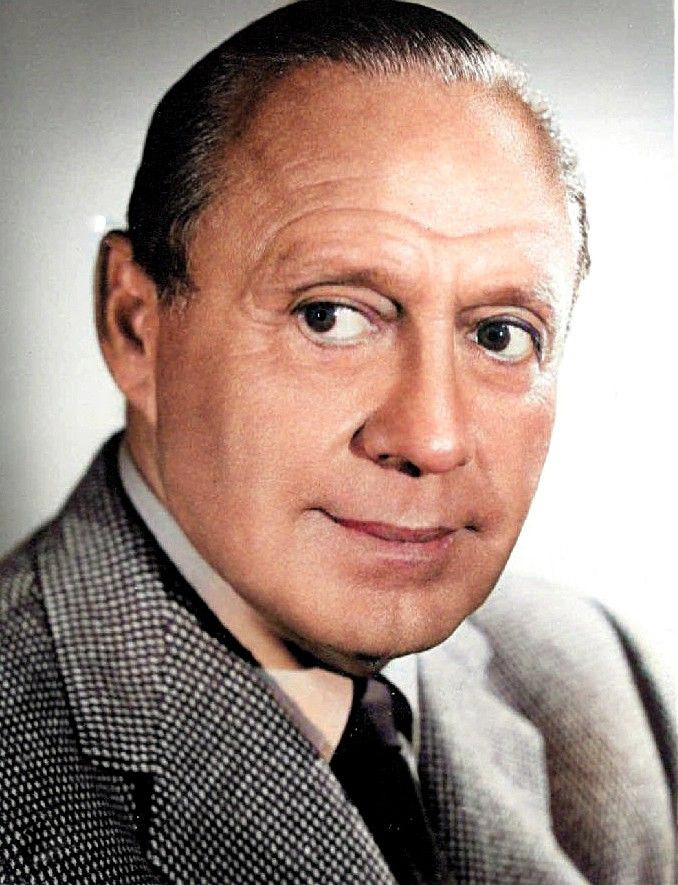
| 10 Quotes | |
| Born as | Benjamin Kubelsky |
| Occup. | Comedian |
| From | USA |
| Spouse | Mary Livingstone |
| Born | February 14, 1894 Chicago, Illinois, USA |
| Died | December 26, 1974 Los Angeles, California, USA |
| Cause | Pancreatic Cancer |
| Aged | 80 years |
| Cite | |
Citation Formats
APA Style (7th ed.)
Jack benny biography, facts and quotes. (2026, February 11). FixQuotes. https://fixquotes.com/authors/jack-benny/
Chicago Style
"Jack Benny biography, facts and quotes." FixQuotes. February 11, 2026. https://fixquotes.com/authors/jack-benny/.
MLA Style (9th ed.)
"Jack Benny biography, facts and quotes." FixQuotes, 11 Feb. 2026, https://fixquotes.com/authors/jack-benny/. Accessed 27 Mar. 2026.
Early Life and Background
Benjamin Kubelsky was born on February 14, 1894, in Chicago, Illinois, to Jewish immigrants from the Russian Empire (often described as Lithuanian). He grew up in nearby Waukegan, a small Midwestern city whose immigrant neighborhoods and storefront bustle sharpened his ear for accents, pacing, and the social comedy of ordinary talk. The household valued hard work and respectability; show business was not the obvious route for a son expected to help in the family trade.As a boy he was drawn to performance through music before jokes. He took up the violin, practicing with the seriousness of a budding classical player, and for a time imagined a career built on tone and discipline rather than laughs. That early tension - between the respectable craft of musicianship and the risky seduction of applause - became a lifelong engine in his public persona: the anxious professional who wants dignity even as the room demands comedy.
Education and Formative Influences
Benny left formal schooling relatively early and learned on the road, absorbing vaudeville's hard rules: get attention fast, keep it, then leave them wanting more. Working as a violinist in small venues and touring circuits, he discovered that the quickest path to connection was not virtuosity but timing - the fraction of a beat that turns a note into a wink. He adopted the stage name Jack Benny and began reshaping himself from earnest musician into a performer who could weaponize hesitation, embarrassment, and understatement.Career, Major Works, and Turning Points
Benny's rise tracked American mass entertainment as it moved from vaudeville to radio, film, and television. After early stage success and silent-to-sound film appearances, he became a radio star with The Jack Benny Program (debuting in 1932), building an ensemble that felt like a dysfunctional family: Mary Livingstone (Sadye Marks, his wife), announcer Don Wilson, bandleader Phil Harris, Rochester (Eddie Anderson), and a rotating gallery of guests. The show refined a new kind of comedy built less on punch lines than on character friction, pauses, and running gags - his stinginess, his vanity about age, his feud with Fred Allen. In the 1950s he carried the same world into television with uncommon ease, while continuing films such as To Be or Not to Be (1942), where his comic timing served darker satire. By the 1960s he was an elder statesman of American humor, still touring, still guesting, still treating timing as a craft until his death in Los Angeles on December 26, 1974.Philosophy, Style, and Themes
Benny's comedy rested on restraint, not aggression. He understood that what the audience supplies - anticipation, recognition, the urge to fill silence - can be funnier than what a performer says. His own maxim, “It's not so much knowing when to speak, when to pause”. , was less advice than autobiography: a man who turned caution into rhythm. The famous pause, the slow turn of the head, the offended inhale - these were not mannerisms but a philosophy of control, a way to stay safe while still inviting the crowd to pounce.Under the thrift-and-vanity caricature was a psychology of defensiveness softened by charm. He let the public mock his age and miserliness because it created a predictable world where embarrassment could be managed and shared. “Age is strictly a case of mind over matter. If you don't mind, it doesn't matter”. reads as a joke, but also as a coping strategy from a performer whose brand depended on never appearing desperate for youth. Likewise, “Gags die, humor doesn't”. is practically a mission statement for a craftsman who outlived formats by treating comedy as character and tempo rather than topicality. Even his stinginess bit was a moral fable: laugh at the tight fist, then notice how generously he distributed the best lines to his supporting cast, making the ensemble - not the star - the real machine.
Legacy and Influence
Jack Benny helped define the sound of American comedy: the conversational cadence of radio, the sitcom ensemble as a moral universe, and the comic power of silence. His timing influenced performers from Bob Hope and Johnny Carson to later character-driven comedians who build laughs through persona rather than punch lines alone. He also left a complicated record in casting and representation - notably giving Eddie Anderson a prominent, enduring role while still working within the stereotypes of his time. Above all, Benny proved that a performer could age publicly, keep the same basic jokes, and still feel modern, so long as the inner music of the act - the pause, the self-protective dignity, the controlled vulnerability - remained precise.Our collection contains 10 quotes written by Jack, under the main topics: Witty One-Liners - Aging - Husband & Wife.
Other people related to Jack: Woody Allen (Director), Leo Robin (Composer), Don Knotts (Actor), William S. Paley (Businessman), Mel Blanc (Actor), Bob Crosby (Musician)
Source / external links