
Jerry West Biography Quotes 7 Report mistakes
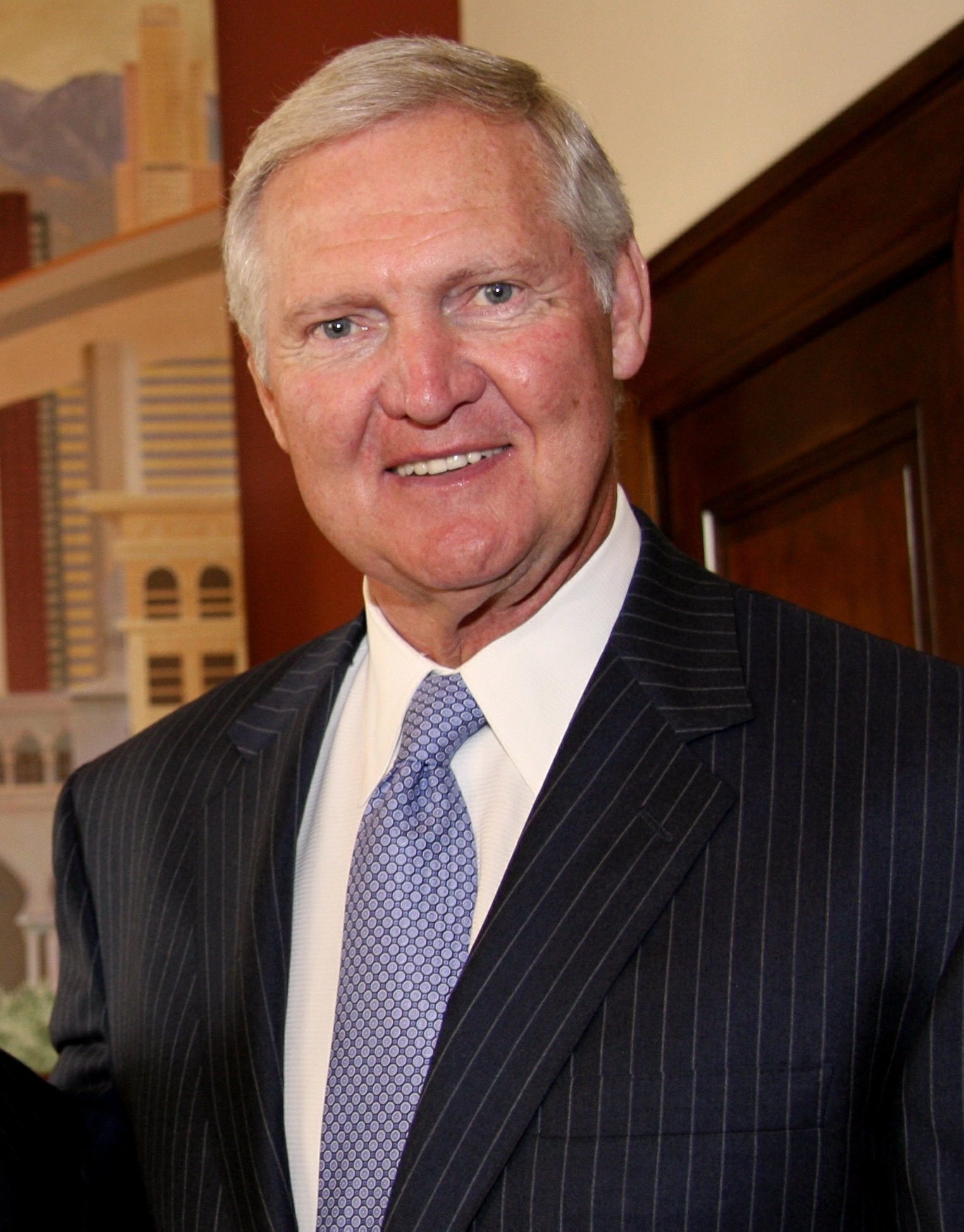
| 7 Quotes | |
| Occup. | Artist |
| From | USA |
| Born | May 28, 1938 |
| Age | 87 years |
| Cite | |
Citation Formats
APA Style (7th ed.)
Jerry west biography, facts and quotes. (2026, February 18). FixQuotes. https://fixquotes.com/authors/jerry-west/
Chicago Style
"Jerry West biography, facts and quotes." FixQuotes. February 18, 2026. https://fixquotes.com/authors/jerry-west/.
MLA Style (9th ed.)
"Jerry West biography, facts and quotes." FixQuotes, 18 Feb. 2026, https://fixquotes.com/authors/jerry-west/. Accessed 26 Mar. 2026.
Early Life and Background
Jerry Alan West was born on May 28, 1938, in Chelyan, West Virginia, a coal-country town shaped by hard labor, tight margins, and the quiet pride of people who measured character in endurance. The era of his childhood - the final years of the Depression and the long aftershocks of World War II - left rural Appalachia with few luxuries and little patience for excuses. West grew up in a large family, one of six children, with a father who worked as an electrician in the mines and a mother who kept the household steady. The landscape of his early life was both literal and psychological: steep hills, long winters, and an ingrained sense that work was a form of morality.Those conditions forged a temperament that later audiences often mistook for simple competitiveness. West was small and underpowered as a boy, and he responded by building himself through repetition - shooting alone, strengthening his body, testing his nerve against older, bigger players. A devastating private sorrow deepened that inward drive: the death of his brother David during the Korean War left the family with grief that did not easily translate into speech. West learned early to carry emotion as discipline, turning feeling into focus, and that conversion - pain into purpose - became a lifelong pattern.
Education and Formative Influences
West attended East Bank High School in West Virginia, where he emerged as a state-level basketball star and won the WV state tournament in 1956, earning a scholarship to West Virginia University. At WVU (1956-1960), he played under coach Fred Schaus, a former NBA player who treated preparation as a profession and gave West a model for leadership that was neither theatrical nor soft. West became a three-time All-American and the face of a program that reached the 1959 NCAA championship game (losing to Cal) and won the 1959-60 Southern Conference tournament; he also won Olympic gold with Team USA in Rome in 1960, a global stage that confirmed what his hometown already suspected - his intensity traveled.Career, Major Works, and Turning Points
Drafted second overall by the Los Angeles Lakers in 1960, West spent his entire playing career (1960-1974) in a franchise that moved from Minneapolis to Los Angeles just before he arrived and was still defining its glamour. A precise guard with a lethal pull-up jumper, West became a perennial All-NBA selection, led the league in scoring in 1969-70, and made 14 All-Star teams. The signature drama of his career was repeated collision with the Boston Celtics in the Finals - brilliant performances amid narrow defeats - until the catharsis of the 1972 championship alongside Wilt Chamberlain and Gail Goodrich, part of the Lakers record 33-game winning streak. Individual honors followed both triumph and anguish: Finals MVP in 1969 despite losing the series, and the rare distinction of belonging to the NBA's 50th and 75th anniversary teams. After retirement he coached the Lakers (1976-1979), then became an executive whose personnel instincts - more than any single statistic - reshaped modern basketball.Philosophy, Style, and Themes
West's public image - the silhouette that became the NBA logo - disguised a more complicated inner life: he was not a showman by nature, but a perfectionist who felt failure as physical weight. He understood confidence as an engineered state rather than a mood, insisting, “Confidence is a lot of this game or any game. If you don't think you can, you won't”. That sentence reads like motivational advice, but in West it functioned as self-management: a guard in the era before sports psychology mainstreamed who had to manufacture certainty to survive late-game pressure and relentless comparison to Celtics dynasties.His work ethic was almost punitive, anchored in the belief that effort could not be contingent on comfort. “You can't get much done in life if you only work on the days when you feel good”. In West's case, this was less a slogan than a biography of coping - the way an Appalachian childhood, wartime loss, and big-city expectation converged into a single ethic of daily repetition. Yet the same conscience that drove him also drew boundaries, revealing a stoic self-preservation: “When it's time for me to walk away from something, I walk away from it. My mind, my body, my conscience tell me that enough is enough”. This theme - relentless pursuit tempered by a moral stop-sign - explains his willingness to leave roles once the internal cost exceeded the purpose, even when the outside world saw only prestige.
Legacy and Influence
West's influence is twofold: as a player he helped define the modern two-guard - a scorer who could also organize, defend, and close - and as an executive he built templates for dynasties. As Lakers general manager he assembled the 1980s "Showtime" core (including drafting Magic Johnson in 1979 and later trading for key pieces), and in later front-office roles he helped create the Shaquille O'Neal-Kobe Bryant era, notably by pushing to acquire Kobe Bryant in the 1996 draft; he later served as an architect in Memphis and as an adviser connected to Golden State and the Clippers, repeatedly validating his eye for talent and culture. Beyond titles, his enduring mark is psychological: a portrait of greatness that includes doubt, and a model of professionalism where imagination is inseparable from labor - the quiet, demanding inner engine behind one of American sport's most recognizable outlines.Our collection contains 7 quotes written by Jerry, under the main topics: Sports - Work Ethic - Confidence - Teamwork - Letting Go.
Other people related to Jerry: Red Auerbach (Coach), Oscar Robertson (Athlete), John Havlicek (Athlete), Jack Kent Cooke (Businessman)
Source / external links