
John Belushi Biography Quotes 7 Report mistakes
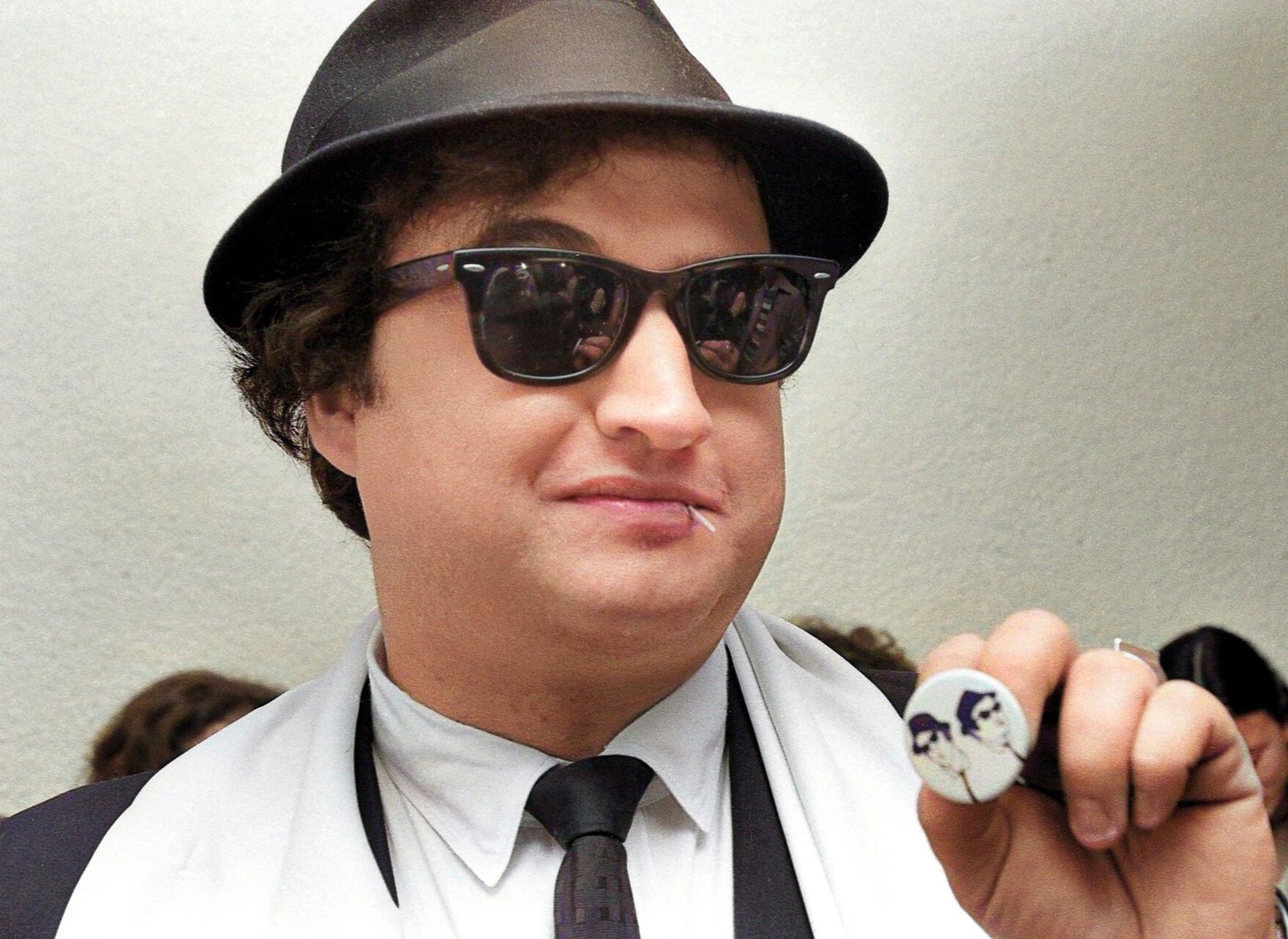
| 7 Quotes | |
| Born as | John Adam Belushi |
| Occup. | Comedian |
| From | USA |
| Spouse | Judith Jacklin |
| Born | January 24, 1949 Chicago, Illinois, USA |
| Died | March 5, 1982 Hollywood, California, USA |
| Cause | Drug overdose |
| Aged | 33 years |
| Cite | |
Citation Formats
APA Style (7th ed.)
John belushi biography, facts and quotes. (2026, February 11). FixQuotes. https://fixquotes.com/authors/john-belushi/
Chicago Style
"John Belushi biography, facts and quotes." FixQuotes. February 11, 2026. https://fixquotes.com/authors/john-belushi/.
MLA Style (9th ed.)
"John Belushi biography, facts and quotes." FixQuotes, 11 Feb. 2026, https://fixquotes.com/authors/john-belushi/. Accessed 25 Mar. 2026.
Early Life and Background
John Adam Belushi was born on January 24, 1949, in Chicago, Illinois, the first child of Albanian immigrants Adam and Agnes Belushi. He grew up largely in Wheaton and nearby suburbs in DuPage County, a postwar landscape of tidy lawns and anxious ambition where assimilation meant learning to be louder than your unease. At home he absorbed the push-pull common to immigrant families - pride in hard work, suspicion of indulgence - while on the street he learned that charisma could buy belonging faster than conformity.Big, athletic, and quick to perform, Belushi treated attention as both armor and oxygen. Friends recalled a boy who could flip from swagger to sensitivity in a breath, as if the joke had to land before anyone could look too closely. In that tension - between the desire to be loved and the fear of being ordinary - the later Belushi was already visible: a comic who made intensity look like play.
Education and Formative Influences
Belushi attended Wheaton Central High School, where he acted, played football, and began shaping his persona as a ringleader who could command a room. After graduation he enrolled at the College of DuPage and later Southern Illinois University Carbondale, but the classroom never held him the way stages did. Chicago, meanwhile, was a proving ground: Second City and the citys improvisational culture taught him speed, ensemble discipline, and the sacred rule that energy is a kind of truth even when the premise is absurd.Career, Major Works, and Turning Points
Belushis break came through The Second City and National Lampoons Lemmings, which led to the original cast of NBCs Saturday Night Live in 1975. There he became a defining face of the show's early, anything-can-happen volatility - as the feral Joe Cocker impression, the Samurai, and especially as Jake Blues, co-creating The Blues Brothers with Dan Aykroyd and turning a sketch into a touring band and then a 1980 film that fused reverence for American rhythm-and-blues with anarchic comedy. He leapt to movies with Animal House (1978), playing John Blutarsky "Bluto" Blutarsky as a force of nature - childish, destructive, weirdly inspiring - and then 1941 (1979) and Continental Divide (1981), a romantic lead attempt that revealed both his ambition and the industrys uncertainty about how to contain him. Behind the scenes, the pace of fame, substances, and expectation tightened into a loop, and by early 1982 he was physically depleted, oscillating between craving rest and chasing the next jolt. He died on March 5, 1982, at the Chateau Marmont in Los Angeles, aged 33.Philosophy, Style, and Themes
Belushis comedy was built on acceleration: a body that refused stillness, a face that broadcast appetite, and a commitment to push a bit past the point of safety. The signature characters were less about cleverness than about permission - to be loud, to fail publicly, to turn humiliation into fuel. That is why his most famous rallying cry, delivered as Bluto, still reads like a manifesto for the insecure overachiever: “Nothing is over until we decide it is! Was it over when the Germans bombed Pearl Harbor? Hell, no!” The line is funny because it is wrong, but it is also revealing - a mind that converts error into momentum, insisting the will can outrun reality.Under the roar sat a private unease about satisfaction and self-worth. Belushi could fill rooms and yet experience pleasure as elusive or undeserved, a split captured in the plaintive logic of: “I give so much pleasure to so many people. Why can I not get some pleasure for myself?” Fame intensified the paradox. He chased the ecstatic high of performance while resenting the machinery that demanded it, and he named the dynamic with blunt clarity: “It's all false pressure; you put the heat on yourself, you get it from the networks and record companies and movie studios. You put more pressure on yourself to make everything that much harder”. His work often staged that pressure as a party that will not end - the animal joy of the moment masking dread of the quiet afterward.
Legacy and Influence
Belushi remains an emblem of SNLs first generation and of a particular American comic archetype: the volcanic performer whose physicality carries the joke before the words arrive. Animal House helped set the template for modern broad comedy, while The Blues Brothers modeled a rare kind of cross-cultural evangelism, steering mainstream audiences toward Curtis Mayfield, James Brown, and a lineage of Black American music treated not as a prop but as a source of awe. His death hardened him into cautionary myth, yet his deeper legacy is artistic: he proved that abandon can be crafted, that wildness can be precise, and that the most explosive laughter often comes from a performer trying - urgently, theatrically - to outrun his own silence.Our collection contains 7 quotes written by John, under the main topics: Witty One-Liners - Never Give Up - Student - Work - Happiness.
Other people related to John: Dan Aykroyd (Comedian), Michael Chiklis (Actor), Garrett Morris (Comedian), Tim Matheson (Actor)
Source / external links