
John Candy Biography Quotes 3 Report mistakes
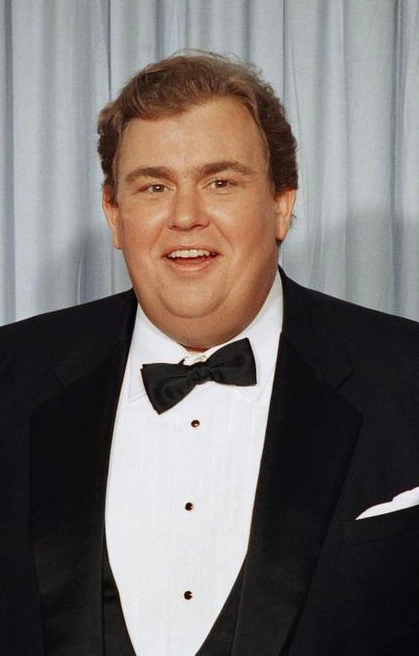
| 3 Quotes | |
| Occup. | Comedian |
| From | Canada |
| Born | October 31, 1950 |
| Died | March 4, 1994 |
| Aged | 43 years |
| Cite | |
Citation Formats
APA Style (7th ed.)
John candy biography, facts and quotes. (2026, February 27). FixQuotes. https://fixquotes.com/authors/john-candy/
Chicago Style
"John Candy biography, facts and quotes." FixQuotes. February 27, 2026. https://fixquotes.com/authors/john-candy/.
MLA Style (9th ed.)
"John Candy biography, facts and quotes." FixQuotes, 27 Feb. 2026, https://fixquotes.com/authors/john-candy/. Accessed 26 Mar. 2026.
Early Life and Background
John Franklin Candy was born on October 31, 1950, in Newmarket, Ontario, and grew up largely in the Toronto area in a working-class Canadian household shaped by postwar optimism and the quiet pressures of upward mobility. His father, Sidney James Candy, sold auto parts; his mother, Evangeline (Aker), held the family together through long stretches of routine labor and modest means. Candy's early sensibility formed in a country still negotiating its cultural identity beside an overpowering American entertainment machine, a tension that would later make his warmth and ordinariness feel like a kind of national signature.His childhood carried an early rupture: his father died when Candy was young, leaving an emotional vacancy that friends later felt he papered over with jokes, hospitality, and a talent for making other people feel seen. He was a big, athletic kid with a natural comedic timing, and the combination often cast him as both class clown and gentle protector. That mixture of sensitivity and self-deprecation became his private engine - a need to belong, to be liked, and to turn loneliness into laughter without exposing the raw source.
Education and Formative Influences
Candy attended Neil McNeil Catholic High School in Toronto, where he played football and began taking performance seriously, drawn to the collaborative energy of sketch comedy and the discipline of rehearsed bits. In the late 1960s and early 1970s, as Canadian television expanded and Second City style improvisation traveled north, he found a model for comedy rooted in character rather than cruelty. Toronto's comedy ecosystem - clubs, TV variety, and the growing influence of The Second City - offered him a path that did not require abandoning his Canadian cadence, even as Hollywood remained the ultimate proving ground.Career, Major Works, and Turning Points
Candy broke through with The Second City troupe and became a central face of SCTV (Second City Television) from the mid-1970s into the early 1980s, creating affectionate, ridiculous characters with a strangely sincere inner life - most famously the loud, needy, and lovable half of the McKenzie brothers in Strange Brew (1983). Hollywood widened his canvas: supporting turns in The Blues Brothers (1980) and Splash (1984) established his ability to steal scenes without breaking the film, while Planes, Trains and Automobiles (1987) cemented him as a leading man who could make pain funny and comedy painful. He moved fluidly between broad hits like Uncle Buck (1989) and Cool Runnings (1993) and more dramatic shading in Only the Lonely (1991), his career increasingly defined by a rare reliability: he made chaos feel human. Candy died suddenly of a heart attack on March 4, 1994, in Durango, Mexico, while filming Wagons East, a shock that froze his image at 43 as an emblem of generosity, exhaustion, and unfinished promise.Philosophy, Style, and Themes
Candy's comedy was built on contradiction: he played the brash guy who secretly wants permission to be soft. His improvisational background gave him rhythm and patience - he could let a pause do the work, or gently overplay a line until it revealed a character's need. Even in throwaway moments, he carried an actor's attention to motive; the famous fast-food refrain, “Who wants an orange whip? Orange whip? Orange whip? Three orange whips”. is funny not just for its repetition but for the way it turns a public space into a small stage where a man tries, absurdly, to connect.Under the surface, Candy often treated performance as camouflage and confession at once. “I think I may have become an actor to hide from myself. You can escape into a character”. That self-diagnosis reframes his best roles - Del Griffith in Planes, Trains and Automobiles, Buck Russell in Uncle Buck - as portraits of men who bluff their way through shame with charm, then reveal a startling moral tenderness. His humor also leaned on bodily self-awareness, turning the anxiety of being seen into a shared joke rather than a private wound: “I thought to myself, Join the army. It's free. So I figured while I'm here I'll lose a few pounds”. The line reads like a gag, but it also shows the lifelong negotiation between appetite, self-image, and a desire to be accepted without conditions.
Legacy and Influence
Candy's enduring influence lies in how he expanded what a screen comedian could be: not a cool ironist, but a vulnerable everyman whose kindness did not negate his messiness. He helped legitimate Canadian comedic talent in American film and TV, proving that a distinctly Toronto-born sensibility - polite, self-effacing, and emotionally literate - could headline global hits. Decades after his death, actors and audiences return to him for the same reason: he made laughter feel like companionship, and he made the lonely parts of ordinary life briefly, bearably communal.Our collection contains 3 quotes written by John, under the main topics: Witty One-Liners - Funny - Art.
Other people related to John: Martin Short (Actor), Eugene Levy (Actor), David Steinberg (Comedian), Michael Winslow (Actor), Rick Moranis (Actor), John Hughes (Director)