
Jose Rizal Biography Quotes 71 Report mistakes
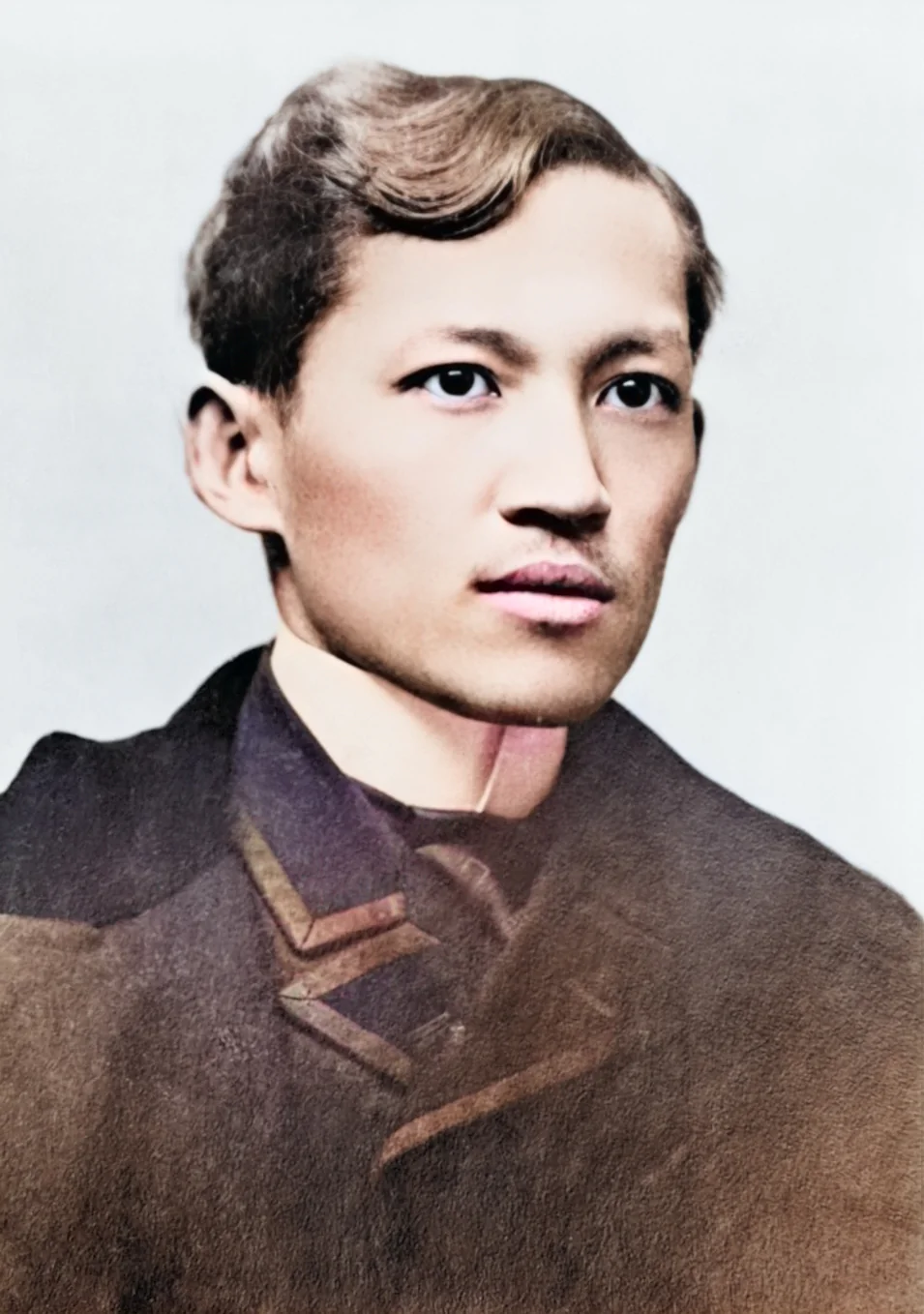
| 71 Quotes | |
| Born as | José Protasio Rizal Mercado y Alonso Realonda |
| Occup. | Writer |
| From | Philippines |
| Born | June 19, 1861 Calamba, Laguna |
| Died | December 20, 1896 Bagumbayan, Manila |
| Cause | Execution by firing squad |
| Aged | 35 years |
| Cite | |
Citation Formats
APA Style (7th ed.)
Jose rizal biography, facts and quotes. (2026, February 9). FixQuotes. https://fixquotes.com/authors/jose-rizal/
Chicago Style
"Jose Rizal biography, facts and quotes." FixQuotes. February 9, 2026. https://fixquotes.com/authors/jose-rizal/.
MLA Style (9th ed.)
"Jose Rizal biography, facts and quotes." FixQuotes, 9 Feb. 2026, https://fixquotes.com/authors/jose-rizal/. Accessed 12 Feb. 2026.
Early Life and Background
Jose Protasio Rizal Mercado y Alonso Realonda was born on June 19, 1861, in Calamba, Laguna, in the Captaincy General of the Philippines, a Spanish colony ordered by friar power, racial hierarchy, and the slow violence of tribute and forced deference. He grew up in a prosperous, literate family of tenant-landholders whose relative comfort did not shield them from the arbitrariness of colonial rule. That contradiction - security built on precarious permission - would become the emotional engine of his writing: gratitude toward home and kin, paired with an ever-sharpening awareness that dignity could be revoked by decree.Within the Mercado-Rizal household, ambition was disciplined by piety and study. His mother, Teodora Alonso, was his first serious teacher and a formative symbol of injustice when she was falsely accused and jailed; the memory taught him that law in a colony could be theater. His older brother Paciano, shaped by the martyrdom of the reformist priest Jose Burgos in 1872, quietly inducted him into a world where ideas could kill and where prudence was not cowardice but strategy.
Education and Formative Influences
Rizal studied in Binan, then at the Ateneo Municipal de Manila, earning top honors, and later at the University of Santo Tomas, where he encountered both scholastic rigor and the discrimination that Filipino students routinely faced. He trained in medicine, specializing in ophthalmology with the practical hope of treating his mother's failing eyesight, but his deeper education was comparative: he absorbed liberal nationalism, scientific method, and European debates on race and progress. From 1882 he traveled and studied across Spain and beyond - Madrid, Paris, Heidelberg, and other centers - reading the novelists and historians who showed how a people could be imagined into nationhood, while he himself became a cosmopolitan who refused to stop being Filipino.Career, Major Works, and Turning Points
His career fused physician, essayist, and political conscience. In Europe he joined the Propaganda Movement and wrote for La Solidaridad, arguing for representation, secularization, and civil equality, not immediate separation. His first novel, Noli Me Tangere (1887), anatomized the collusion of friar authority and local opportunism; its sequel, El Filibusterismo (1891), darkened into a study of vengeance, failed reform, and moral contamination. Both books, banned yet circulated, made him a target. Returning to the Philippines in 1892, he founded La Liga Filipina to pursue civic reform through organization and mutual aid; within days he was arrested and exiled to Dapitan in Mindanao. There he practiced medicine, built a school, undertook scientific collecting, and lived a quieter, earned life with Josephine Bracken - until the revolution of 1896 dragged his name, willingly or not, into the logic of war. Despite his disavowal of violent revolt, he was tried for sedition and executed by firing squad in Manila on December 30, 1896, after writing his farewell poem, later titled "Mi Ultimo Adios".Philosophy, Style, and Themes
Rizal's interior life was a disciplined argument between tenderness and severity. He loved home with the ache of exile, yet he mistrusted sentimentality as a substitute for change. His reformism was not softness but an ethics: liberty had to be deserved through education, work, and civic virtue, or it would simply trade masters. "It is a useless life that is not consecrated to a great ideal. It is like a stone wasted on the field without becoming a part of any edifice". The line reads like self-command. He feared a life spent in complaint, and he feared - more quietly - that brilliance without service was its own kind of betrayal.His style mixed realist social portraiture with satire, allegory, and forensic observation. In the novels, clerical hypocrisy is not only villainy but a system that trains everyone to lie, including the oppressed, and his characters often suffer less from pure evil than from learned accommodation. "There can be no tyrants where there are no slaves". That provocation exposes a psychological target: internalized fear, the habit of lowering the eyes, the small bargains that make domination durable. Yet Rizal refused despair. He invested his hope in formation - schools, language, science, the slow building of competence - and kept returning to youth as the hinge between a wounded past and a possible nation. "The youth is the hope of our future". It is both exhortation and confession that his revolution was, at root, educational.
Legacy and Influence
Rizal's death made him the colony's most potent moral symbol, but his endurance comes from the precision of his diagnosis: how power recruits culture, how reformers are tempted by vanity, how love of country can be manipulated or deepened into duty. Across the Philippines and its diaspora, his novels remain political literature not because they prescribe a single program, but because they train readers to notice complicity, to demand dignity in institutions, and to link private conscience with public consequence. He is invoked by reformists and radicals alike, a sign that his real bequest is a civic vocabulary - of rights, education, and accountable nationhood - that outlived the empire that tried to silence him.Our collection contains 71 quotes written by Jose, under the main topics: Motivational - Wisdom - Justice - Mortality - Freedom.
Frequently Asked Questions
- Jose Rizal Siblings in order: Saturnina, Paciano, Narcisa, Olympia, Lucia, Maria, Jose, Concepción, Josefa, Trinidad, and Soledad.
- Who was Jose Rizal family? Jose Rizal's family consisted of his parents, Francisco Mercado and Teodora Alonso, and his 10 siblings.
- What was Jose Rizal last words? 'Consummatum est,' which means 'It is finished' or 'It is accomplished' in Latin.
- How did Jose Rizal fight for our country? Jose Rizal fought for the Philippines by writing and publishing novels, essays, and articles promoting national consciousness, freedom, and reforms.
- How old was Jose Rizal? He became 35 years old
Jose Rizal Famous Works
- 1896 Mi último adiós (Poem)
- 1891 El Filibusterismo (Novel)
- 1888 Ang pagong at ang matsing (Play)
- 1887 Noli Me Tangere (Novel)
Source / external links