
Larry Bird Biography Quotes 20 Report mistakes
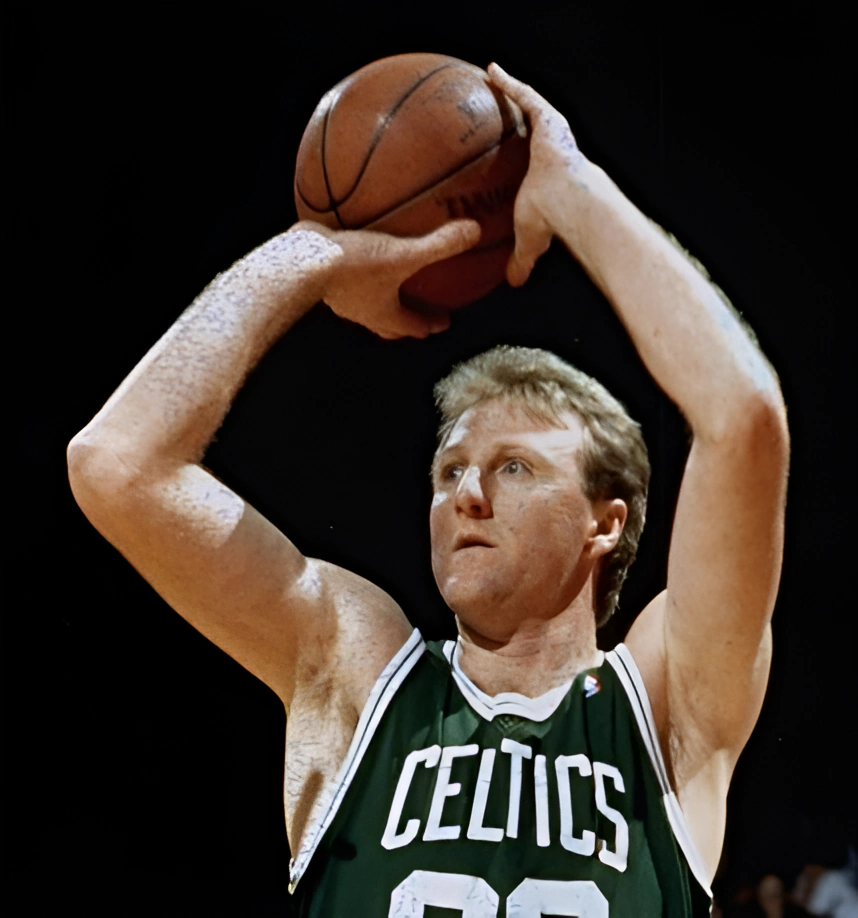
| 20 Quotes | |
| Born as | Larry Joe Bird |
| Occup. | Coach |
| From | USA |
| Born | December 7, 1956 West Baden, Indiana |
| Age | 69 years |
| Cite | |
Citation Formats
APA Style (7th ed.)
Larry bird biography, facts and quotes. (2026, February 11). FixQuotes. https://fixquotes.com/authors/larry-bird/
Chicago Style
"Larry Bird biography, facts and quotes." FixQuotes. February 11, 2026. https://fixquotes.com/authors/larry-bird/.
MLA Style (9th ed.)
"Larry Bird biography, facts and quotes." FixQuotes, 11 Feb. 2026, https://fixquotes.com/authors/larry-bird/. Accessed 27 Mar. 2026.
Early Life and Background
Larry Joe Bird was born on December 7, 1956, in West Baden Springs, Indiana, and grew up nearby in the small town of French Lick. The rural hills of southern Indiana shaped him: a place of shift work, modest houses, and high school gyms that doubled as civic temples. He was the fourth of six children, raised in a family where money was tight and pride ran deep, and where the rhythms of labor and church life sat beside the escape valve of sport.His childhood carried both intimacy and fracture. Bird later spoke with blunt gratitude about his mother, Georgia, who prioritized her children in a way that hardened his respect for sacrifice and responsibility. “If there was a payment to the bank due, and we needed shoes, she'd get the shoes, and then deal with them guys at the bank. I don't mean she wouldn't pay the bank, but the children always came first”. The family was also marked by loss: his father, Joe Bird, struggled and died by suicide, an event Bird rarely romanticized but which left a permanent undertow of guardedness and self-reliance.
Education and Formative Influences
Bird starred at Springs Valley High School, then briefly enrolled at Indiana University in 1974, overwhelmed by the scale of Bloomington and the social distance between his upbringing and the campus world; he withdrew after less than a month. He worked municipal jobs in French Lick, then rebuilt his path at Northwood Institute before transferring to Indiana State University, where coach Bill Hodges gave him structure and freedom. At Indiana State he became a national figure, culminating in the 1979 NCAA championship game against Magic Johnson's Michigan State - a cultural event for college basketball and a preview of an NBA rivalry that would help define the 1980s.Career, Major Works, and Turning Points
Drafted by the Boston Celtics in 1978 and joining in 1979, Bird became the franchise cornerstone, winning NBA titles in 1981, 1984, and 1986, three straight MVP awards (1984-86), and a reputation for late-game cruelty built on precision passing, rebounding, and shot-making. His duels with Johnson and the Los Angeles Lakers re-energized the league, while his partnership with Kevin McHale and Robert Parish formed one of the era's most complete frontcourts. Injuries and a famously self-inflicted back problem from paving a driveway helped end his playing career in 1992, but the second act was unusually direct: he returned to the NBA as head coach of the Indiana Pacers in 1997, won Coach of the Year in 1998, and led them to the 2000 NBA Finals, later shifting to team-building leadership as Pacers president.Philosophy, Style, and Themes
Bird's inner life was defined by a worker's ethic welded to an artist's sense of timing. His best teams mirrored his psyche: unsentimental, intensely prepared, and quietly theatrical at the moment of decision. He treated effort as a moral category, not a mood, the kind that expects pain and uses it. “Push yourself again and again. Don't give an inch until the final buzzer sounds”. That insistence was not merely competitive bravado; it was the emotional technology of someone who learned early that nothing arrives on schedule and that dignity is often self-manufactured.As a player and later a coach, Bird trusted the connective tissue of basketball more than the glamorous finish. He valued the read, the angle, the second pass that breaks a defense and reveals what he considered the real hierarchy of skill. “It doesn't matter who scores the points, it's who can get the ball to the scorer”. Leadership, to him, was physical and public - the act that removes excuses for everyone else. “Leadership is diving for a loose ball, getting the crowd involved, getting other players involved. It's being able to take it as well as dish it out. That's the only way you're going to get respect from the players”. In that view, ego is acceptable only when it fuels responsibility; what matters is whether the team feels your seriousness in its bones.
Legacy and Influence
Bird endures as a template for intelligent toughness: a superstar who proved that anticipation, craft, and competitive will could dominate an athletic league, and whose rivalry with Magic Johnson helped pull the NBA into a new commercial and cultural era. His coaching and front-office work extended the same values - spacing, unselfish decision-making, accountability - into institutional form, influencing how modern teams talk about "the pass that creates the pass". In Indiana he remains a local myth made literal, and in basketball history he stands as the rare figure whose greatness reads the same from any angle: as scorer, passer, leader, and builder of winning cultures.Our collection contains 20 quotes written by Larry, under the main topics: Witty One-Liners - Motivational - Wisdom - Never Give Up - Leadership.
Other people related to Larry: Hakeem Olajuwon (Athlete), Red Auerbach (Coach), Isaiah Thomas (Athlete), Chuck Daly (Coach), Bill Laimbeer (Coach), Patrick Ewing (Athlete), Rick Fox (Actor), Reggie Lewis (Athlete)
Source / external links