
Leah Ward Sears Biography Quotes 7 Report mistakes
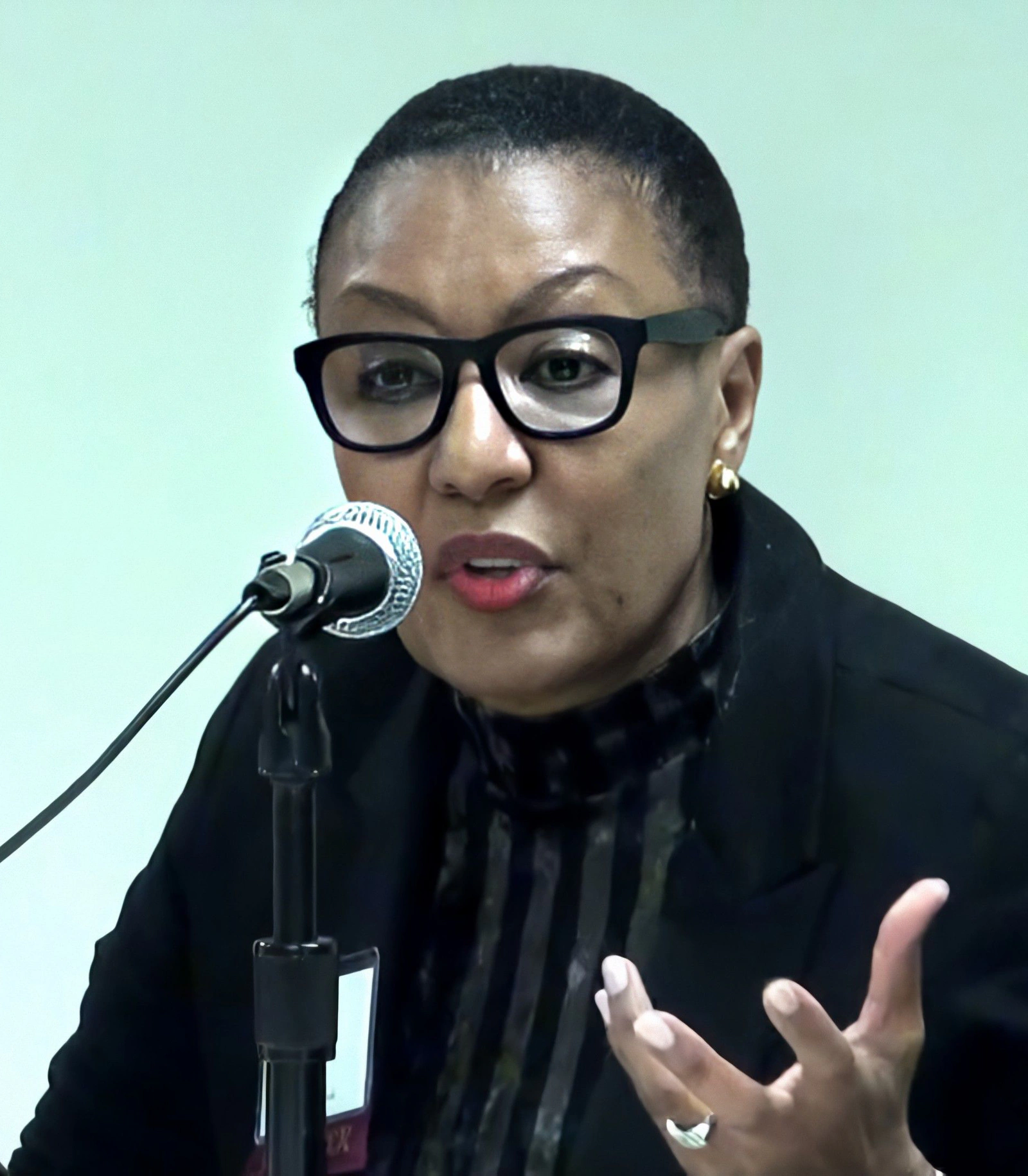
Attr: Nydia Tisdale, CC BY 3.0
| 7 Quotes | |
| Occup. | Judge |
| From | USA |
| Born | June 13, 1955 |
| Age | 70 years |
| Cite | |
Citation Formats
APA Style (7th ed.)
Leah ward sears biography, facts and quotes. (2026, February 22). FixQuotes. https://fixquotes.com/authors/leah-ward-sears/
Chicago Style
"Leah Ward Sears biography, facts and quotes." FixQuotes. February 22, 2026. https://fixquotes.com/authors/leah-ward-sears/.
MLA Style (9th ed.)
"Leah Ward Sears biography, facts and quotes." FixQuotes, 22 Feb. 2026, https://fixquotes.com/authors/leah-ward-sears/. Accessed 9 Mar. 2026.
Early Life and Background
Leah Ward Sears was born on June 13, 1955, in the United States, into a Black middle-class family coming of age in the long aftershock of Brown v. Board of Education and on the doorstep of the civil rights era's decisive legal battles. She grew up watching the courts become a theater where national ideals were contested and revised, and that early proximity to law as a tool of civic transformation shaped her sense of vocation as much as any single event.
Her childhood was also marked by the quiet, sustaining machinery of family ambition: parents and community elders who treated education as a moral duty and professional achievement as a way to widen the path for those coming behind. Sears later spoke plainly about the loneliness of aiming for institutions that had rarely admitted people like her, and the inner discipline that required - a discipline rooted less in certainty than in practiced hope.
Education and Formative Influences
Sears pursued higher education during the 1970s, a period when formal segregation had ended but professional gatekeeping remained entrenched, especially for African-American women entering elite legal circles. She was drawn to constitutional argument, the language of rights, and the institutional reality of appellate courts - influences reinforced by the example of the U.S. Supreme Court as the arena where social conflict could be translated into enforceable principles and where, for the first time in American history, a young Black woman could plausibly imagine herself not merely observing but participating.
Career, Major Works, and Turning Points
After building her credentials as a lawyer, Sears rose through Georgia's legal and civic institutions and ultimately became a Justice of the Supreme Court of Georgia, where she later served as Chief Justice - a milestone both personal and historical. Her career unfolded in the practical world of case law, judicial administration, and public trust: deciding disputes that rarely made national headlines but cumulatively defined how Georgians experienced equal protection, criminal procedure, family law, and the daily legitimacy of the courts. A key turning point was her transition from advocate to jurist, when persuasion gave way to the discipline of restraint - the obligation to explain decisions transparently, to treat precedent seriously, and to protect the court as an institution even when politics around it grew sharper.
Philosophy, Style, and Themes
Sears' public philosophy centered on law as a civilizing practice: a method for transforming social conflict into reasoned disagreement without breaking the civic bond. She was outspoken about tone and trust in a democratic society, insisting that argument need not become mutual destruction: “We need to, in this country, begin again to raise civil discourse to another level. I mean, we shout and scream and yell and get very little accomplished, but you can disagree very much with the next guy and still be friends and acquaintances”. The psychology behind that line is telling - a judge who had lived through eras when the stakes of disagreement were existential, yet who still wagered that legitimacy is built not only by correct outcomes but by the manner of reaching them.
Her inner life, as she described it, was forged in scarcity of examples and abundance of expectation. “I had very supportive parents that made the way for me, even at a time when there were very few women - no women, really; maybe two or three women - and very few, fewer than that, African-American women heading in this direction, so there were very few people to look up to. You just had to have faith”. That "faith" was not abstract piety but a working temperament - the ability to endure isolation, to outlast stereotypes, and to perform excellence as both self-protection and public argument. At the same time, she framed her judicial life inside a larger moral narrative about democratic promises and human dignity: “I've always been very interested in the struggle for human rights, not just here but abroad, and I wanted to be an inside player in that struggle. I wanted to make the laws reflect our ideals and ideas in this democracy that is America”. Taken together, these themes - civility, faith under pressure, and law as moral architecture - explain her blend of firmness and invitation: demanding rigor while calling the public back to the habits that make rigor politically sustainable.
Legacy and Influence
Leah Ward Sears' legacy rests on institutional leadership and symbolic force: a jurist who embodied the widening of American legal authority to include voices long excluded, and who used that authority to argue for steadier civic habits rather than louder victories. For younger lawyers and judges, especially women and African-Americans in the South, her career offered a concrete blueprint for how to carry identity without being reduced to it - to treat representation as a beginning, not an endpoint, and to anchor ambition in service to the legitimacy of the courts and the dignity of the people who stand before them.
Our collection contains 7 quotes written by Leah, under the main topics: Justice - Parenting - Overcoming Obstacles - Human Rights - Father.
Source / external links