
Louis D. Brandeis Biography Quotes 23 Report mistakes
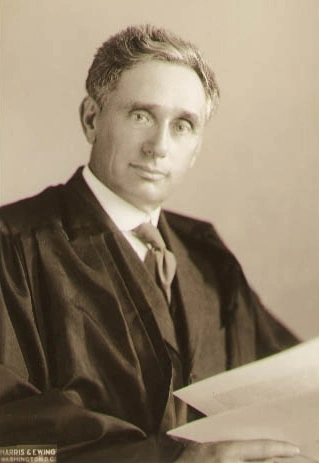
| 23 Quotes | |
| Born as | Louis Dembitz Brandeis |
| Occup. | Judge |
| From | USA |
| Born | November 13, 1856 Louisville, Kentucky |
| Died | October 3, 1941 Washington, D.C. |
| Aged | 84 years |
| Cite | |
Citation Formats
APA Style (7th ed.)
Louis d. brandeis biography, facts and quotes. (2026, February 11). FixQuotes. https://fixquotes.com/authors/louis-d-brandeis/
Chicago Style
"Louis D. Brandeis biography, facts and quotes." FixQuotes. February 11, 2026. https://fixquotes.com/authors/louis-d-brandeis/.
MLA Style (9th ed.)
"Louis D. Brandeis biography, facts and quotes." FixQuotes, 11 Feb. 2026, https://fixquotes.com/authors/louis-d-brandeis/. Accessed 12 Feb. 2026.
Early Life and Background
Louis Dembitz Brandeis was born on November 13, 1856, in Louisville, Kentucky, into a German Jewish immigrant household shaped by the revolutions and disappointments of 1848 Europe. His parents, Adolph Brandeis and Frederika Dembitz Brandeis, brought to the Ohio River border city a cosmopolitan, secular-leaning Judaism and a respect for learning, commerce, and civic duty. Louisville in the 1850s and 1860s was a place where slavery, migration, and mercantile ambition collided; the Civil War years left behind both trauma and the practical lesson that law and markets could be instruments of power as well as order.Family life offered him a stabilizing blend of ethical seriousness and intellectual independence. He grew up alert to the vulnerabilities of minorities and to the temptations of concentrated power, yet he was not a romantic outsider. Early on he displayed a rare confidence in reasoned argument and self-discipline, the kind that would later make colleagues describe him as austere, exacting, and strangely private. Those traits were less temperament than strategy: in a nation industrializing at speed, restraint and analysis were his way of keeping moral agency intact.
Education and Formative Influences
Brandeis studied first in Louisville and spent formative time in Europe before entering Harvard Law School, where he graduated in 1877 with the highest honors. Harvard in the late 1870s was consolidating legal education into a rigorous, case-centered discipline, and Brandeis absorbed its habits of close reading and adversarial logic, but he resisted the era's drift toward abstract formalism. He read economics and social science alongside law and became convinced that facts about working life, industrial organization, and human behavior belonged inside legal reasoning, not outside it.Career, Major Works, and Turning Points
After moving to Boston, Brandeis built a formidable practice and became known as "the people's lawyer" for taking on public causes while maintaining a reputation for integrity and technical brilliance. His turning point came in progressive-era battles over corporate power and social reform: he advised on labor issues, opposed monopolistic practices, and helped legitimize new regulatory approaches. In 1908 he co-authored the pioneering "Brandeis Brief" in Muller v. Oregon, marshaling social and medical data to support labor protections - a method that changed how courts could be persuaded. President Woodrow Wilson nominated him to the US Supreme Court in 1916 amid fierce, often antisemitic opposition; confirmed, he served until 1939. On the Court he shaped modern understandings of privacy (notably through the intellectual lineage of his earlier Harvard Law Review article with Samuel Warren, "The Right to Privacy"), defended free speech in dissents and concurrences, and helped steer constitutional law toward deference to democratic experimentation in economic regulation.Philosophy, Style, and Themes
Brandeis' inner life was governed by a stern faith that citizenship could be educated and that power, left unexamined, metastasized. His progressivism was not primarily sentimental but diagnostic: he treated corruption, monopoly, and demagoguery as predictable products of incentives and secrecy. "Publicity is justly commended as a remedy for social and industrial diseases. Sunlight is said to be the best of disinfectants; electric light the most efficient policeman". The line is often repeated as a slogan, but in Brandeis it signals a psychological orientation - an insistence that moral judgment requires visibility, that people behave better when institutions are forced into the open. It also reveals his impatience with theatrical politics; he trusted procedures, records, and the slow discipline of accountability more than charisma.His judicial style mirrored that temperament: careful, fact-attentive, skeptical of grand theory, and alert to unintended consequences. "The logic of words should yield to the logic of realities". Brandeis used this realism to defend legislative experiments, to insist that constitutional principles had to meet the world as it was - factories, unions, advertising, mass communications - rather than the world as lawyers wished it to be. At the same time he feared paternalistic overreach, especially in policing and prosecution, where zeal could become lawlessness. "The greatest dangers to liberty lurk in the insidious encroachment by men of zeal, well meaning but without understanding". The sentence captures the tension at the center of his character: he believed in reform, yet he distrusted the reformer's temptation to shortcut rights, and he worried that good intentions could rationalize coercion.
Legacy and Influence
Brandeis died on October 3, 1941, having helped reorient American constitutional culture toward modern realities: administrative governance, economic regulation, and a more robust vocabulary for privacy and free expression. His name endures not only in opinions but in methods - the idea that law should be argued with data, that courts should understand the social world they govern, and that democratic life depends on transparency and restraint. In an era still wrestling with inequality, surveillance, and the legitimacy of institutions, Brandeis remains a demanding guide: suspicious of concentrated wealth, wary of righteous overreach, and confident that liberty can survive modernity only if citizens and judges learn to think with disciplined boldness.Our collection contains 23 quotes written by Louis, under the main topics: Ethics & Morality - Wisdom - Justice - Freedom - Equality.
Other people related to Louis: Joseph McKenna (Politician), Carter Glass (Politician)
Source / external links