
Lucille Ball Biography Quotes 24 Report mistakes
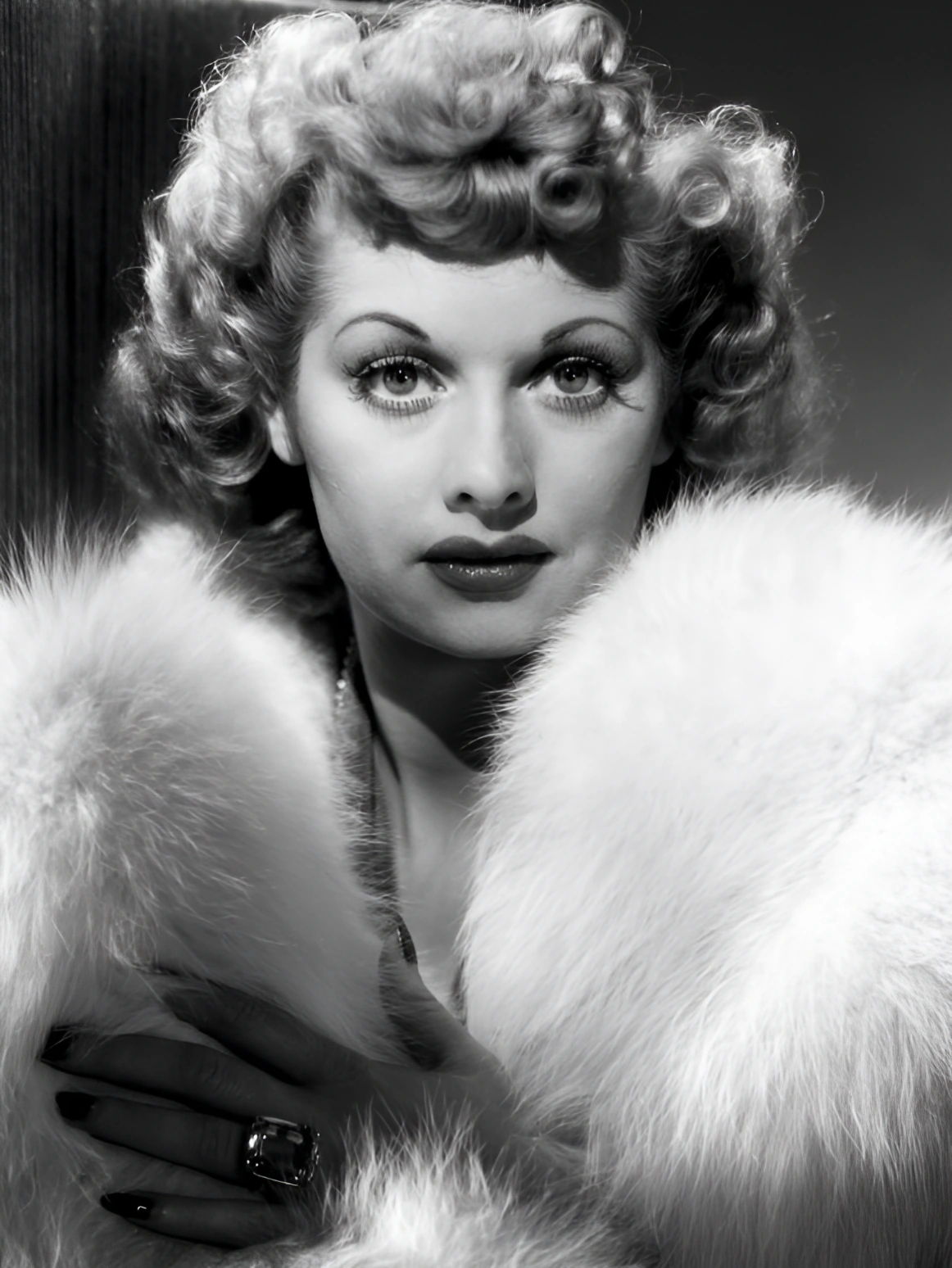
| 24 Quotes | |
| Born as | Lucille Desiree Ball |
| Occup. | Comedian |
| From | USA |
| Born | August 6, 1911 Jamestown, New York, USA |
| Died | April 26, 1989 Los Angeles, California, USA |
| Cause | aortic dissection |
| Aged | 77 years |
| Cite | |
Citation Formats
APA Style (7th ed.)
Lucille ball biography, facts and quotes. (2026, February 11). FixQuotes. https://fixquotes.com/authors/lucille-ball/
Chicago Style
"Lucille Ball biography, facts and quotes." FixQuotes. February 11, 2026. https://fixquotes.com/authors/lucille-ball/.
MLA Style (9th ed.)
"Lucille Ball biography, facts and quotes." FixQuotes, 11 Feb. 2026, https://fixquotes.com/authors/lucille-ball/. Accessed 26 Mar. 2026.
Early Life and Background
Lucille Desiree Ball was born on August 6, 1911, in Jamestown, New York, a small industrial city shaped by turn-of-the-century migration and factory rhythms. Her father, Henry Durrell Ball, worked for the Bell Telephone system; his early death from typhoid fever in 1915 ruptured the household and left Lucille, her brother Fred, and their mother, Desiree "DeDe" Ball, facing precariousness that would sharpen her instinct for self-reliance and performance as a kind of emotional armor.Raised largely in Celoron, near Chautauqua Lake, Ball grew up amid extended family, shifting finances, and the social expectations placed on a bright, awkward girl in an era that prized quiet femininity. She later described herself as shy, yet her shyness was paired with a fierce appetite to be seen - a paradox that became central to her comic identity: anxiety transmuted into precision timing, and humiliation turned into craft.
Education and Formative Influences
Ball left high school early and, against the grain of small-town respectability, moved toward the performing arts, studying briefly at the John Murray Anderson-Robert Milton School for the Theatre and Dance in New York City. The training did not immediately crown her with confidence - she was reportedly told she lacked promise - but the experience clarified what she could control: discipline, repetition, and a willingness to be embarrassed in public. In the 1930s, as America struggled through the Great Depression, she took modeling work, including for Hattie Carnegie, and began appearing in films as a chorus girl and contract player, learning camera mechanics and the hard economics of being replaceable.Career, Major Works, and Turning Points
After early screen work at RKO and MGM (including roles opposite major stars, often uncredited or lightly sketched), Ball found steadier identity in radio and then television, marrying Cuban bandleader Desi Arnaz in 1940 and shaping her life around the volatile blend of love, ambition, and show business logistics. Her breakthrough arrived with "I Love Lucy" (CBS, 1951-1957), developed from the radio hit "My Favorite Husband" and built around the chemistry - and friction - between Ball and Arnaz; the series pioneered the three-camera setup on 35mm film before a live audience, making reruns economically viable and redefining TV as an industry of repeatable icons. She and Arnaz formed Desilu Productions, which expanded into influential programming, and after their divorce in 1960, Ball became the first woman to run a major Hollywood studio operation when she took control of Desilu in 1962, later selling it in 1967. Subsequent series such as "The Lucy Show" and "Here's Lucy" extended her reign by adapting her persona to changing decades, while her later years were marked by public honors and continued work that maintained her image as a relentless professional.Philosophy, Style, and Themes
Ball's comedy was built on a brave acceptance of risk: she treated failure not as a verdict but as raw material, turning panic into choreography. Her famous insistence - “I'm not funny. What I am is brave”. - reads less like false modesty than a diagnostic of her own psychology. She understood that the comic body must volunteer for damage: pratfalls, double-takes, mangled dignity, and the threat of being disliked. That willingness let her smuggle subversion into mainstream living rooms, especially in storylines where domestic order was scrambled by a woman's schemes and desires, exposing marriage as a negotiation rather than a fairy tale.Her themes circled around work, appetite, and the hunger to participate in public life. In an era that asked women to be supportive rather than central, she presented ambition as both irresistible and punishing, yet never abstract - it was always about rehearsal, hustle, and the next attempt. “The more things you do, the more you can do”. captures the ethic behind her on-screen momentum and her off-screen executive life, where she learned budgets, casting, and the politics of network power. Even her self-regard was pragmatic rather than sentimental: “Love yourself first and everything else falls into line. You really have to love yourself to get anything done in this world”. becomes, in context, a survival strategy for a woman who had been dismissed, underestimated, and asked to stay small.
Legacy and Influence
Ball died on April 26, 1989, in Los Angeles, California, after years of being treated as both a beloved clown and a foundational architect of television. Her enduring influence is technical (the filmed sitcom, the rerun economy, the studio model), cultural (the normalization of a woman as comic engine and narrative driver), and psychological: she made vulnerability bankable and demonstrated that authority can be earned through timing, preparation, and nerve. Generations of comedians and showrunners cite her as a template for physical comedy, ensemble rhythm, and the unglamorous labor beneath "natural" laughter, while her red-haired image remains a shorthand for an American kind of courage - the courage to look ridiculous and keep going.Our collection contains 24 quotes written by Lucille, under the main topics: Witty One-Liners - Motivational - Funny - Wisdom - Parenting.
Other people related to Lucille: Gilda Radner (Actress), Gale Gordon (Actor), Laura Kightlinger (Comedian), Bruce Davison (Actor), Cy Coleman (Composer), Valerie Harper (Actress)