
Mel Brooks Biography Quotes 21 Report mistakes
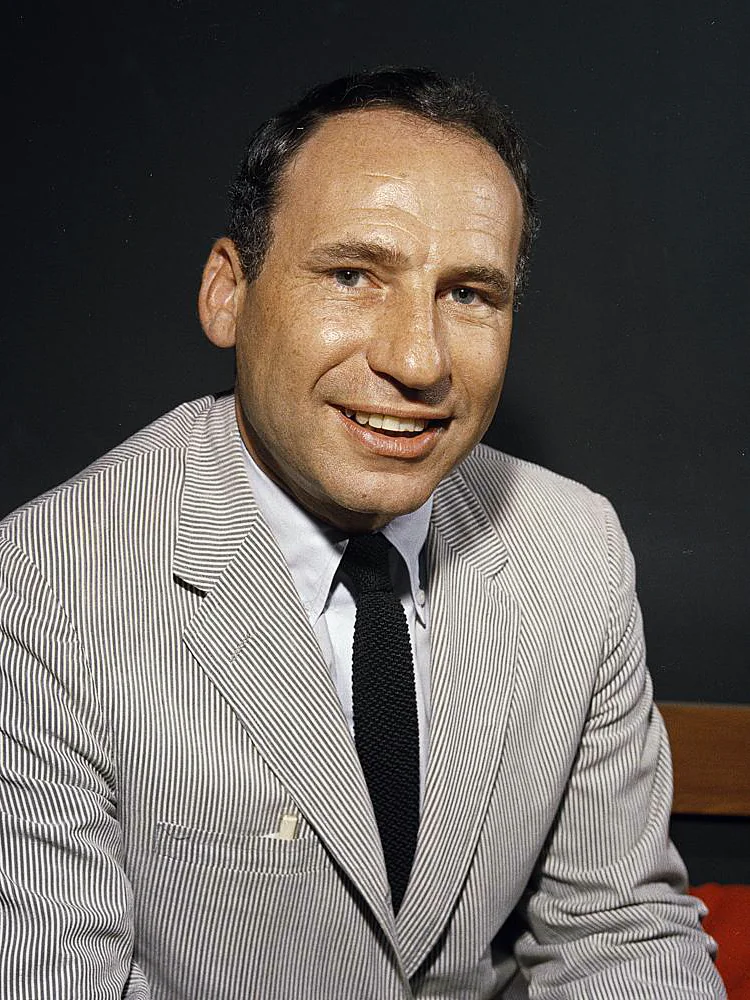
Attr: kxxv.com
| 21 Quotes | |
| Born as | Melvin James Kaminsky |
| Occup. | Comedian |
| From | USA |
| Born | June 28, 1926 Brooklyn, New York City, USA |
| Age | 99 years |
| Cite | |
Citation Formats
APA Style (7th ed.)
Mel brooks biography, facts and quotes. (2026, February 7). FixQuotes. https://fixquotes.com/authors/mel-brooks/
Chicago Style
"Mel Brooks biography, facts and quotes." FixQuotes. February 7, 2026. https://fixquotes.com/authors/mel-brooks/.
MLA Style (9th ed.)
"Mel Brooks biography, facts and quotes." FixQuotes, 7 Feb. 2026, https://fixquotes.com/authors/mel-brooks/. Accessed 27 Mar. 2026.
Early Life and Background
Mel Brooks was born Melvin James Kaminsky on June 28, 1926, in Brooklyn, New York, the youngest of four sons in a Jewish immigrant household shaped by precarity and argument. His father, Max Kaminsky, died of tuberculosis when Mel was still a child, leaving a permanent early lesson in how quickly the world can take away stability. The boroughs of the interwar city offered him two counterweights to grief: the streetwise music of Yiddish-inflected English and the mass entertainment of movies and radio, where wisecracks traveled faster than sorrow.Small in stature and often targeted, he learned to turn humiliation into leverage, sharpening a comic reflex that could make the room choose laughter over cruelty. The cultural pressure cooker of New York during the Depression and wartime years taught him how performance could be both camouflage and command - a way to seize control of a moment before it seized you.
Education and Formative Influences
Brooks attended Eastern District High School in Brooklyn and worked early as a Catskills resort drummer and entertainer, absorbing the timing and audience psychology of Borscht Belt comedy, vaudeville remnants, and the rapid-fire patter of radio. World War II became its own crucible: drafted into the U.S. Army, he served in Europe as a combat engineer, helping clear mines during the push into Germany. The proximity to death, propaganda, and mass spectacle - and the afterimage of the Holocaust behind the lines - deepened his conviction that comedy was not a diversion from history but a way to fight its lies.Career, Major Works, and Turning Points
After the war he entered television variety at the moment it was inventing itself, writing for Sid Caesar on Your Show of Shows alongside fellow young talents such as Carl Reiner, Neil Simon, and Woody Allen, and later for Caesar's Hour. In 1965 he co-created Get Smart with Buck Henry, turning spy mania into gleeful absurdity; soon film became his main instrument. The Producers (1967) announced his signature blend of showbiz craft and taboo demolition, winning him an Academy Award for screenplay while insisting that even Nazism could be stripped of its self-serious spell. He followed with Blazing Saddles (1974) and Young Frankenstein (1974), then Silent Movie (1976), High Anxiety (1977), Spaceballs (1987), and Robin Hood: Men in Tights (1993), before reinventing himself again as a Broadway force with the musical version of The Producers (2001), later followed by Young Frankenstein (2007). Across decades he built a parallel career as a producer of others' work, notably backing David Lynch's The Elephant Man (1980), and his long marriage to Anne Bancroft (1964-2005) grounded a private life often kept deliberately offstage.Philosophy, Style, and Themes
Brooks' comedy is powered by a survivalist psychology: fear is real, so ridicule must be louder. He treated laughter as armor, not perfume, and he said it plainly: “Humor is just another defense against the universe”. That defensive posture was never timid; it was aggressive, even militarized, aimed at bullies, ideologues, and the sanctimony that makes cruelty feel noble. His WWII experience and Jewish identity did not lead him to reverence but to irreverence with purpose - an insistence that evil depends on being treated as grand and inevitable.Formally, he fused old-world theatricality with modern media parody: the musical number as a battering ram, the pun as a switchblade, the broad character as a decoy for sharper satire. His most controversial move was to make the unthinkable sing and dance, arguing that laughter can puncture the spell of tyrants: “Rhetoric does not get you anywhere, because Hitler and Mussolini are just as good at rhetoric. But if you can bring these people down with comedy, they stand no chance”. Beneath the bravado sits a bleak clarity about mortality and scale, a cosmic shrug that fuels the manic pace: “If Shaw and Einstein couldn't beat death, what chance have I got? Practically none”. That awareness explains his obsession with noise, speed, and excess - if the abyss is coming, the only dignified answer is a chorus line.
Legacy and Influence
Brooks helped define postwar American parody, bridging Borscht Belt rhythm, TV writers-room precision, and Hollywood pastiche into a language that later comedians and filmmakers could speak fluently. Blazing Saddles reshaped how studio comedy could confront racism while mocking the myths of the Western; Young Frankenstein became a model for affectionate genre deconstruction; The Producers proved that a filmmaker with a anarchic voice could also be a disciplined craftsman of stage spectacle. His enduring influence lies less in individual jokes than in permission: to treat the pompous as fragile, to turn taboo into critique, and to make entertainment a weapon against intimidation without surrendering joy.Our collection contains 21 quotes written by Mel, under the main topics: Witty One-Liners - Funny - Dark Humor - Writing - Life.
Other people related to Mel: Sid Caesar (Actor), Marty Feldman (Comedian), Teri Garr (Actress), Shawn Wayans (Actor), Gene Wilder (Actor), David Zucker (Director), Barbara Feldon (Actress), Matthew Broderick (Actor), Rick Moranis (Actor), Morey Amsterdam (Actor)