
Michelle Kwan Biography Quotes 4 Report mistakes
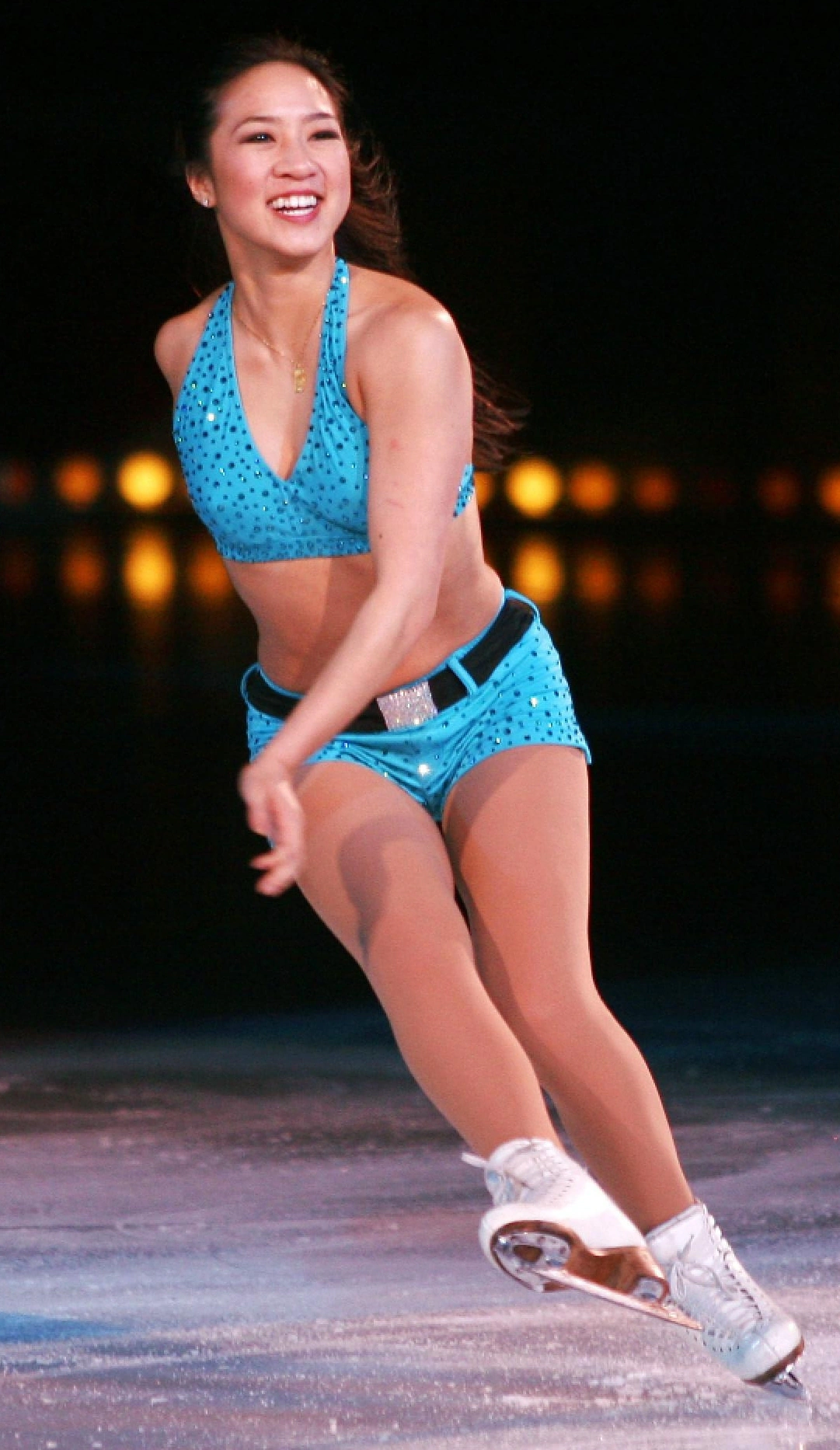
| 4 Quotes | |
| Born as | Michelle Wingshan Kwan |
| Occup. | Athlete |
| From | USA |
| Born | July 7, 1980 Torrance, California |
| Age | 45 years |
| Cite | |
Citation Formats
APA Style (7th ed.)
Michelle kwan biography, facts and quotes. (2026, February 11). FixQuotes. https://fixquotes.com/authors/michelle-kwan/
Chicago Style
"Michelle Kwan biography, facts and quotes." FixQuotes. February 11, 2026. https://fixquotes.com/authors/michelle-kwan/.
MLA Style (9th ed.)
"Michelle Kwan biography, facts and quotes." FixQuotes, 11 Feb. 2026, https://fixquotes.com/authors/michelle-kwan/. Accessed 6 Mar. 2026.
Early Life and Background
Michelle Wingshan Kwan was born July 7, 1980, in Torrance, California, and grew up in the Los Angeles area in a Hong Kong-Chinese immigrant household where thrift and persistence were everyday disciplines. Her parents, Danny and Estella Kwan, ran a modest family business and organized life around an ice rink schedule that would have been unthinkable without sacrifice - early mornings, long drives, and careful budgeting for coaching, ice time, and costumes. In Southern California, far from the traditional East Coast skating enclaves, Kwan developed a self-contained, almost monastic focus that later read as poise under pressure.She began skating as a child, following her older brother and sister onto the ice, and soon showed an unusual ability to translate emotion into movement. The 1990s were a televised boom era for American figure skating, and Kwan came of age watching the sport become both mass entertainment and a microscope for adolescent ambition. Even as a teenager, she learned that beauty and scrutiny arrived together - every success amplified expectations, every mistake replayed in slow motion.
Education and Formative Influences
Kwan balanced traditional schooling with elite training, a split life that sharpened her sense of responsibility early and made time feel like a moral problem rather than a neutral resource. Coaches and choreographers shaped her as much as textbooks did: Frank Carroll became the central technical and artistic architect of her career, while choreographic collaborators helped refine her signature blend of classical line and direct emotional address. The era also offered cautionary models - champions celebrated one season and dissected the next - teaching her to build an inner metric of progress that could survive the volatility of judging and headlines.Career, Major Works, and Turning Points
Kwan announced herself internationally by winning the 1996 U.S. title at 15, then seized a lasting place in the sport with five World Championships (1996, 1998, 2000, 2001, 2003) and nine U.S. titles (1996-2005, except 1997 and 2004), along with Olympic medals - silver at Nagano 1998 and bronze at Salt Lake City 2002. Her programs became cultural artifacts for skating audiences: "Lyra Angelica" (1998) made her lyricism feel inevitable, while later vehicles like "East of Eden" and "Tosca" emphasized dramatic continuity and mature restraint. The pivotal psychological turn came after 2002, when the expected arc - retire on top, tour, and monetize fame - did not satisfy her; she kept returning, competing through injuries and shifting technical standards, and later remained a public figure through touring, occasional attempted comebacks, and service-oriented work.Philosophy, Style, and Themes
Kwan skated as if interpretation were a form of ethical seriousness: edges clean enough to read across an arena, arms that completed the phrase rather than decorated it, and a calm face that never meant the absence of feeling. Her best performances carried a recognizable Kwan grammar - sustained glide, musical timing, and the ability to make even transitional steps seem deliberate. In an increasingly jump-driven sport, she argued with her body that artistry was not a consolation prize but a competitive weapon, and she won often enough to make that argument persuasive.Just as revealing was her candor about the cost. “I was so worried about winning, it was as if I was caught up in my own web”. That sentence captures the paradox of her era: skating marketed as grace, lived as pressure. She also framed overachievement as both privilege and compulsion - “Skating takes up 70 percent of my time, school about 25 percent. Having fun and talking to my friends, 5 percent. It's hard. I envy other kids a lot of things, but I get a guilt trip when I'm not training”. After Salt Lake City, her refusal to exit on schedule sounded less like indecision than devotion: “I always thought after 2002 that I'd hang up my skates and turn professional and just go on tour and do shows. But I don't know when it is enough. I mean, I still enjoy it. I'm the luckiest girl alive that I get to perform in front of thousands of people, do what I love doing”. The through-line is a psyche that equated work with worth, yet found genuine joy in performance - a rare combination that made her both relentlessly driven and unusually sincere on the ice.
Legacy and Influence
Kwan endures as the defining American figure skater of her generation not because she changed the rulebook, but because she set a standard for competitive artistry, professionalism, and emotional credibility that younger skaters still chase. She helped keep U.S. skating culturally central through the late 1990s and early 2000s, modeled longevity in a sport that burns athletes quickly, and proved that a champion could be simultaneously media-savvy and internally exacting. Long after specific results fade, her influence persists in the expectation that a complete skater must do more than land jumps - she must communicate, withstand scrutiny, and keep returning to the ice with something honest to say.Our collection contains 4 quotes written by Michelle, under the main topics: Friendship - Anxiety - Training & Practice - Career.
Other people related to Michelle: Sarah Hughes (Athlete)
Source / external links