
Mitch Hedberg Biography Quotes 51 Report mistakes
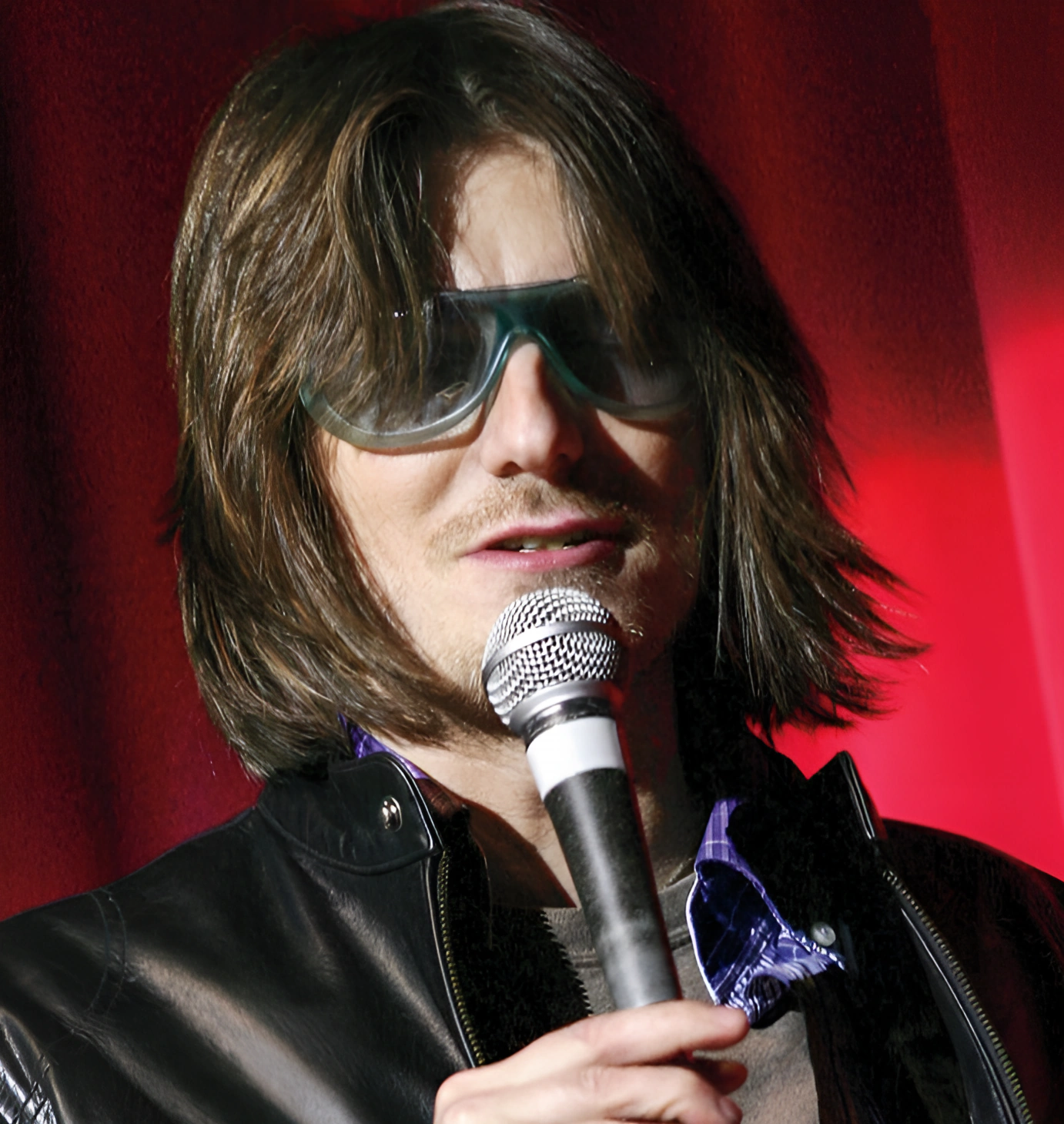
| 51 Quotes | |
| Born as | Mitchell Lee Hedberg |
| Occup. | Comedian |
| From | USA |
| Spouse | Lynn Shawcroft |
| Born | February 24, 1968 Saint Paul, Minnesota, USA |
| Died | March 30, 2005 Livingston, New Jersey, USA |
| Cause | Drug overdose |
| Aged | 37 years |
| Cite | |
Citation Formats
APA Style (7th ed.)
Mitch hedberg biography, facts and quotes. (2026, February 11). FixQuotes. https://fixquotes.com/authors/mitch-hedberg/
Chicago Style
"Mitch Hedberg biography, facts and quotes." FixQuotes. February 11, 2026. https://fixquotes.com/authors/mitch-hedberg/.
MLA Style (9th ed.)
"Mitch Hedberg biography, facts and quotes." FixQuotes, 11 Feb. 2026, https://fixquotes.com/authors/mitch-hedberg/. Accessed 27 Mar. 2026.
Early Life and Background
Mitchell Lee Hedberg was born on February 24, 1968, in Saint Paul, Minnesota, and grew up across the river in the working, winter-hardened neighborhoods of the Twin Cities. The late-1970s and 1980s Midwest he inherited valued practicality and plain speech, a cultural weather that can make a natural eccentric either shrink or sharpen; in Hedberg it sharpened. He spoke later about ordinary jobs and routine days with the tone of someone watching life from one step to the side, amused that everyone else seemed to accept the rules.Even before comedy gave him a passport out of Minnesota, his inner life seemed organized around noticing. Friends and later audiences sensed a mind that did not merely observe but continually re-labeled reality, as if every object had an alternate meaning hidden in its syntax. That posture made him both gentle and distant: he could stand onstage with a shy, half-lidded calm, but his jokes carried the alertness of a person never fully at rest, always turning the world over like a coin.
Education and Formative Influences
Hedberg attended the private Jesuit-run Creighton University in Omaha, Nebraska, where he studied communication, graduating in 1990. The campus and its disciplined rhetoric offered a formal backdrop for a student who preferred the informal and the illogical; stand-up became a way to smuggle daydream logic into public speech. He gravitated toward the American one-liner tradition and the surreal looseness that ran from Steven Wright to the era of alternative comedy, absorbing the idea that a joke could be a small poem with a punchline rather than a story with a moral.Career, Major Works, and Turning Points
After college he moved into the club circuit, building a reputation in the 1990s for short, vivid lines delivered in a soft voice, often leaning into the mic stand as if it were a prop for thinking. National recognition accelerated with television appearances and his breakthrough on HBO, including his stand-up special Comedy Central Presents: Mitch Hedberg (1999), and the album Strategic Grill Locations (recorded in 1999, released in 2003), which preserved his cadence and crowd rapport as much as the jokes themselves. He also appeared in film, most notably as the laid-back kitchen worker in Almost Famous (2000), a role that matched his offstage aura: present, peculiar, and quietly funny. By the early 2000s he was a favorite of comedians and audiences alike, touring heavily while his health and stability deteriorated under substance use; he died on March 30, 2005, in Livingston, New Jersey, at 37.Philosophy, Style, and Themes
Hedberg wrote like someone skeptical of the standard contract between language and reality. He treated nouns as negotiable and logic as a toy, asking questions that sounded childish until they revealed how much adulthood depends on not asking them. When he wondered, “Is a hippopotamus a hippopotamus, or just a really cool Opotamus?” , he was not chasing randomness for its own sake - he was demonstrating how a single syllable can unmake certainty, and how comedy can expose the arbitrariness hiding under everyday categories.His onstage persona deepened that philosophy. He performed with an unhurried, inward gaze, as if he were reporting discoveries in real time rather than reciting prepared material; the pauses were part of the meaning. The famous line “I used to do drugs. I still do drugs. But I used to, too”. reads like a simple stoner paradox, yet it also shows his fixation on time, identity, and the way people edit their own narratives to feel improved. Even his observations about clothing and objects carried a metaphysical shrug: “My belt holds my pants up, but the belt loops hold my belt up. I don't really know what's happening down there. Who is the real hero?” In Hedberg's mind, the world was full of unnoticed systems, and humor was the moment you realize you have been living inside them without permission.
Legacy and Influence
Hedberg's influence is disproportionate to his short life: he became a patron saint of the one-liner, quoted endlessly, studied by younger comics, and revered for proving that a stand-up set could be both minimalist and strange without turning cold. His recordings circulate like modern folk art, passed along because they make listeners feel smarter and weirder at the same time, and because his delivery preserved a rare vulnerability - a performer who sounded less like a salesman of jokes than a man surprised by his own thoughts. In an era that increasingly rewarded speed, volume, and controversy, Hedberg endures as evidence that softness can be commanding, and that a single sentence - perfectly tilted - can change how you see a room.Our collection contains 51 quotes written by Mitch, under the main topics: Witty One-Liners - Dark Humor - Puns & Wordplay - Dog.
Source / external links